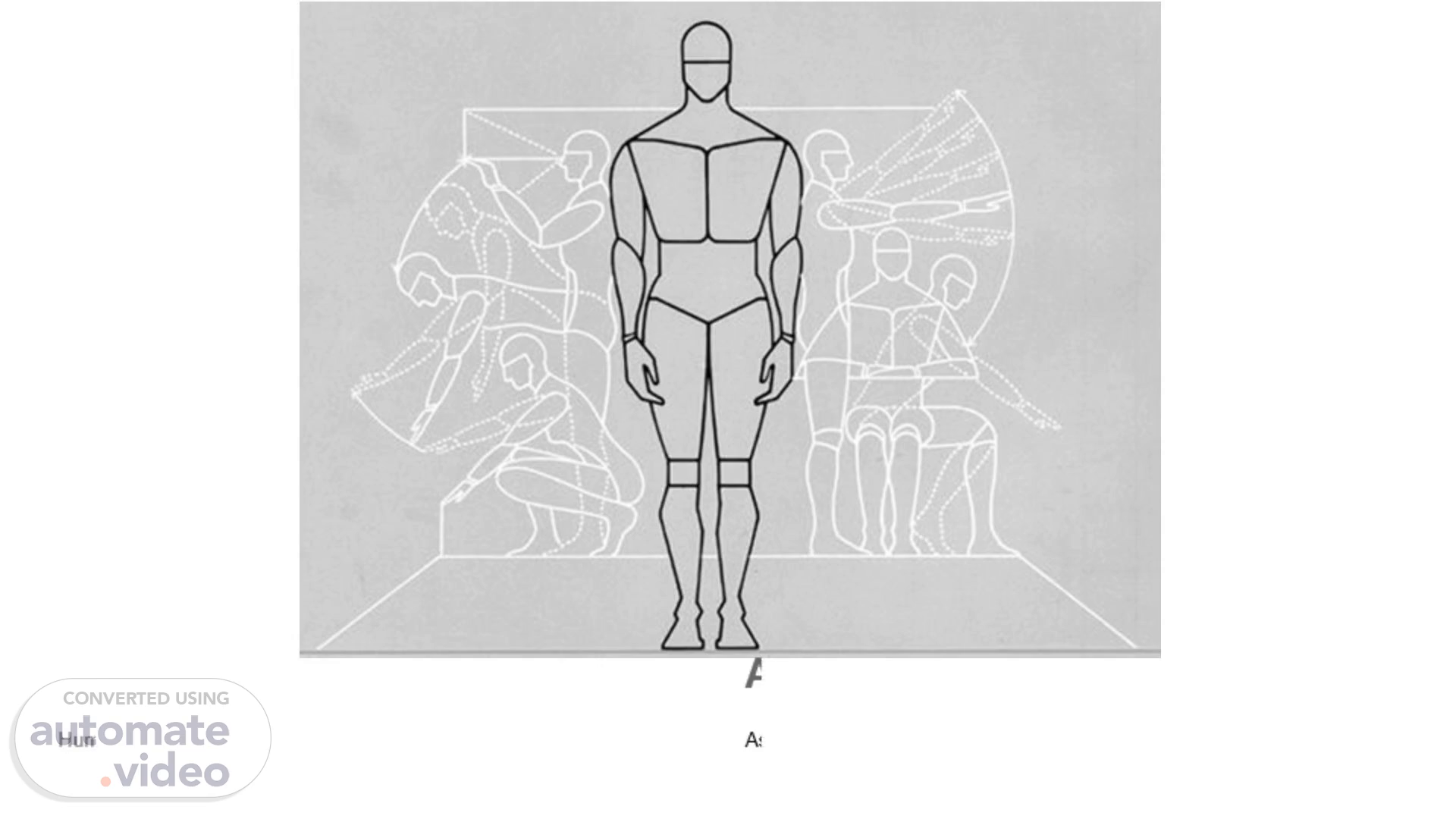
Ar. Sawan Kumar Sharma Assistant Professor, FOAP-AKTU, Lucknow


Scene 1 (0s)
[image]. Anthropometry in Architecture Human-Centered Design Through Body Measurements and Proportions.
Scene 2 (10s)
[image]. What is Anthropometry ?. Anthropometry is the scientific study of human body measurements. It helps designers, architects, and engineers create spaces, products, and systems. fit human physical needs, improving comfort, safety, and performance..
Scene 3 (34s)
[image]. Types of Anthropometry. Static: Body dimensions when still (standing height, sitting height). Dynamic: Measurements during movement (reach distance, bending). Structural vs Functional: Bone-based vs movement-based dimensions.
Scene 4 (47s)
Static. [image]. [image] C Male D Female 21 24 A Male B Female Cwe 21 24 Arms Extended Parallel to Floor/ Pams Up.
Scene 5 (55s)
Static. [image] 14.5 in 95th Percentile (36.8 cm) 58 in (65.5 cm) Max. Clothed Body Breadth (Heavy Outer 13.0 in 22.8 in (57.9 crn).. Winter Garments) 33.0 cm 23 95th Percentile Max. Clothed Body Depth (Heavy Outer Winter Garments) 95th Percentile ax. Bcxiy Depth 95th Percentile IMax BOdy Profile of Clothing 25.8 in (65.5 crn) THE HUMAN BODY/ DEPTH AND BREADTH DIMENSIONS.
Scene 6 (1m 14s)
Dynamic. [image] B Female c Male D FomaJo E Male SIT-UP FLOOR EXERCISE.
Scene 7 (1m 24s)
Structure. [image] NE LATERAL e EN ONG. [image] SHOU ELBOW/.
Scene 8 (1m 31s)
Structure. [image] ROTATION. [image] KLE AND.
Scene 9 (1m 38s)
[image]. Percentiles. Population measurements are expressed using percentiles 5th percentile: small individuals 50th percentile: average 95th percentile: large individuals.
Scene 10 (1m 50s)
[image]. Applications in Architecture & Design. • Building Elements: doors, windows, handrails, stairs. • Furniture Design: desks, chairs, beds, storage. • Urban Design: pathways, signage, bus stops. • Workspace & Ergonomics: neutral posture, comfort, efficiency..