Scene 1 (0s)
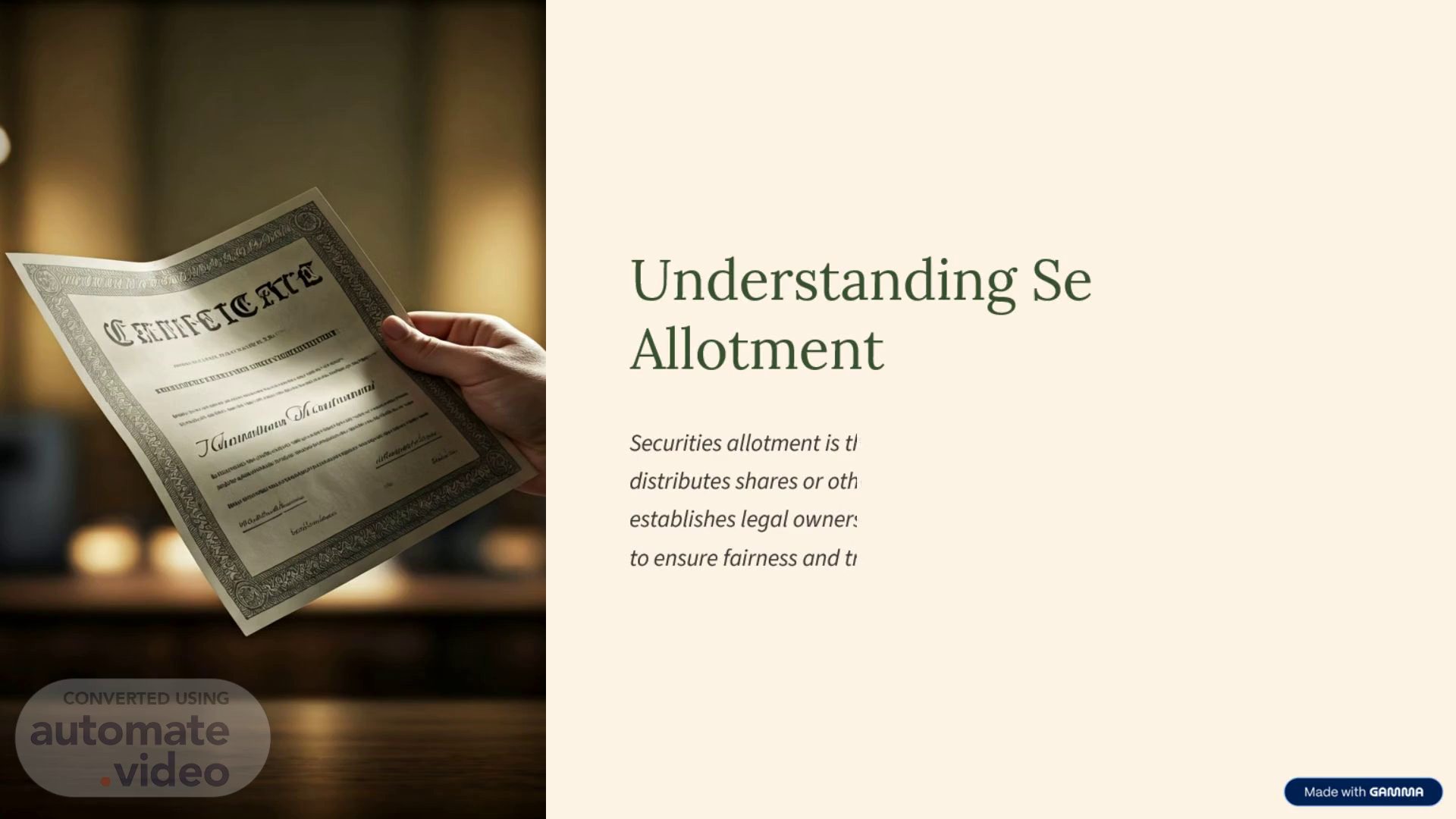
Understanding Securities Allotment. Securities allotment is the formal process by which a company issues and distributes shares or other securities to applicants. This crucial procedure establishes legal ownership and is governed by strict regulatory frameworks to ensure fairness and transparency for all stakeholders..
Scene 2 (15s)
The Foundation: Regulatory Compliance. Legal Framework.
Scene 3 (36s)
Bookkeeping. Bookkeeping in accounting is the systematic daily process of recording, organizing, and maintaining a business's financial transactions, like sales, purchases.
Scene 4 (49s)
Procedural Steps for Allotment of Securities. The allotment of securities is a multi-step process, beginning with internal approvals and extending to post-allotment record updates. Each stage is vital for a legally sound and transparent issuance..
Scene 5 (1m 3s)
Step 1: Board Resolution. Formal Approval. The company's Board of Directors must convene a meeting to formally approve the proposed allotment. This includes detailing the number of securities, their issue price, and the specific allottees..
Scene 6 (1m 21s)
Step 2: Invitation & Application. Issuing the Prospectus.
Scene 7 (1m 37s)
Step 3: Ensuring Minimum Subscription. TARGET. Threshold Requirement.
Scene 8 (1m 57s)
A//otment fRegret. Step 4 & 5: Allotment Decisions & Communication.
Scene 9 (2m 16s)
Step 6: Filing & Regulatory Compliance. Mandatory Filings.
Scene 10 (2m 33s)
Step 7: Issuance of Certificates. Physical Certificates.
Scene 11 (2m 52s)
Step 8: Updating Company Records. Internal Record Keeping.
Scene 12 (3m 8s)
Applicability in India: A Local Perspective. The outlined steps for securities allotment largely conform to the regulatory framework in India. Companies operating within India must specifically adhere to the provisions of the Companies Act, 2013, and the regulations issued by the Securities and Exchange Board of India (SEBI) for public offerings..