Scene 1 (0s)
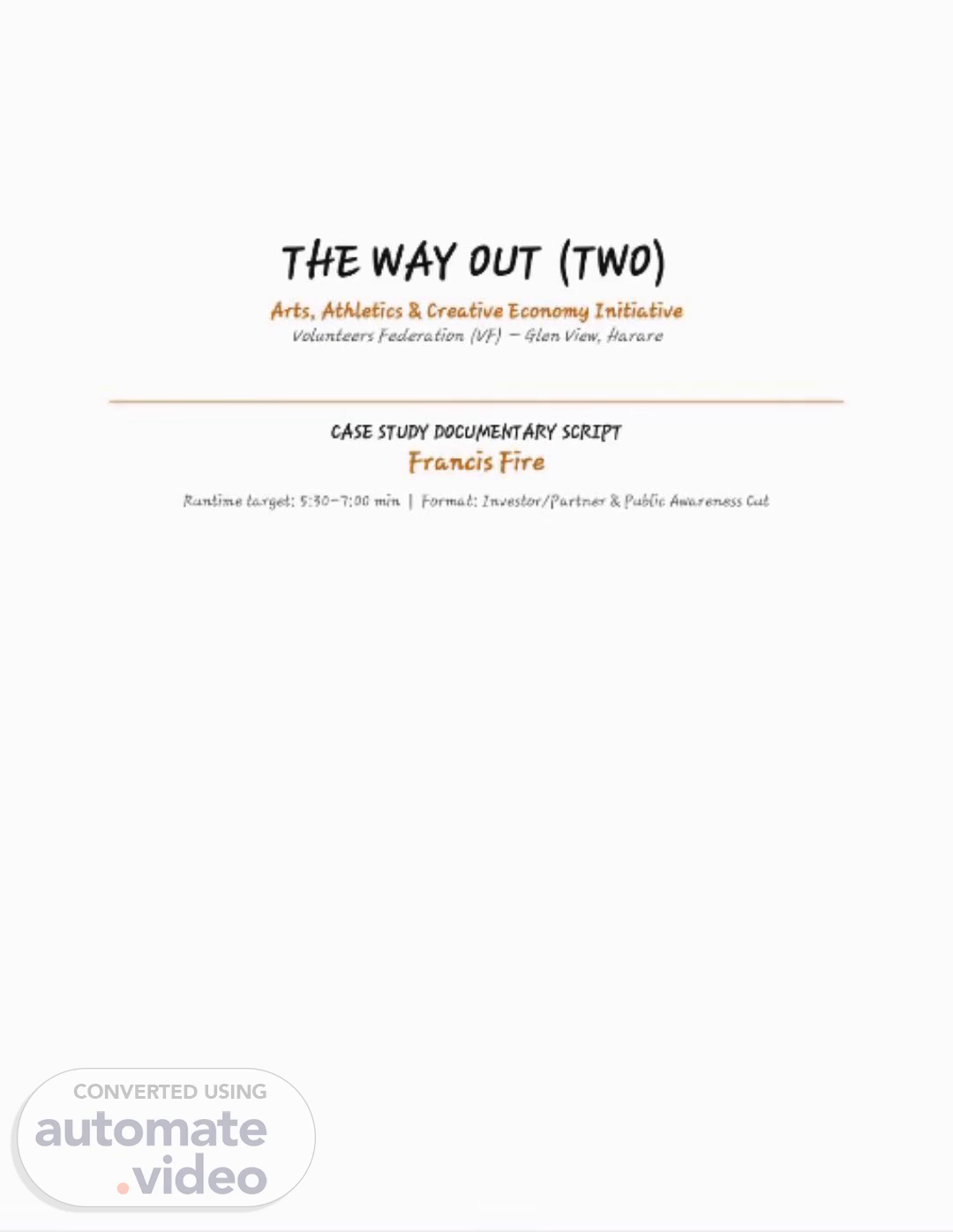
THE WAY OUT (TWO) Arts, Athletics & Creative Economy Initiative Volunteers Federation (VF) — Glen View, Harare CASE STUDY DOCUMENTARY SCRIPT Francis Fire Runtime target: 5:30–7:00 min | Format: Investor/Partner & Public Awareness Cut.
Scene 2 (1m 11s)
[Audio] The script is structured as follows: Chapter One: The Street Kid Chapter Two: The Creative Chapter Three: The Exporter Chapter Three has two sub-chapters: Chapter Three A: The Exporter Chapter Three B: The Exporter Chapter Three C: The Exporter Chapter Three D: The Exporter Chapter Three E: The Exporter Chapter Four: The System Chapter Five: The Impact Chapter Six: The Future Chapter Seven: The Infrastructure Chapter Eight: The Call to Action Chapter Nine: The Legacy Chapter Ten: The Conclusion Chapter Eleven: The Infrastructure Chapter Twelve: The Call to Action Chapter Thirteen: The Legacy Chapter Fourteen: The Conclusion Chapter Fifteen: The Infrastructure Chapter Sixteen: The Call to Action Chapter Seventeen: The Legacy Chapter Eighteen: The Conclusion Chapter Nineteen: The Infrastructure Chapter Twenty: The Call to Action Chapter Twenty-One: The Legacy Chapter Twenty-Two: The Conclusion Chapter Twenty-Three: The Infrastructure Chapter Twenty-Four: The Call to Action Chapter Twenty-Five: The Legacy Chapter Twenty-Six: The Conclusion Chapter Twenty-Seven: The Infrastructure Chapter Twenty-Eight: The Call to Action Chapter Twenty-Nine: The Legacy Chapter Thirty: The Conclusion Chapter Thirty-One: The Infrastructure Chapter Thirty-Two: The Call to Action Chapter Thirty-Three: The Legacy Chapter Thirty-Four: The Conclusion Chapter Thirty-Five: The Infrastructure Chapter Thirty-Six: The Call to Action Chapter Thirty-Seven: The Legacy Chapter Thirty-Eight: The Conclusion Chapter Thirty-Nine: The Infrastructure Chapter Forty: The Call to Action Chapter Forty-One: The Legacy Chapter Forty-Two: The Conclusion Chapter Forty-Three: The Infrastructure Chapter Forty-Four: The Call to Action Chapter Forty-Five: The Legacy Chapter Forty-Six: The Conclusion Chapter Forty-Seven: The Infrastructure Chapter Forty-Eight: The Call to Action Chapter Forty-Nine: The Legacy Chapter Fifty: The Conclusion Chapter Fifty-One: The Infrastructure Chapter Fifty-Two: The Call to Action Chapter Fifty-Three: The Legacy Chapter Fifty-Four: The Conclusion Chapter Fifty-Five: The Infrastructure Chapter Fifty-Six: The Call to Action Chapter Fifty-Seven: The Legacy Chapter Fifty-Eight: The Conclusion Chapter Fifty-Nine: The Infrastructure Chapter Sixty: The Call to Action Chapter Sixty-One: The Legacy Chapter Sixty-Two: The Conclusion Chapter Sixty-Three: The Infrastructure Chapter Sixty-Four: The Call to Action Chapter Sixty-Five: The Legacy Chapter Sixty-Six: The Conclusion Chapter Sixty-Seven: The Infrastructure Chapter Sixty-Eight: The Call to Action Chapter Sixty-Nine: The Legacy Chapter Seventy: The Conclusion Chapter Seventy-One: The Infrastructure Chapter Seventy-Two: The Call to Action Chapter Seventy-Three: The Legacy Chapter Seventy-Four: The Conclusion Chapter Seventy-Five: The Infrastructure Chapter Seventy-Six: The Call to Action Chapter Seventy-Seven: The Legacy Chapter Seventy-Eight: The Conclusion Chapter Seventy-Nine: The Infrastructure Chapter Eighty: The Call to Action Chapter Eighty-One: The Legacy Chapter Eighty-Two: The Conclusion Chapter Eighty-Three: The Infrastructure Chapter Eighty-Four: The Call to Action Chapter Eighty-Five: The Legacy Chapter Eighty-Six: The Conclusion Chapter Eighty-Seven: The Infrastructure Chapter Eighty-Eight: The Call to Action Chapter Eighty-Nine: The Legacy Chapter Ninety: The Conclusion Chapter Ninety-One: The Infrastructure Chapter Ninety-Two: The Call to Action Chapter Ninety-Three: The Legacy Chapter Ninety-Four: The Conclusion Chapter Ninety-Five: The Infrastructure Chapter Ninety-Six: The Call to Action Chapter Ninety-Seven: The Legacy Chapter Ninety-Eight: The Conclusion Chapter Ninety-Nine: The Infrastructure Chapter One Hundred: The Call to Action Chapter One Hundred One: The Legacy Chapter One Hundred Two: The Conclusion.
Scene 3 (6m 11s)
[Audio] The narrator says that every country has two main products to export to the world. The first product is something that comes from the earth, such as minerals, oil, or gas. This can be anything from gold to coal, copper to diamonds, or even rare earth elements. These natural resources are extracted from the earth through various methods, including drilling, mining, and excavation. They are then transported to other countries where they are used for a variety of purposes, such as manufacturing, construction, and energy production. The second product is something that comes from human labor, such as clothing, electronics, cars, and airplanes. These manufactured goods are created by skilled workers who use their expertise and knowledge to design, produce, and assemble them. They are then exported to other countries where they are sold to consumers, used for business purposes, or distributed to charities. In addition to these two main products, some countries also export services, such as financial services, tourism, and education. These services are provided by individuals or companies and are often intangible, meaning they cannot be physically touched or held. Examples of services include consulting, accounting, and IT support. Some countries also export knowledge and expertise, which can take many forms, such as research, innovation, and cultural exchange programs. Overall, every country's economy is driven by the export of these three types of products: natural resources, manufactured goods, and services. The way these products are produced, marketed, and traded can have a significant impact on a country's economic growth and development..
Scene 4 (8m 3s)
[Audio] The narrator speaks about the true students of a particular individual, highlighting that these individuals are not necessarily paying customers but rather those who need help the most. The focus is on the people who cannot afford to pay for lessons or training, yet still manage to achieve great things with the guidance of this person. These individuals have become champions in their respective fields, and as a result, they are now working towards creating a better future for themselves and their communities..
Scene 5 (9m 9s)
[Audio] The company has been working with Francis Fire since its inception. Over time, they have provided him with various forms of support including training, mentorship, and guidance. Francis Fire has undergone significant changes as he has grown within the organization. He has moved from being an independent contractor to becoming a key member of the team. His role has evolved significantly over the years, and he now plays a crucial part in shaping the direction of the company. Francis Fire has become an integral part of the organization, providing valuable insights and expertise to his colleagues. His contributions are recognized and valued by all members of the staff. Francis Fire's journey is one of transformation and growth, and it serves as a testament to the power of collaboration and partnership..
Scene 6 (10m 14s)
[Audio] The production team is focused on capturing the essence of Francis Fire's journey from his early days as a talented but untrained youth to his current status as a successful entrepreneur. They have identified key elements that will help bring the story to life. These elements include empty paddock bookend shots, archival footage of major events such as the NAMA Awards and World Cup, and performances captured on cruise ships. The team is also incorporating powerful music into the film, which includes raw street percussion, orchestral swells, and gospel-inspired choruses. The goal is to create a compelling visual identity for the film, showcasing the transformative power of the Arts, Athletics, and Creative Economy Initiative..