Scene 1 (0s)
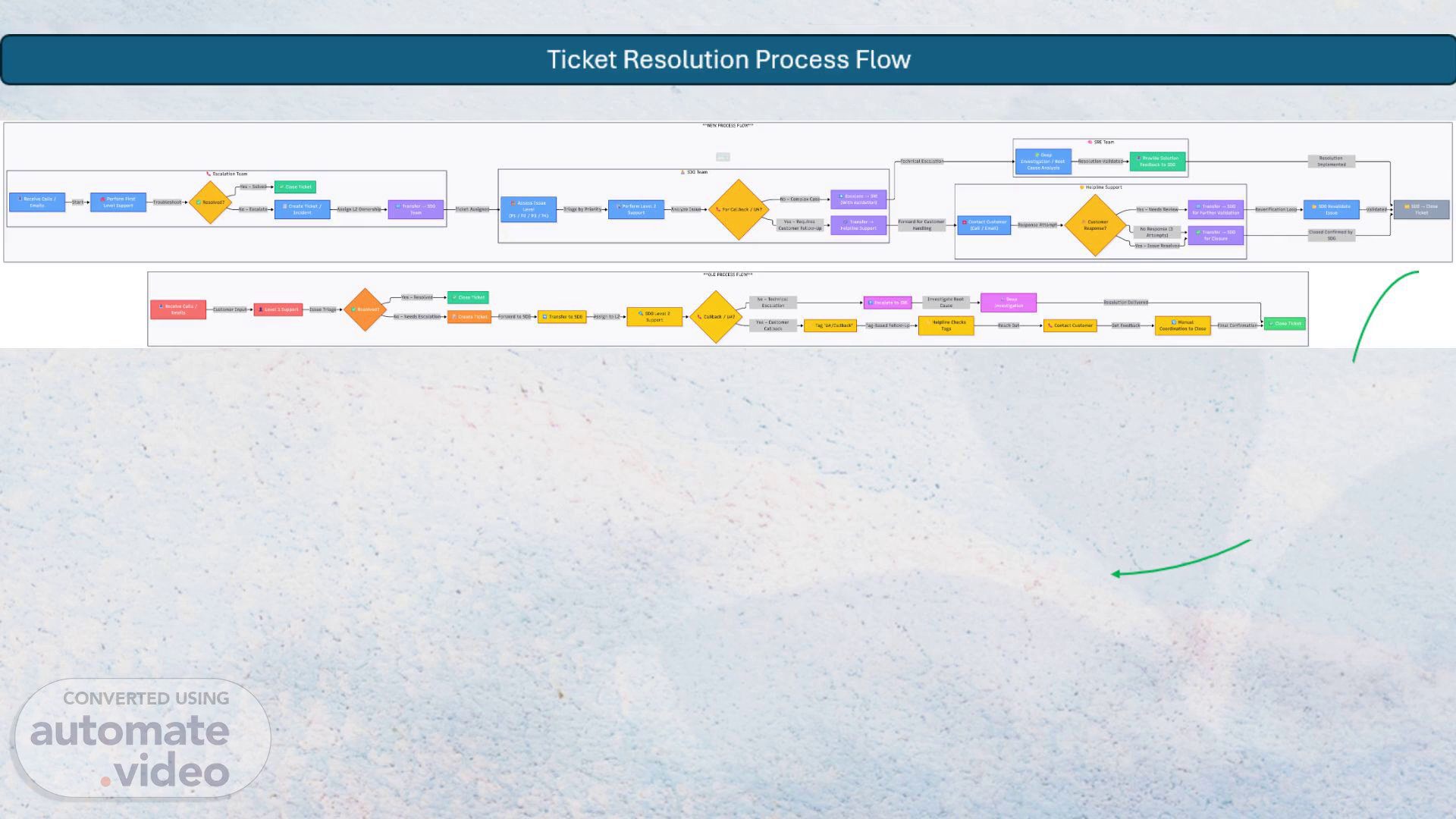
[Audio] Let me briefly explain the improved ticket resolution process. | Level two assigns directly to SDG, | who owns validation, resolution, and closure. || If customer interaction is needed, | SDG sends the ticket to CSC. | CSC handles callbacks and user acceptance, | then returns it to SDG. || This creates a simple loop, | reduces handoffs, | and improves speed, clarity, and customer experience..
Scene 2 (35s)
[Audio] Let me walk you through this slide. At the top, you can see the overall ticket resolution process—from Level 1 support to SDG for validation and resolution. Now focusing on the improvement—once a ticket is created, Level 2 ownership is assigned immediately and transferred to SDG. In the middle, this is the SDG ticket board. All tickets are organized into dedicated buckets. The highlighted 'No Assigned' bucket shows newly transferred tickets, improving visibility and ensuring nothing gets missed. From here, tickets can simply be dragged and dropped into specific buckets, and they are automatically assigned to the corresponding owner..
Scene 4 (2m 45s)
[Audio] Now let's take a closer look at the Helpline support flow. At the top, this shows what happens when a ticket requires customer interaction. Helpline begins by contacting the customer through call or email and attempts to get a response. From there, we have a decision point—whether the customer responds or not. If the customer responds and the issue still needs validation, the ticket is sent back to SDG for further validation. If the issue is already resolved or there's no response after several attempts, it is sent to SDG for closure. On the right side, SDG performs the final validation and confirms closure, ensuring technical accuracy before the ticket is closed. At the bottom left, you can see the actual ticket details view, which captures important information like assignment, status, SLA, and ownership—helping teams track progress clearly. And on the right, the table summarizes the roles: Helpline focuses on customer communication, follow-ups, and user acceptance SDG handles technical validation, resolution, and remains the final authority for closure So overall, Helpline acts as the bridge to the customer, while SDG ensures the issue is fully resolved and properly closed..
Scene 5 (4m 5s)
[Audio] Let me walk you through this comparison. In the old process, tickets move across multiple teams—from Level 1 to SDG, Helpline, and sometimes SRE. This creates multiple handoffs, manual follow-ups, and unclear ownership, which can delay closure. In the new process, tickets are automatically created and assigned to SDG, who owns validation, resolution, and closure. CSC handles customer interaction when needed, and SRE is only engaged for complex cases. Most importantly, closure is centralized with SDG, ensuring consistency and accountability. Overall, the new process is faster, simpler, and more efficient..