Scene 1 (0s)
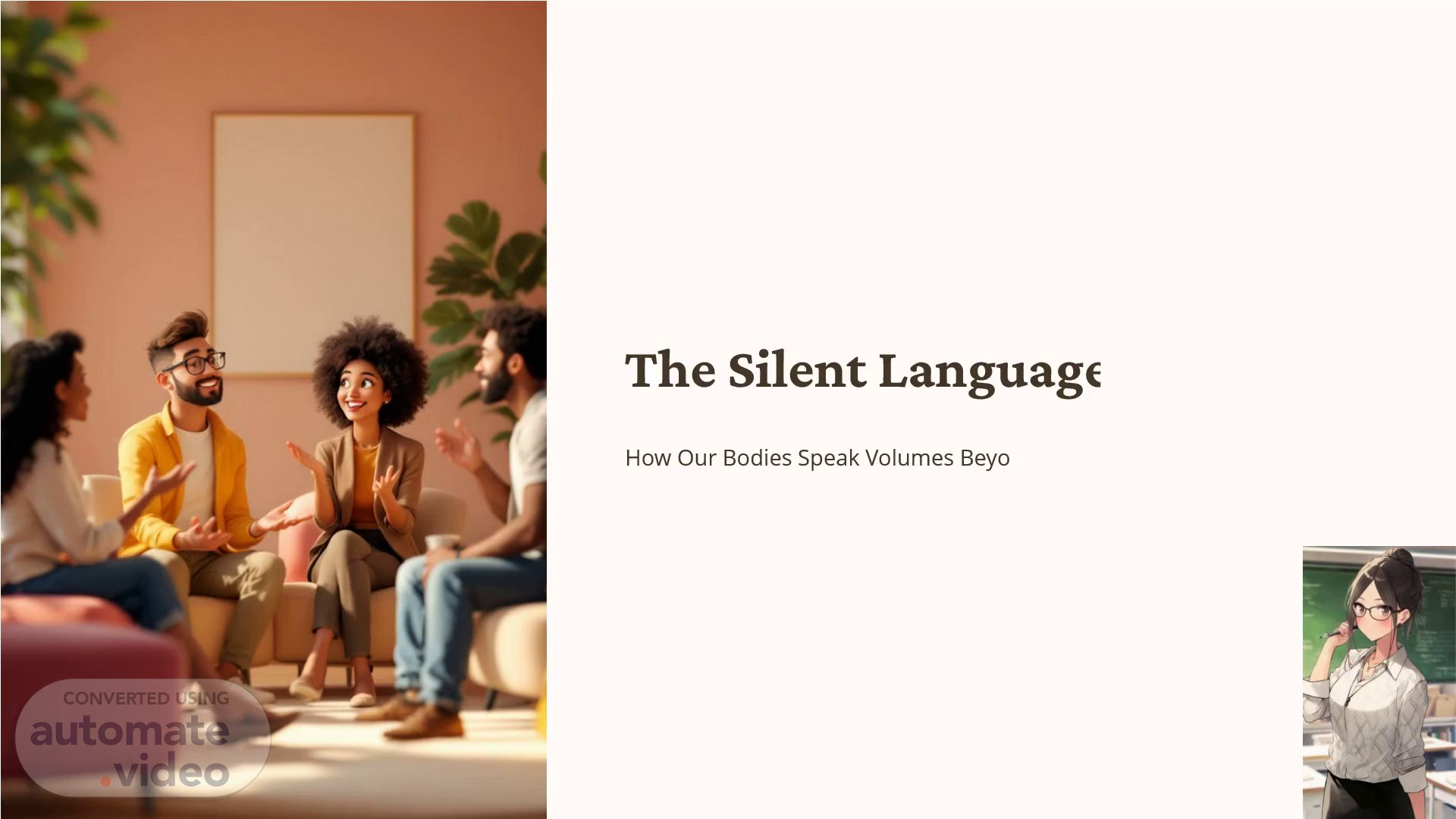
preencoded.png. The Silent Language of Gender. How Our Bodies Speak Volumes Beyond Words.
Scene 2 (36s)
[Audio] Non-verbal communication plays a crucial role in effective communication. Research shows that 93% of effective communication occurs through non-verbal cues, not just the words we speak. Our body language, facial expressions, and other physical behaviors all contribute to conveying our message. Maintaining eye contact can demonstrate engagement and trust, while crossing our arms can indicate defensiveness. Open and confident body language conveys approachability and friendliness, whereas closed-off postures suggest discomfort or disinterest. Being aware of these non-verbal cues and matching them with our verbal messages can improve our communication skills and build stronger relationships..
Scene 3 (1m 23s)
[Audio] Body language plays a significant role in our daily interactions. Every movement, expression, and gesture conveys meaning. This includes hand movements such as gestures, which can emphasize, direct, or express emotions during conversations. Our posture also conveys information about us, revealing whether we are confident, open, or defensive. Eye contact is essential, as it shows engagement, trust, or sometimes challenge. Non-verbal cues are crucial in understanding each other's intentions and feelings. Being aware of these cues helps us navigate social situations more effectively and builds stronger relationships..
Scene 4 (2m 8s)
[Audio] The facial expressions that people make when they meet each other are a universal language. They convey emotions instantly and are understood by everyone. However, societal norms dictate how we express emotions based on gender. Women are often encouraged to smile to appear approachable and friendly, while men are expected to maintain serious, authoritative expressions. These expectations can lead to misunderstandings and miscommunications. Recognizing and challenging these norms can help us communicate more authentically and emotionally..
Scene 5 (2m 44s)
[Audio] The first thing that comes to mind when I think about the concept of a "good" relationship is the idea of a romantic partnership. However, this definition may not be universally applicable. A good relationship can also refer to friendships, family relationships, or even professional partnerships. The key factor is that all parties involved are able to communicate effectively and maintain a healthy balance between their individual needs and the needs of others. Effective communication is crucial for building trust, understanding, and respect among partners. This includes active listening, empathy, and being open to feedback and criticism. Partners should strive to create an environment where they feel comfortable sharing their thoughts and feelings, and where they can receive constructive feedback from one another. In addition to effective communication, other essential elements of a good relationship include mutual respect, trust, and a willingness to compromise. Partners must be willing to work together to find solutions to problems and challenges, rather than trying to impose their own will on each other. By doing so, they can build a strong foundation for their relationship and foster a sense of unity and cooperation. Furthermore, a good relationship requires a certain level of emotional intelligence. This means being aware of one's own emotions and those of others, and being able to manage them in a way that promotes harmony and understanding. Emotional intelligence helps partners navigate conflicts and difficult situations, and it enables them to respond to each other's needs in a more empathetic and supportive manner. In conclusion, a good relationship is built on several key factors, including effective communication, mutual respect, trust, and emotional intelligence. By prioritizing these elements, partners can create a strong and lasting bond that fosters growth, understanding, and happiness..
Scene 6 (4m 46s)
[Audio] The societal expectations placed on males and females regarding emotional expression vary greatly across cultures and historical periods. In many societies, women are encouraged to express their feelings freely, whereas men are discouraged from displaying emotion. This disparity stems from cultural norms that have been perpetuated over time, which dictate how people should behave and interact with each other. The pressure to conform to these norms can result in misunderstandings and miscommunications, particularly when individuals feel compelled to hide their true emotions. Recognizing and challenging these norms can help create a more inclusive environment where people feel free to express themselves honestly. Both men and women can exhibit a wide range of emotions, and there is no single standard for emotional expression. By acknowledging this diversity, we can promote greater empathy and understanding among individuals, ultimately fostering stronger connections and relationships..
Scene 7 (5m 50s)
[Audio] The speaker emphasizes that verbal and non-verbal communication should be aligned for effective interaction. The speaker suggests that people often fail to recognize the discrepancy between verbal and non-verbal messages. The speaker provides examples of how verbal and non-verbal messages may not align, such as saying "I'm fine" with crossed arms and avoiding eye contact, or maintaining distance and crossing one's legs. These examples illustrate how verbal and non-verbal messages can create confusion and erode trust in relationships. The speaker concludes by stating that recognizing these discrepancies allows individuals to take steps to ensure consistent communication, leading to more effective and harmonious interactions..
Scene 8 (6m 38s)
[Audio] The impact of non-verbal communication on relationships can be significant. Women who exhibit assertive behaviors such as taking up space or using traditionally masculine gestures may be misinterpreted as aggressive, potentially affecting their career advancement opportunities. Men who display vulnerability or emotional expression may be perceived as weak, hindering their ability to form meaningful connections with colleagues. In personal relationships, partners who interpret each other's gestures through the lens of traditional gender roles often experience misunderstandings, leading to feelings of frustration and disconnection. Recognizing and learning each other's authentic communication styles enables individuals to build stronger, more empathetic relationships. This awareness allows people to navigate complex social situations with greater ease, fostering a deeper sense of connection and trust. To create an inclusive environment, it is essential to acknowledge and address these biases, promoting a culture where individuals feel comfortable expressing themselves freely..
Scene 9 (7m 52s)
[Audio] Non-verbal communication plays a significant role in shaping our perceptions of each other. Our body language, facial expressions, and tone of voice all convey different messages. When we communicate non-verbally, we are sending signals that can be easily misunderstood. These signals can be influenced by various factors, including cultural background, personal experiences, and individual characteristics. As a result, people may interpret our non-verbal cues differently, leading to potential conflicts and misunderstandings. To avoid these issues, it is essential to consider the context and audience when using non-verbal communication. We must also be aware of our own non-verbal behaviors and their impact on others. By being mindful of our non-verbal signals, we can reduce the risk of misinterpretation and promote effective communication..
Scene 10 (8m 53s)
[Audio] The concept of identity has been around for centuries, but it was not until the 20th century that it became a central theme in psychology. The term "identity" refers to an individual's sense of self, encompassing their personality, values, and experiences. Identity is formed through interactions with others, including family members, friends, and community. Social norms and cultural expectations play a significant role in shaping an individual's identity. However, traditional approaches to identity formation often overlook the complexities of human experience. Modern psychology recognizes that identity is not fixed, but rather dynamic and constantly evolving. It acknowledges that individuals have multiple identities, and these identities intersect and influence one another..