Scene 1 (0s)
[Virtual Presenter] Quails are small, ground-dwelling birds that belong to the family Phasianidae. They are known for their distinctive appearance, which includes a rounded body shape, short legs, and long, pointed beaks. Quails have a wide range of habitats, from grasslands to forests, and can be found in many different parts of the world. There are over 130 species of quail, with some being more common than others. Some species of quail are migratory, while others are resident birds. Migratory quails travel long distances each year to reach their breeding grounds, often crossing entire countries or even continents. Resident quails, on the other hand, remain in their territories throughout the year. Both types of quails play an essential role in maintaining the balance of nature..
Scene 2 (55s)
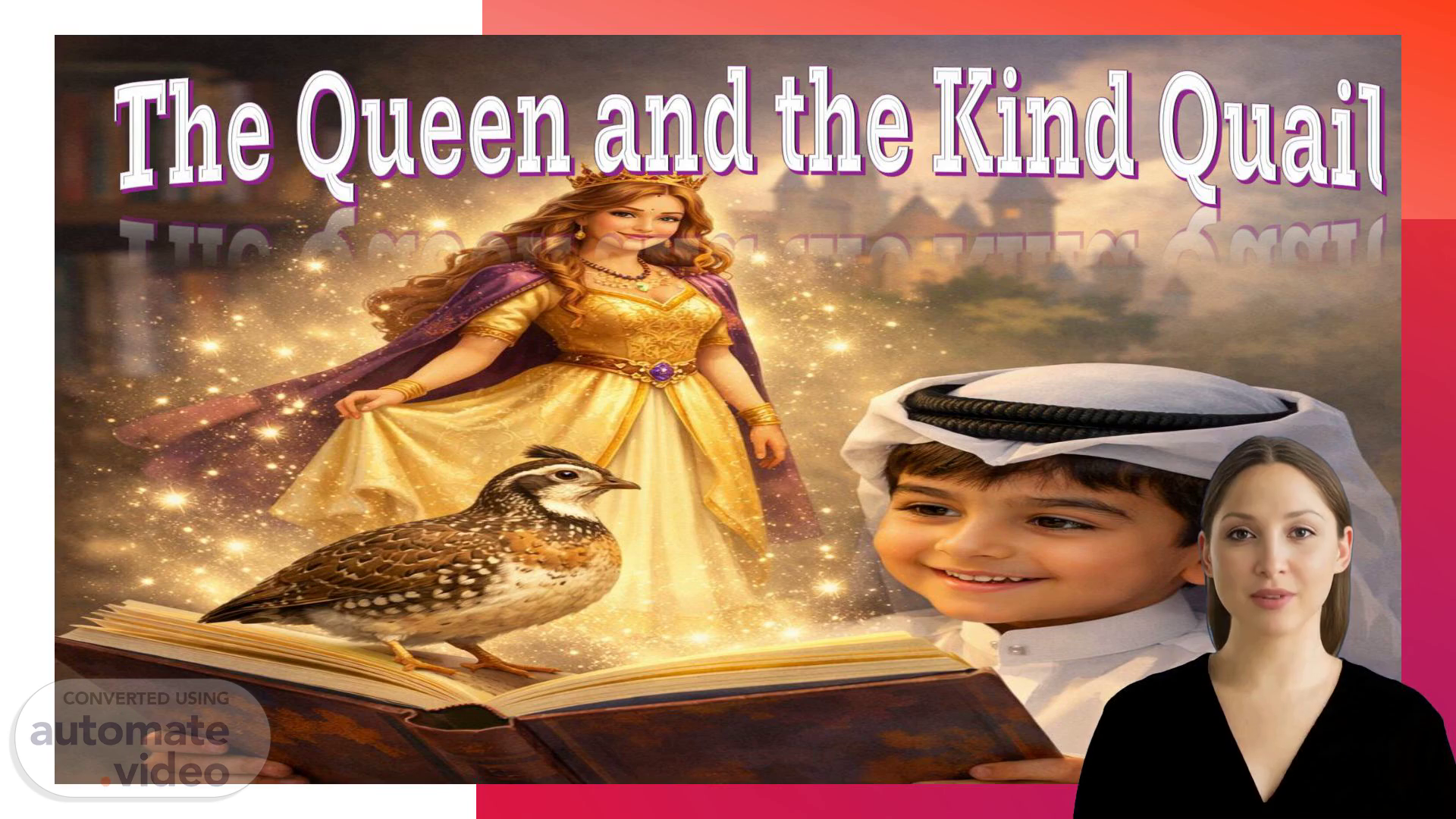
[Audio] The story begins with a young boy named Khalid who lives in Qatar. He is very curious and loves to read books. One day, he finds an old book about a queen in his grandfather's library. The book tells the story of a powerful queen who ruled over her kingdom with kindness and wisdom. She was loved by her people and respected by her peers. Khalid is fascinated by the story and decides to learn more about the queen and her kingdom. He spends hours reading the book and learning about the queen's life. As Khalid reads the book, he becomes increasingly aware of the importance of leadership and the qualities that make a good leader. He learns that a good leader must be kind, wise, and just. He also discovers that a good leader must be able to inspire and motivate others to work towards a common goal. Khalid realizes that the queen's leadership style is an example of how to effectively lead a team and achieve great success. Khalid's curiosity gets the better of him, and he decides to find out more about the queen's reign. He searches for information about the queen's life and reign, and eventually finds a biography written by one of her advisors. The biography provides detailed information about the queen's life, including her accomplishments and challenges. Khalid learns that the queen faced many obstacles during her reign, but she persevered and achieved great success despite these challenges. Through his research, Khalid gains a deeper understanding of the queen's leadership style and the qualities that made her successful. He realizes that the queen's ability to inspire and motivate others was key to her success. He also learns that the queen's kindness and wisdom were essential qualities for a leader. Khalid's journey of discovery has taught him valuable lessons about leadership and the importance of kindness, wisdom, and justice..
Scene 3 (2m 52s)
[Audio] The queen is symbolic of power and authority, while the quail represents simplicity and humility. The queen is depicted as being very powerful and having great influence over those around her. She is shown to have a strong sense of self-confidence and assertiveness. On the other hand, the quail is portrayed as gentle and humble, often showing signs of fear and submission. The contrast between the two characters highlights the complexities of human nature. The queen's power and authority are juxtaposed against the quail's vulnerability, creating an intriguing dynamic. This contrast serves as a reminder that even the most powerful individuals can possess vulnerabilities and weaknesses. The quail's humility and willingness to submit to others demonstrate a more modest approach to life. The queen's confidence and assertiveness, however, suggest a more dominant personality type. The interplay between these two opposing characteristics creates a rich tapestry of human experience..
Scene 4 (3m 58s)
[Audio] The Queen has been known as a symbol of strength and resilience throughout history. However, she was also vulnerable to illness. One day, the Queen fell ill. She appeared on slide number four looking subdued and quiet. This was not her usual confident self. The Queen's behavior suggests that she needed to take a break and listen to her body. Even leaders must prioritize their health and well-being. When the Queen felt unwell, she took steps to address her condition. She gave herself the rest and care she needed. This shows that even those who are strong and resilient can benefit from taking care of themselves. The Queen's experience highlights the importance of prioritizing one's own health and well-being. Leaders should set an example by doing so. By doing so, they demonstrate that they value their own health and well-being. This sets a positive tone for others to follow..
Scene 5 (4m 58s)
[Audio] Here are the answers: Student 1: The quail is showing kindness towards the queen by giving her a soft quilt..
Scene 6 (5m 6s)
[Audio] The queen was given a quail as a gift by her loyal subjects. The queen was known for her love and appreciation for all living things. The quail was a symbol of love and loyalty from her people. The queen was genuinely happy about receiving the gift and expressed her gratitude by saying, "Thank you, my quail." The small act of giving had brought joy to the queen's heart and reminded her that she was loved and appreciated by her subjects. It was a reminder to everyone to show love and kindness to others, even if their gestures seemed insignificant. The queen's happiness was contagious and inspired others to do the same. The queen's love for animals was well-known, and the quail was a testament to her compassion. The queen's expression of gratitude was sincere and heartfelt. The queen's actions were a reflection of her character, demonstrating her kindness and generosity towards her subjects..
Scene 7 (6m 1s)
[Audio] The birds that live in the gardens of England are known as quails. However, it is not common knowledge that these birds are actually members of the pheasant family. Many people think that quails are different species altogether. But, in reality, they are just a type of pheasant. The reason why many people don't know this is because the term 'quail' is often used loosely and incorrectly. This has led to confusion among birdwatchers and enthusiasts. To clarify, quails are indeed pheasants, but they belong to a specific subfamily within the pheasant family. This subfamily is called Phoenicurus. The name 'Phoenicurus' comes from the Greek word 'phoinix', meaning'red'. This refers to the distinctive red coloration found on some quail species. The name 'Phoenicurus' was chosen by the Swedish botanist Carolus Linnaeus. He chose this name because he wanted to distinguish between the quails and other types of pheasants. By using the name 'Phoenicurus', Linnaeus aimed to create a clear classification system for the quails. Unfortunately, the use of the term 'quail' is still widespread today, leading to ongoing confusion. Despite this, the correct classification of quails remains an essential part of ornithology..
Scene 8 (7m 26s)
[Audio] The Queen's love for animals is well-known throughout the world. She has always shown great affection and compassion towards animals. In this presentation, we will explore the significance of Her Majesty's love for animals. The first slide presents a picture of the Queen smiling and saying, "We must be kind to animals". This simple statement holds a lot of weight and importance. It teaches us that it is our responsibility to treat animals with kindness and care. Just like how we would treat our fellow humans. Animals cannot speak for themselves, and they rely on us to take care of them. The Queen's words remind us of our duty to protect and care for these innocent beings. Whether it's our pets at home or the animals we encounter in the wild, we must always show kindness and empathy towards them. We can learn a lot from the Queen's love for animals. It shows us that no matter our position or status, we can all make a difference in the lives of animals. So let us all take this lesson from Her Majesty and vow to be kind and compassionate towards animals, just like she is. Remember, it is not just about being kind to animals, but it is also about being a kind and responsible citizen of this world. Let us all strive to make the world a better place for all creatures, big and small..
Scene 9 (8m 48s)
[Audio] The speaker emphasizes the importance of treating animals with care and compassion. The speaker highlights the significance of this lesson for people of all ages. Animals are living beings and should be treated with kindness and respect. They are not mere objects for human entertainment or use. The speaker suggests that individuals can take action to improve animal welfare by providing proper food, shelter, and medical care. The speaker also stresses the need to educate oneself and others about the importance of animal welfare. Raising awareness and speaking out for animals in need is crucial. The speaker concludes by emphasizing the value of treating animals with kindness and empathy..