Scene 1 (0s)
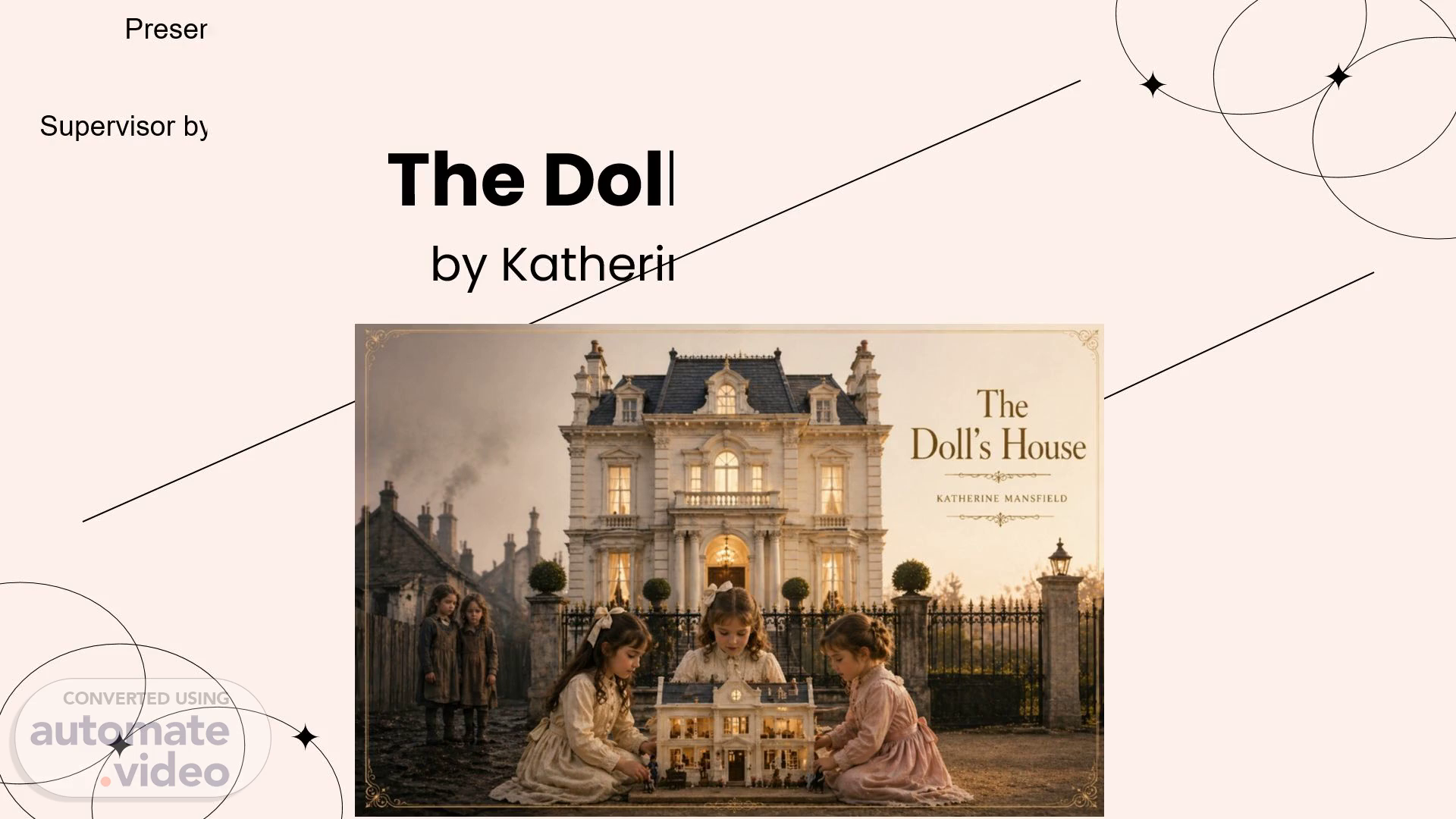
The Doll’s House by Katherine Mansfield. Presented by Myasar Saad Section EF Supervisor by Prof. Maysoon Taher Muhi.
Scene 2 (10s)
About the outher. Katherine Mansfield was a famous modernist writer. She was born in New Zealand in 1888. She wrote many short stories about family and society. Her stories often show social class differances. She died in 1923 at a young age..
Scene 3 (34s)
Introduction to the Story. 03. “The Doll’s House” by Katherine Mansfield is a short story about children and a doll’s house that becomes the center of attention at school. Through this, the story shows how some children are treated unfairly because of their social class, while others show kindness and empathy..
Scene 4 (59s)
Main Characters. Isabel Burnell: The eldest sister, proud and likes to control others. Lottie Burnell: Quiet and follows her sisters. Kezia Burnell: Kind and caring, treats others fairly. Lil Kelvey: Poor girl, shy and often excluded. Else Kelvey: Very quiet, follows her sister Lil..
Scene 5 (1m 26s)
Plot Summary (Beginning). 05. The Burnell children receive a beautiful doll’s house as a gift. They are very excited and proud of it. At school, they begin telling other children about it. Most children are allowed to come and see it. But the Kelvey sisters are not invited because they are poor..
Scene 6 (1m 51s)
Plot Summary. 06. The Kelvey sisters are always treated badly because they are poor. Their mother works as a cleaner, so other children avoid them. Kezia feels sorry for them and secretly invites them to see the doll’s house. They are very happy, especially Else when she sees the little lamp inside the house. Then Aunt Beryl becomes angry and sends them away.
Scene 7 (2m 19s)
Symbols. 07. The doll’s house is the main symbol in the story. It represents wealth, social class, and the difference between rich and poor people. The little lamp inside the house is another important symbol. It represents hope, kindness, and beauty. For Else Kelvey, the lamp is the most special part because it gives her happiness..
Scene 8 (2m 46s)
Comparison Between the Two Families. 08. The Burnell family is rich and has a high social status. The children are treated with respect and are allowed to share the doll’s house with others at school. They live a comfortable and happy life..
Scene 9 (3m 20s)
Themes. 10. 1. Social Class: The story shows strong differences between rich and poor. 2. Discrimination: Poor children are treated unfairly just because of their family. . Kindness: Kezia shows kindness while others are rude. 4. Innocence: Children copy adult behavior without understanding it fully..
Scene 10 (3m 48s)
Conclusion “The Doll’s House” is a story about unfair society. It shows how social class can affect relationships. It also shows that small acts of kindness are important. The story teaches us to treat everyone equally.