Scene 1 (0s)
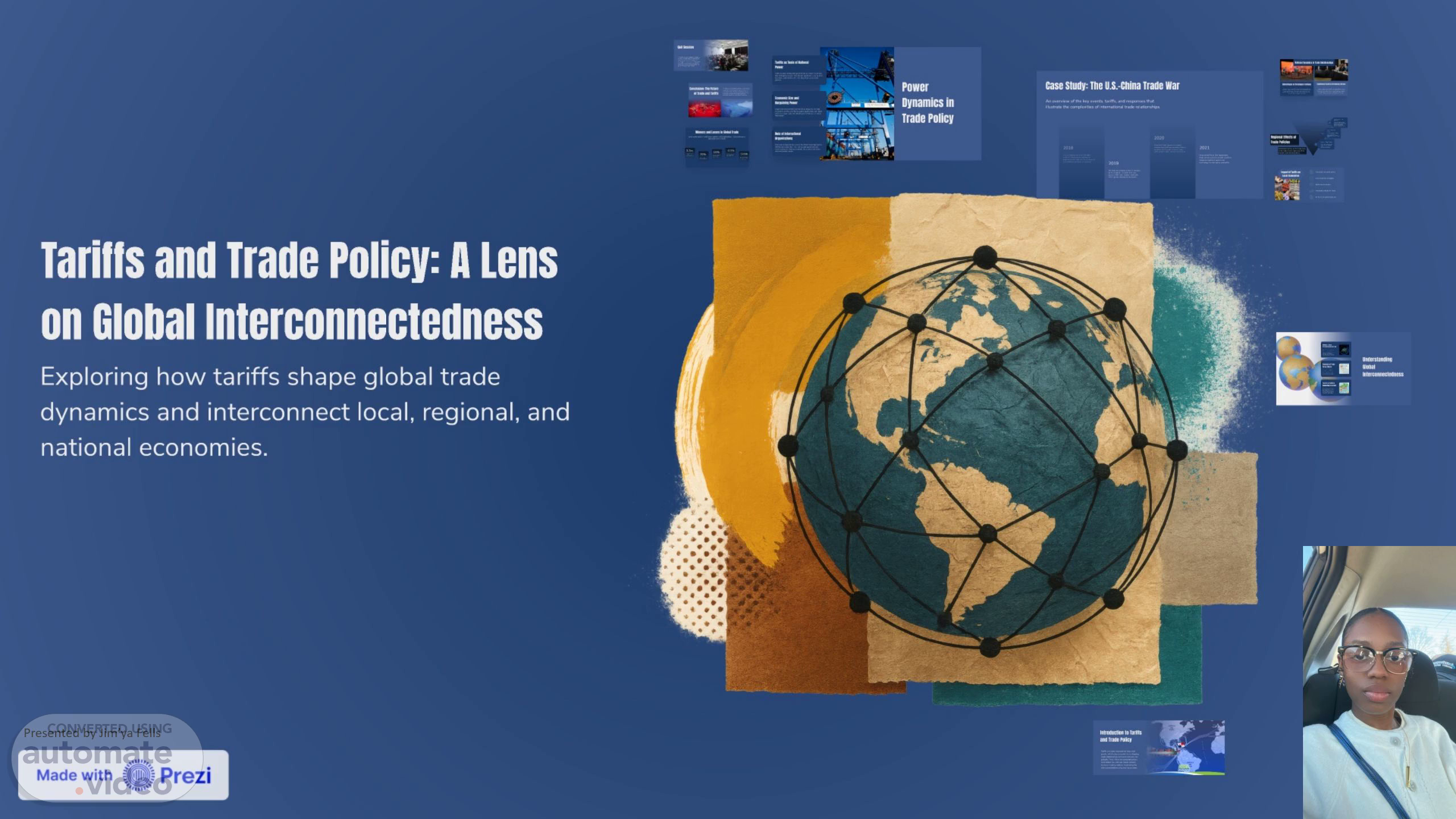
case Stutv: The U.S.•na war Dynamics Trade poucy Tariffs and Trade Policy: A Lens on Global Interconnectedness Exploring how tariffs shape global trade dynamics and interconnect local, regional, and national economies. Made with Prezi.
Scene 2 (14s)
Introduction to Tariffs and Trade Policy Tariffs are taxes imposed on imported goods, which play a crucial role in shaping trade relationships and economic policies globally. They influence consumer prices, local industries, and can create tension between trading nations, illustrating the interconnectedness of global economies. Made with Prezi AMÉRICA DEL NORTE AMÉRICA.
Scene 3 (29s)
Definition ot Global Interconnectedness Trade the •oeb o' that Of These ore oaten 00—5. Examples ot Trade Policy Effects the WS Chru not U S. and Chinese but "o or commnerts to tt'ese shows The Role ot Tariffs in connecting Economies a' tod' that Chaim, each t'Ne st'"eqv. Understanding Global Interconnectedness Made with Prezi.
Scene 4 (42s)
Definition ot Global Interconnectedness in Trade Global interconnectedness in trade refers to the complex web of economic relationships that countries share through the exchange of goods, services, and capital. These relationships are influenced by trade policies, creating a system where the actions of one nation can significantly impact others. Made with Prezi.
Scene 5 (57s)
Examples ot Trade Policy Effects For instance, tariffs imposed by the U.S. on Chinese goods lead to retaliatory tariffs by China, affecting not only U.S. and Chinese economies but also countries that export raw materials or components to these nations. This shows how interconnected trade policies can create a ripple effect across the globe. Made with Prezi COMPANY SPAIN CRA Dutch GREENLAND AIL AN 1 'C O' TAN C, UINTA conacco PERU snivri:oii".. JAM-NV A AFRICA GOOD oc.ADtwept.
Scene 6 (1m 17s)
The Role of Tariffs in connecting Economies Tariffs act as tools that connect economies by regulating trade flows. They can protect domestic industries from foreign competition while impacting global supply chains. Tariffs create economic ties between nations, reflecting their interdependence and influencing each country's trade strategy. Made with 6)) Prezi OCÉA.Vo 25/12/91; Gorbåchov tymiti& nte de la URSS bon«w dö Ja su Rosia. , Stoniay 1990; Moldavi' Öoab$' toenas %ipendea/ 1988; enfrentam.ento entre armemos y azenes 1939; Pacto entre Molotov Von Ribbentrop (formaaon de latJRSS) 1990; Boris VeRsin ("esi&nte parlamento ruso) impuso . —r naci05smo aoarece rnw.s para terminar con la epub€as c auca E S PAHA RAN SutWR'CA'•.
Scene 7 (1m 42s)
Impact of Tariffs on Local Economies Ail Rose de Lautrec A'i Rose de Lautrec .O Ail Rose de Lautrec Ad Rose de lautrec Ail Rose de Rose Increased consumer prices Local business struggles Job losses in sectors Increased production costs Shifts in consumer behavior Made with Prezi.
Scene 8 (1m 54s)
Regional Ettects ot Trade Policies Understanding how tariffs shape trade relationships across regions and their broader economic implications. Made with Prezi Impact on Regional Trade Agreements Tariffs can hinder or enhance cooperation among neighboring countries, affecting trade agreements and partnerships. Effects on Neighboring Countries Changes in trade policy can lead to economic advantages or disadvantages for countries that share borders, influencing their trade balance. Economic Ripple Effects Tariffs create cascading effects in regional economies, influencing local industries, employment rates, and consumer prices..
Scene 9 (2m 14s)
National Dynamics in Trade Relationships Advantages of Developed Nations Developed nations, such as the U.S., have significant advantages in trade negotiations, including established economic power, advanced technologies, and strong diplomatic ties. This enables them to set trade norms and standards that often benefit their economic interests, allowing them to exert considerable influence over global trade policies. Made with 0)) Prezi challenges Faced by Developing Nations Conversely, developing nations like China face unique challenges in trade negotiations. While they are large markets with growing economies, they often contend with power imbalances, which can lead to dependency on developed nations. Their bargaining power can be limited by their need for access to advanced technologies and capital, making negotiations more complex..
Scene 10 (2m 45s)
case study: The U.S.-China Trade war An overview of the key events, tariffs, and responses that illustrate the complexities of international trade relationships. 2020 Phase One Trade Agreement is signed, reducing some tariffs and increasing Chinese purchases Of U.S. goods. However, many tariffs remain in place, and tensions continue. 2018 The U.S. imposes tariffs on $34 billion worth of Chinese goods. marking the beginning of thc trade war. China responds with retaliatory tariffs on US. products. Made with Prezi 2021 Despite the Phase One Agreement, trade tensions persist as both countries navigate ongoing disputes over technology, human rights, and tariffs. 2019 The trade war escalates as the U.S. increases tariffs on $200 billion worth of Chinese goods to 25%. China retaliates with tariffs on U.S. goods, affecting various sectors..
Scene 11 (3m 20s)
Tariffs as Tools ot National Power Tariffs are often employed by governments as a means to enhance their strategic leverage in international negotiations. allowing them to protect local industries while wielding influence over trade partners. Economic Size and Bargaining Power Larger economies tend to have more bargaining power in trade discussions, as they can influence global supply chains and impact prices on a larger scale, often dictating terms that smaller nations must accept. Role of International organizations International organizations. such as the World Trade Organization (W TO), play crucial roles in facilitating trade agreements and resolving disputes, helping to maintain fair practices and reduce tensions between nations. Made with Prezi power Dynamics in Trade Policy.
Scene 12 (3m 47s)
Tariffs as Tools ot National power Tariffs are often employed by governments as a means to enhance their strategic leverage in international negotiations, allowing them to protect local industries while wielding influence over trade partners. Made with Prezi.
Scene 13 (3m 59s)
Economic size and Bargaining Power Larger economies tend to have more bargaining power in trade discussions, as they can influence global supply chains and impact prices on a larger scale, often dictating terms that smaller nations must accept. Made with Prezi.
Scene 14 (4m 12s)
Role of International organizations International organizations, such as the World Trade Organization (W TO), play crucial roles in facilitating trade agreements and resolving disputes, helping to maintain fair practices and reduce tensions between nations. Made with Prezi.
Scene 15 (4m 25s)
winners and Losers in Global Trade Analyzing the impacts of tariffs reveals significant shifts in job markets, industry performance, and overall economic health. 3.7m U.S. jobs lost in manufacturing since 2000 due to trade imbalances and tariff impacts. Made with Prezi 200/0 Increase in prices for American consumers on certain imported goods due to tariffs. Gains for U.S. steel industry. resulting in increased production and jobs. -0.5% Projected decrease in U.S. GDP due to escalating tariffs on Chinese imports. $200b Estimated economic losses for China from U.S. tariffs and trade restrictions..
Scene 16 (4m 52s)
Conclusion: The Future ot Trade and Tariffs The analysis of tariffs and trade policies reveals a complex landscape of global interconnectedness that shapes economies and societies at multiple levels. As nations navigate the repercussions of the U.S.- China trade war, future trade policies will likely reflect a balance of power dynamics, emphasizing cooperation and competition among global players, and adapting to ongoing challenges such as technological advancement and shifting economic partnerships. (anil guita Ente uaitr frot' "ris •festue Ani Emat liiii repilit hetu• Yilqsi Inims Inuti Tiiiti Villiti Illivia Inn tiile Agutiu Iruyuy Made with 0)) Prezi.
Scene 17 (5m 13s)
session This session invites the audience to engage in an open discussion about the complexities of tariffs and trade policies. Participants are encouraged to ask questions and share insights on how these policies impact local and global economies, as well as the power dynamics at play in international trade relations. Made with Prezi.