Scene 1 (0s)
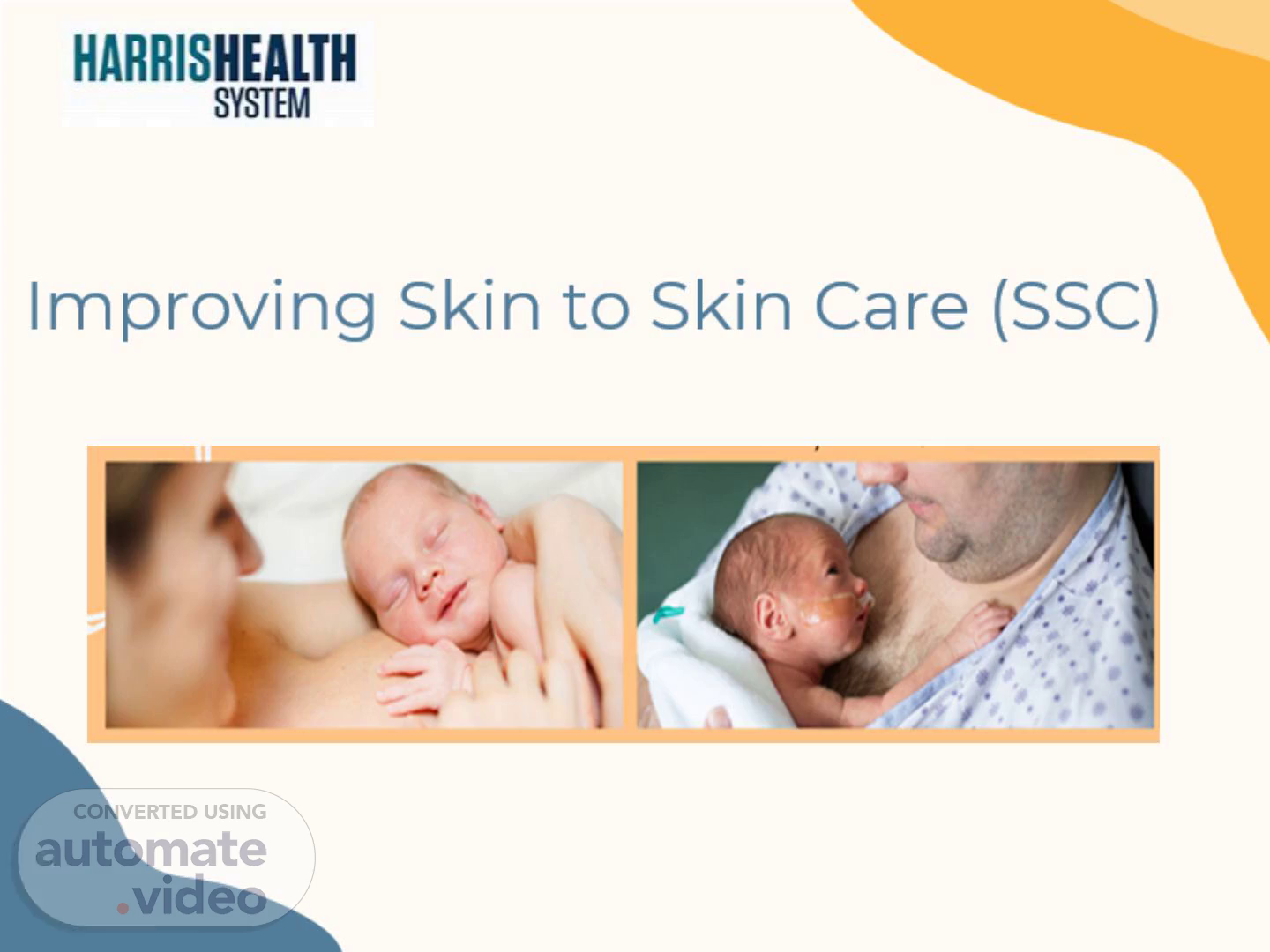
[Audio] Skin to Skin Care has been linked to increased feelings of comfort and relaxation in both mothers and babies. This is because the physical touch stimulates the release of oxytocin, also known as the "love hormone," which promotes bonding and attachment between caregivers and their newborns. By incorporating S-S-C into our daily routine in N-I-C-U, we can promote better health outcomes for our patients..
Scene 2 (28s)
[Audio] For our learning objectives, we will learn our current baseline data to determine where we stand now. We will discuss ways to increase the frequency of these sessions. Finally, we will be able to identify the desired outcomes we wish to achieve following our intervention. By establishing clear objectives, we can develop targeted strategies to enhance our practice.
Scene 3 (51s)
[Audio] Based on the graph, last May, missed opportunities were at 50%. By June and July, this decreased substantially to 22%. Compared to the three month period last year, we see a significant increase in parental participation in S-S-C. While this progress is encouraging, there remains meaningful opportunity to further strengthen engagement and continue reducing missed SSC opportunities..
Scene 4 (1m 18s)
[Audio] It is essential to identify the root causes of missed S-S-C opportunities. A likely contributing factor is that staff may not always recognize when an infant is clinically stable and eligible for S-S-C. In addition, the absence of clear visual cues or reminders at the bedside may limit staff awareness that a patient is ready to transition to S-S-C..
Scene 5 (1m 43s)
[Audio] As part of the intervention strategy, S-S-C acrylic reminder will be used as visual cues to support timely initiation of skin-to-skin care. During daily rounds, the neonatal team evaluates each infant to determine whether they meet the clinical criteria for S-S-C. Once the team confirms eligibility, the bedside nurse immediately places the acrylic reminder on the infant's bed. This visual indicator helps ensure that all staff are aware that the infant is stable and appropriate for skin-to-skin contact, promoting consistent communication and reinforcing the practice throughout each shift..
Scene 6 (2m 19s)
[Audio] Eligibility for S-S-C. is determined through a daily, individualized assessment of each infant. Any infant may qualify for S-S-C. if clinical stability is established. Infants with an endotracheal (ET) tube may participate, provided the tube is well-secured and functioning properly. Those with intravenous access—including peripheral IVs, PICC lines, or central lines—must also have all lines securely positioned prior to transfer. In addition to meeting these clinical criteria, S-S-C requires that a parent or family member is present and willing to participate. These provisions ensure that S-S-C is implemented safely while maximizing opportunities for parent–infant bonding..
Scene 7 (3m 8s)
[Audio] Infants with any of the following conditions require interdisciplinary team discussion to determine if S-S-C is safe: Arterial line present (umbilical or peripheral) Humidity requirements > 75% Presence of chest tubes Extremely and Very Low Birth Weight infants admitted within 72 hours Critically ill neonates receiving vasopressors Infants undergoing phototherapy.
Scene 8 (3m 38s)
[Audio] We aim to reduce missed opportunities for S-S-C in the NICU by 5% within three months. Success will be measured through weekly audits of S-S-C initiation and staff adherence to the S-S-C protocol. Continuous feedback loops, including visual reminders and bedside prompts, will support the achievement and sustainability of this goal..
Scene 9 (4m 3s)
References. Balasundaram P, Frascone M, Wnukowski S, Murphy A G, Connors J. (2024). A Quality Improvement Initiative to Increase Skin-to-Skin Care Duration in Preterm Neonates. Hospital Pediatrics, 14(4), 291–299. Lati, I., Carrasquilla-Lopez, V., Chakravorty, B., Bhutada, A., & Khan, M. (2025). Improving Skin-to-Skin Care Among Stable Infants in a Level III NICU: A Quality Improvement Project Using Kotter's Change Management Model. Cureus, 17(7), e87735. https://doi.org/10.7759/cureus.87735 Murthy, R., et al. (2023). Sustaining extended Kangaroo mother care in stable low birthweight infants: a point-of-care quality improvement initiative. BMJ Open Quality, 12(Suppl 3), e002307. https://bmjopenquality.bmj.com/content/12/Suppl_3/e002307.