Scene 1 (0s)
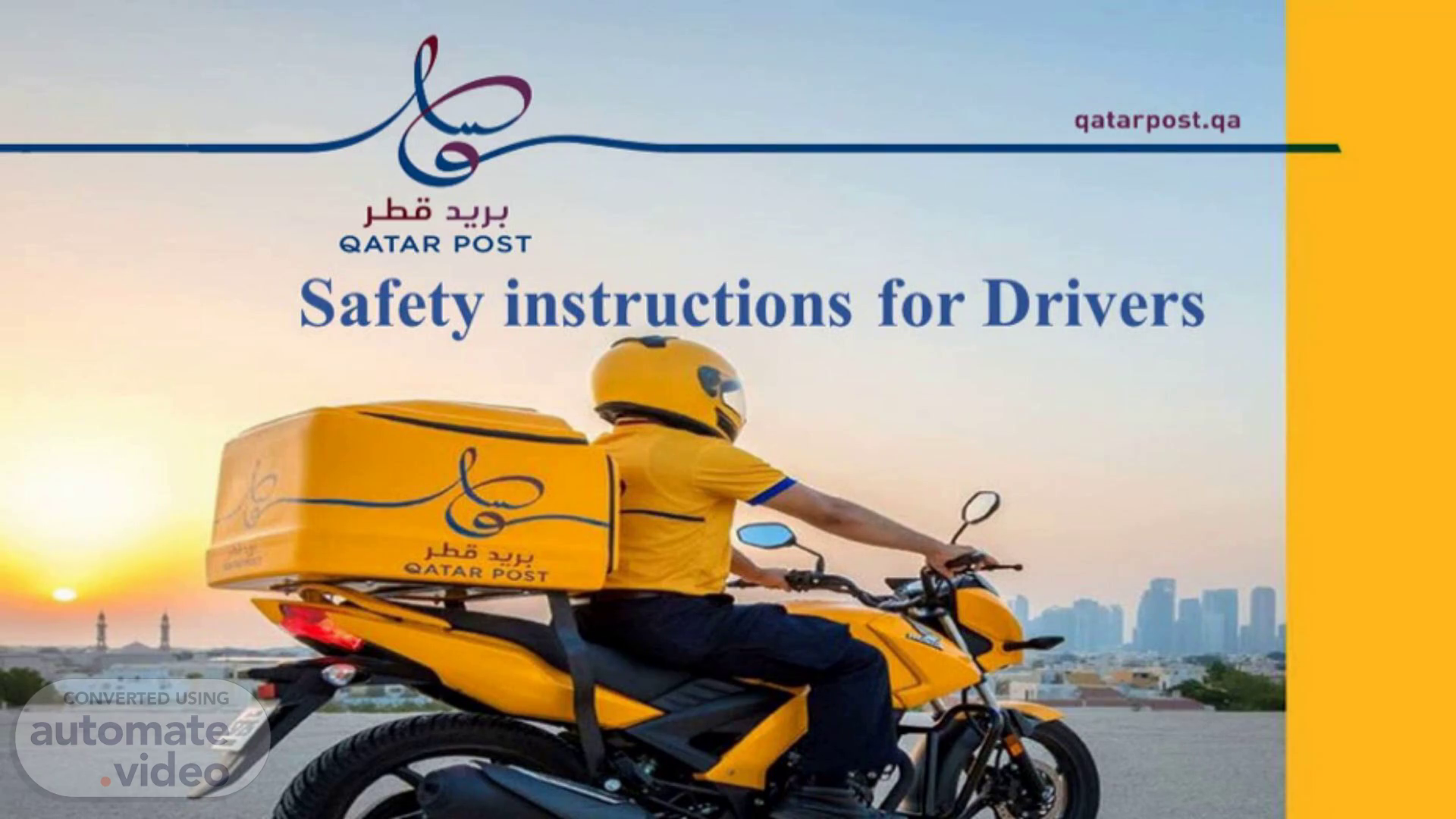
qatarpost.qa QATAR POST Safety instructions for Drivers QATAR.
Scene 2 (1m 3s)
[Audio] The company has implemented several measures to ensure the safety of its employees. One of these measures is the creation of a safety manual for drivers. This manual outlines specific guidelines and procedures that must be followed by drivers when operating vehicles. The manual also includes information about emergency procedures and first aid. By providing this information, Qatar Post aims to minimize the risk of accidents and injuries to its employees. The company also conducts regular training sessions for drivers to reinforce their knowledge and skills. These training sessions cover topics such as defensive driving techniques and hazard recognition. Additionally, Qatar Post has established a system for reporting incidents and near-misses. This system allows employees to report any concerns or issues they encounter during their work. The company takes these reports seriously and investigates them thoroughly. As a result, Qatar Post has seen significant improvements in employee safety over time. The company's proactive approach to safety has earned it a reputation as a leader in the industry..
Scene 3 (2m 16s)
[Audio] The driver must be aware of the safety features of their vehicle and take steps to maintain them. The driver should also be aware of the road conditions and traffic rules. The driver must be able to drive safely and efficiently. The driver must be aware of the weather conditions and adjust accordingly. The driver must be aware of the time of day and adjust accordingly. The driver must be aware of the type of vehicle they are driving and adjust accordingly. The driver must be aware of the number of passengers and adjust accordingly. The driver must be aware of the cargo or luggage being transported and adjust accordingly. The driver must be aware of any special needs or requirements of the passengers and adjust accordingly. The driver must be aware of the location of emergency services and have a plan in case of an accident. The driver must be aware of the location of first aid kits and have a plan in case of an injury. The driver must be aware of the location of spare parts and tools and have a plan in case of a breakdown. The driver must be aware of the location of fuel and have a plan in case of running out of fuel. The driver must be aware of the location of parking facilities and have a plan in case of parking difficulties. The driver must be aware of the location of waste management facilities and have a plan in case of waste disposal issues. The driver must be aware of the location of public transportation options and have a plan in case of transportation difficulties. The driver must be aware of the location of rest stops and have a plan in case of fatigue. The driver must be aware of the location of food and beverages and have a plan in case of hunger or thirst. The driver must be aware of the location of medical facilities and have a plan in case of illness or injury. The driver must be aware of the location of hotels and have a plan in case of overnight stays. The driver must be aware of the location of tourist attractions and have a plan in case of sightseeing. The driver must be aware of the location of local customs and traditions and have a plan in case of cultural differences. The driver must be aware of the location of emergency phone numbers and have a plan in case of emergencies. The driver must be aware of the location of roadside assistance services and have a plan in case of breakdowns. The driver must be aware of the location of repair shops and have a plan in case of vehicle repairs. The driver must be aware of the location of insurance companies and have a plan in case of accidents. The driver must be aware of the location of police stations and have a plan in case of law enforcement. The driver must be aware of the location of hospitals and have a plan in case of serious injuries. The driver must be aware of the location of schools and have a plan in case of school-related activities. The driver must be aware of the location of shopping centers and have a plan in case of shopping difficulties. The driver must be aware of the location of entertainment venues and have a plan in case of leisure activities. The driver must be aware of the location of government offices and have a plan in case of official business. The driver must be aware of the.
Scene 4 (5m 28s)
[Audio] The importance of having a fire extinguisher in every vehicle cannot be overstated. A fire can spread rapidly and cause irreparable harm to people and property. Neglecting to maintain a fire extinguisher is a serious offense that puts everyone's safety at risk. It is crucial to regularly check and renew the fire extinguisher to ensure it remains effective. Moreover, many fires can be prevented by taking simple precautions such as avoiding electrical wire damage and keeping a safe distance from generators and flammable materials. Additionally, smoking inside the vehicle or station is strictly prohibited, and so is stopping near these hazardous materials. By following these guidelines, we can significantly reduce the risk of fire-related accidents and ensure a safer driving experience..
Scene 5 (6m 20s)
[Audio] The driver must keep a safe distance from the vehicle in front of him to avoid accidents, especially rear-end collisions. This distance allows enough time for the driver to react to unexpected situations, such as sudden stops or changes in weather conditions. The recommended safety distance varies depending on the circumstances and driving environment, but generally, it should not be less than 5-10 meters. In rainy or windy conditions, this distance should be increased even further. Furthermore, increasing speed requires a longer safety distance to account for the additional time needed to stop. Ignoring these safety guidelines can lead to serious consequences, including minor traffic accidents caused by insufficient safety distance. Drivers who fail to observe these rules or deliberately follow too closely behind another vehicle put themselves and others at risk. Maintaining a safe distance is crucial for ensuring the safety of all road users..
Scene 6 (7m 25s)
[Audio] The driver who was involved in the overtaking incident was fined QR 500 under article 43/1 of the traffic law. The fine was imposed because the driver failed to yield to the vehicle in front of him. He had been driving at a high speed and was attempting to overtake another vehicle when he crossed the center line. The driver's failure to yield resulted in a collision with another vehicle. Fortunately, no one was injured in the accident. However, the driver was charged with reckless endangerment due to his aggressive driving behavior. The court found that the driver's actions were a clear violation of traffic laws and regulations. The driver was sentenced to three years probation and ordered to attend traffic school. The driver was also required to pay a fine of QR 500. The total amount paid by the driver was QR 1000. The driver was given a warning about the dangers of aggressive driving. The driver was also advised to take defensive driving courses to improve his skills. The driver was allowed to keep his license but was required to attend traffic school. The driver was also required to install a dash cam in his vehicle..
Scene 7 (8m 39s)
[Audio] Seat belts are a critical component of safe driving practices. They play a vital role in reducing the risk of injury or fatality in the event of an accident. Wearing a seat belt minimizes the severity of accidents and reduces the likelihood of serious harm. Many drivers fail to wear their seat belts consistently. The consequences of not wearing a seat belt can be severe, including fines and penalties. Drivers who do not wear a seat belt may face a fine of up to QR 500 in some countries. Adhering to traffic safety regulations promotes a culture of responsible driving. Drivers have a significant responsibility to respect the rights of other road users, such as pedestrians and other motorists. Respecting these rights contributes to a safer and more respectful driving environment. The use of seat belts is essential for ensuring the safety and well-being of all road users..
Scene 8 (9m 39s)
[Audio] The driver must be aware of the road conditions and adjust their speed accordingly. The driver should always keep a safe distance from other vehicles. The driver should use gentle and smooth movements when operating the vehicle. The driver should check the condition of the vehicle's wipers and windshield regularly. The driver should avoid excessive speeds, tailgating, and making unnecessary lane changes. The driver should be aware of the weather conditions and adjust their speed according to the road conditions. The driver should anticipate potential hazards such as black ice and standing water. The driver should take necessary precautions to ensure safety while driving in rainy conditions. The driver should stay focused and alert at all times. The driver should not drive through flooded areas unless absolutely necessary. The driver should not drive too fast for the road conditions. The driver should not follow another vehicle too closely. The driver should not make any sudden movements. The driver should not drive under heavy loads. The driver should not drive during periods of poor visibility. The driver should not drive during periods of heavy rain. The driver should not drive during periods of strong winds. The driver should not drive during periods of thunderstorms. The driver should not drive during periods of icy roads. The driver should not drive during periods of snow. The driver should not drive during periods of fog. The driver should not drive during periods of freezing temperatures. The driver should not drive during periods of low visibility. The driver should not drive during periods of high winds. The driver should not drive during periods of lightning storms. The driver should not drive during periods of icy roads. The driver should not drive during periods of frost. The driver should not drive during periods of sleet. The driver should not drive during periods of freezing rain. The driver should not drive during periods of heavy snowfall. The driver should not drive during periods of blizzard conditions. The driver should not drive during periods of extreme cold. The driver should not drive during periods of extremely low visibility. The driver should not drive during periods of very high winds. The driver should not drive during periods of severe thunderstorms. The driver should not drive during periods of extremely low air pressure. The driver should not drive during periods of extremely high air pressure. The driver should not drive during periods of extremely high humidity. The driver should not drive during periods of extremely low humidity. The driver should not drive during periods of extremely high temperature. The driver should not drive during periods of extremely low temperature. The driver should not drive during periods of extremely high wind chill. The driver should not drive during periods of extremely low wind chill. The driver should not drive during periods of extremely high barometric pressure. The driver should not drive during periods of extremely low barometric pressure. The driver should not drive during periods of extremely high atmospheric pressure. The driver should not drive during periods of extremely low atmospheric pressure. The driver should not drive during periods of extremely high dew point. The driver should not drive during periods of extremely low dew point. The driver should not drive during periods of extremely high heat index. The driver should not drive during periods of extremely low heat index. The driver should not drive during periods of extremely high wind speed. The driver should not drive during periods of extremely low wind speed. The driver should not drive during periods of extremely high gust wind. The driver should not drive.
Scene 9 (13m 30s)
[Audio] The driver should be aware that fog reduces visibility significantly. The driver must take steps to ensure safety while driving in foggy conditions. This includes slowing down and adjusting speed according to the conditions. The driver should also use their fog lights and low beam headlights to increase visibility. High beams should not be used because they can cause glare from the moisture droplets in the fog. Emergency flashers should only be used in emergencies. Drivers should keep their windshields and windows clear by using their defrosters and wipers. Keeping windows and mirrors clean is essential for maintaining good visibility. When driving in foggy conditions, drivers should exercise extreme caution when passing, overtaking, changing lanes, or crossing traffic. More space should be allowed between vehicles due to reduced visibility. Drivers should stay focused on the road and avoid distractions like turning off their music or radio. In extremely dense fog, drivers should pull over to a safe location and activate their emergency flashers..
Scene 10 (14m 46s)
[Audio] The use of vehicle signals and car indicators is mandatory for all vehicles. Vehicle signals are used to indicate direction changes, while car indicators are used to signal intentions to turn or change lanes. Both types of signals are critical components of safe driving practices. Drivers must be aware of their surroundings and anticipate potential hazards when using these signals. The failure to do so can lead to accidents and injuries. Furthermore, the lack of proper signaling can also hinder emergency response efforts. In some cases, the absence of signals altogether can even lead to fatalities. Therefore, it is imperative that drivers take the necessary steps to ensure they are utilizing these signals correctly. This includes understanding the different types of signals available and how to properly use them. By doing so, drivers can significantly reduce the risk of accidents and contribute to maintaining a safer transportation system..
Scene 11 (15m 52s)
[Audio] The motorcycle driver must wear a helmet at all times while driving. Helmet use has been proven to save lives. Drivers should also check their vehicle's safety equipment before each ride. This includes checking the condition of the tires, lights, and other safety features. Regular maintenance is crucial for preventing accidents. The driver should perform daily checks on the vehicle to identify any potential issues. This could include inspecting the brake pads, horn, and other vital systems. By taking these precautions, the motorcyclist can minimize the risk of an accident occurring..
Scene 12 (16m 34s)
[Audio] The safety procedures for accidents are not clearly defined in this document. The lack of clear guidelines may lead to confusion among employees and potentially result in accidents being mishandled or ignored. The absence of specific protocols for emergency situations may cause delays in responding to incidents, which can have severe consequences. Furthermore, the failure to establish a clear chain of command during emergencies may hinder effective communication and decision-making. The current system lacks transparency and accountability, making it difficult to identify and address issues promptly. The absence of standardized training programs for employees may also contribute to inadequate preparedness and response to accidents..
Scene 13 (17m 24s)
[Audio] The safety of all employees is of utmost importance to us. We take every precaution to minimize risks and prevent accidents. However, we also recognize that accidents can still occur despite our best efforts. In such cases, it is crucial to have a plan in place to respond quickly and effectively. This plan should include clear communication, swift action, and a thorough understanding of emergency procedures. We encourage all employees to familiarize themselves with this plan and participate actively in its implementation. By doing so, we can collectively reduce the risk of accidents and create a safer working environment. The safety of our employees is our top priority, and we will continue to work tirelessly to ensure their well-being..