Scene 1 (0s)
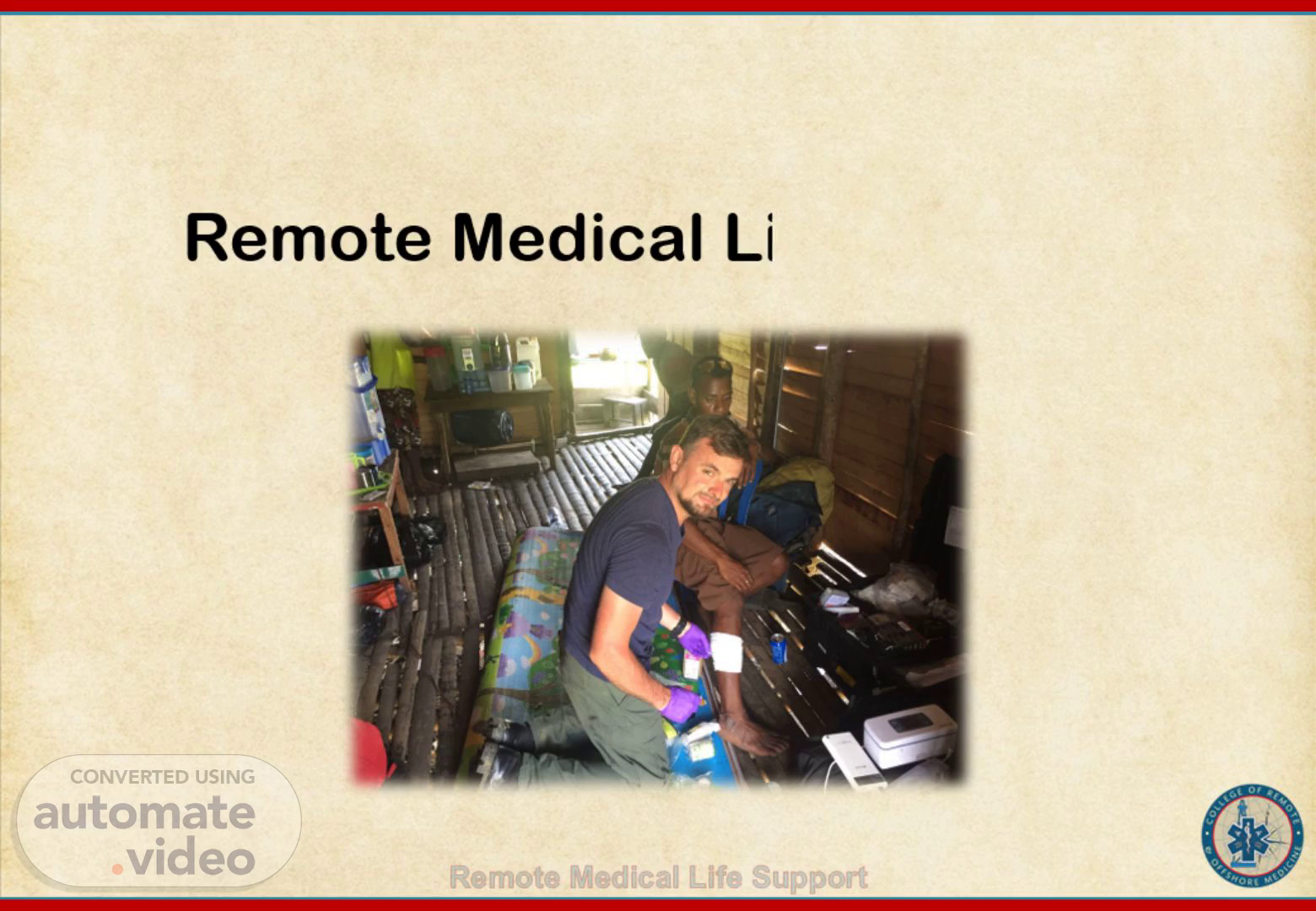
Remote Medical Life Support. [image].
Scene 2 (12s)
Who is CoROM?. The concept of CoROM was started by US Army Green Berets, UK SAS Medics and physicians located around the globe. It is an educational not-for-profit institution that provides academic backed training, research and membership for health care professionals working in the remote, offshore, military, energy and security industries..
Scene 3 (1m 13s)
CoROM Degree Options. Higher Diploma of Remote Practice Paramedic This two year programme focuses on the practice of medicine for the healthcare professional working in remote, austere and resource poor environments. This is equivalent to the level 5 Diploma of Paramedic Science and the Associates Degree..
Scene 4 (2m 9s)
Who is CoROM?. CoROM online CPD/CMS courses. Pharmacology for the Remote Medic This course provides an excellent background of knowledge on the most common drugs encountered by those who manage and treat adults in remote settings..
Scene 5 (3m 45s)
The RMLS is a three day course that focuses on the top twenty ailments seen by remote medics, military medics or any healthcare provider working in austere locations. According to research conducted by the Department of Defence, the majority of injuries and ailments found in a deployed setting fall into non combat injury category. Therefore, Disease and Non Battle Injuries (DNBI) cause more interruption and loss of production than any other type of injuries. Additionally, civilian remote medics see that 18 of the top 20 injuries and ailments are non trauma based. This article is based on that research. Therefore, CoROM has used this research to design and launch the Remote Medical Life Support course..
Scene 6 (4m 43s)
Identify potential emergencies and emergency response List steps in planning and operating a clinic Identify possible community assets and resources in response to public health threats Consider plans for internal and external communication.
Scene 7 (5m 6s)
CoROM Paramedic working in Africa.
Scene 8 (5m 24s)
What will you be facing?. Trauma: Falls from height, RTC… Infectious Disease: Influenza, Malaria, SARS… Local Infectious Disease: Food Handler with Hepatitis A, Meningitis Case… Natural or Man-Made Disaster: Floods, Earthquakes, Drought….
Scene 9 (5m 51s)
Resources. Timeline and scope of response Do you have a physician via telemedicine? Identify sites where the local community will treatment Staffing provided by FPOS/MIRA and other professionals Equipment Where are you getting your initial setup supplies? Where are you getting resupplied? How do you request additional supplies?.
Scene 10 (6m 20s)
Allocate and Train your Team. Who can you train to assist you? What level can you train them to? Who will treat you if you get injured? What is your personal evac plan?.
Scene 11 (6m 46s)
Target population Required response Capacity Staff roles and job descriptions Timeline Location and clinic flow Communication Security & safety issues Process of vaccinating/dispensing Turfing….Where do you send your patients for further care?.
Scene 12 (7m 11s)
CoROM Paramedic on ship.
Scene 13 (7m 26s)
Identify leadership Identify space, location, dates, times of clinic Obtain authorisation from local public health authorities Design SOPs for vaccine, medication, and emergency Order and arrange for delivery and storage of clinic supplies Security for scheduled medications Obtain necessary paperwork/documentation/information Assign set up, breakdown, and clean up duties Determine client flow from arrival to departure Method for disposal of sharps/biohazards.
Scene 14 (8m 6s)
Choosing a site. Floor space Parking Climate controlled Refrigeration for medications Insect security Lighting Toilets Kitchen area Security (inside and outside) Landline/mobile phone reception/internet access.
Scene 15 (8m 27s)
CoROM Paramedic in Basra.
Scene 16 (8m 44s)
Security. Maintain a list of authorised staff Establish staff sign-in/sign-out procedures, including identification Weapon safety / ammo clearing station Develop policies and identify locations to secure medication and supplies Consider availability of security response.
Scene 17 (9m 9s)
Signage. Clinic location and times Important information/instruction for target populations One-way flow of traffic inside EDS Written in all languages in vicinity Designated clinic areas Entrances, exits, toilets Smoking area Inside and outside facility.
Scene 18 (9m 34s)
Prepare for the worst. [image] 12essay.
Scene 19 (9m 47s)
Everyone is on the same page Different terms and concepts across cultures Lack of training Misinterpretation of roles.
Scene 20 (10m 5s)
Click here to download the FAWM Brochure. Fellow of the Academy of Wilderness Medicine.
Scene 21 (10m 45s)
Remote Medical Life Support. Gives up to 24 points.
Scene 22 (11m 8s)
Questions?. Any questions regarding this lesson can be sent to:.