Scene 1 (0s)
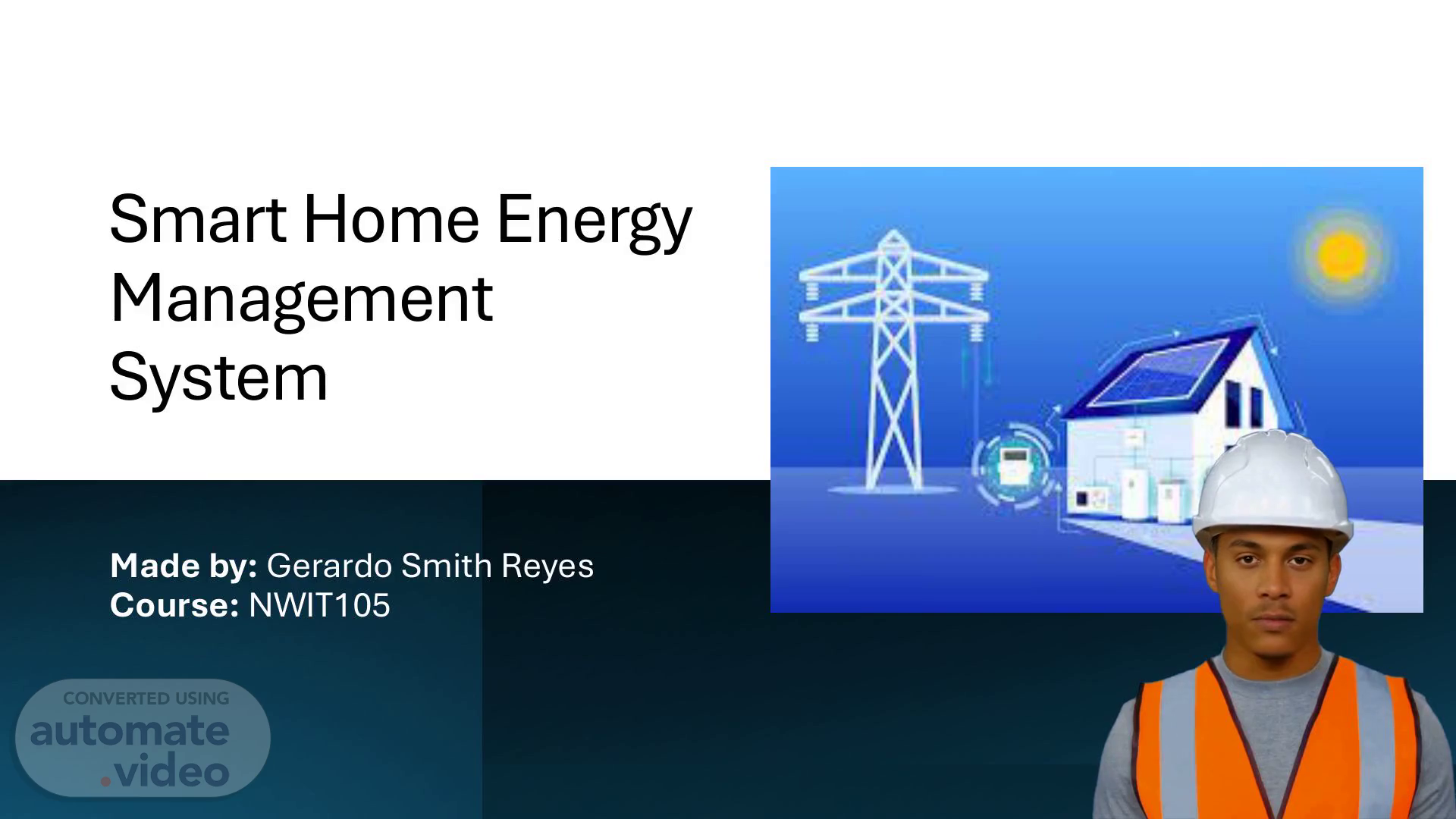
[Virtual Presenter] The Smart Home Energy Management System is a comprehensive solution that integrates various technologies to optimize energy consumption and reduce waste. The system consists of several components, including sensors, smart plugs, and energy monitoring software. These components work together to provide real-time data on energy usage, allowing homeowners to make informed decisions about their energy consumption. By analyzing this data, homeowners can identify areas where they can improve energy efficiency and make adjustments accordingly. For example, if a homeowner notices that their lights are being used excessively during certain hours of the day, they can adjust their lighting schedules to minimize energy waste. Similarly, if a homeowner detects high energy consumption patterns in their appliances, they can take steps to optimize their appliance usage. The system also includes features such as automated energy-saving modes and alerts for unusual energy usage. These features enable homeowners to quickly respond to changes in their energy consumption patterns and make necessary adjustments to maintain optimal energy efficiency. Furthermore, the system provides users with detailed reports and analytics on their energy usage, enabling them to track their progress over time and set realistic goals for improvement. By leveraging these tools and features, homeowners can significantly reduce their energy bills and contribute to a more sustainable future..
Scene 2 (1m 33s)
[Audio] The need for smarter energy usage at home has become increasingly evident due to rising energy costs and growing environmental concerns. As technology advances, it is essential to develop innovative solutions that can help households manage their energy consumption more efficiently. One such solution is presented here, utilizing the Internet of Things (IoT) and Arduino technology to monitor and control electricity usage. By leveraging these tools, we can create a more sustainable and cost-effective way of living. The use of IoT enables real-time monitoring and data analysis, allowing for precise adjustments to be made to optimize energy usage. Meanwhile, Arduino's capabilities provide a user-friendly interface for controlling and automating various aspects of energy management. Together, they form a powerful platform for smart home energy management..
Scene 3 (2m 33s)
[Audio] High energy consumption at home can lead to increased bills due to higher energy expenditure. This can be attributed to various factors including the size and age of appliances, insulation levels, and usage patterns. High energy consumption also contributes to environmental issues such as air pollution and greenhouse gas emissions. Moreover, many households lack real-time monitoring systems, which makes it challenging to track and manage their energy usage effectively. In addition, current energy management systems often lack automation capabilities, resulting in inefficient use of resources..
Scene 4 (3m 12s)
[Audio] The next step in our smart home energy management system is to monitor real-time energy consumption. We will use sensors to track energy usage and send this data to the cloud for analysis. Our goal is to provide a clear picture of how much energy is being used in the home, allowing for more informed decisions about energy efficiency. By sending data to the cloud, we can also access historical usage patterns and identify trends, enabling us to optimize energy usage over time. This data will be displayed on a user-friendly dashboard, providing a visual representation of energy consumption. The dashboard will allow users to easily view their energy usage and make adjustments as needed. Additionally, we plan to automate device control, using Arduino and IoT technology to integrate with various devices in the home. This automation will enable us to remotely monitor and adjust energy usage, further enhancing the overall efficiency of the system. Furthermore, we aim to demonstrate the seamless integration of Arduino and IoT technology, showcasing the potential for innovative applications in smart homes..
Scene 5 (4m 23s)
[Audio] The smart home energy management system consists of three primary components. These include sensors, Arduino, and cloud platforms. The sensors collect data from various sources within the home environment. This data is then processed using the Arduino board. The processed information is then stored and displayed on the cloud platform. Additionally, users have the ability to monitor and control their devices remotely through this system..
Scene 6 (4m 52s)
[Audio] The system's architecture is based on a hierarchical structure with three distinct layers: processing, cloud, and data collection. The processing layer uses Arduino as its primary component, while the cloud layer relies on Firebase for managing dashboards. The data collection layer incorporates sensors to gather information from various sources. This layered approach allows for efficient data processing and analysis, which leads to more accurate and informed decision-making. The integration of these components enables the smart home energy management system to monitor and control energy usage in real-time..
Scene 7 (5m 32s)
[Audio] The hardware components used in this smart home energy management system include an Arduino board, current and voltage sensors, relay modules, an ESP8266 Wi-Fi microcontroller, a sensors module, and household devices such as lamps and chargers. These components work together to monitor and control energy usage in the home. The Arduino board provides a platform for programming and controlling the system. The current and voltage sensors measure the electrical energy being used. The relay modules allow for the control of these devices. The ESP8266 Wi-Fi microcontroller enables wireless communication between devices. The sensors module collects data from various sources, including environmental sensors and other devices. Household devices such as lamps and chargers can be controlled remotely using the system. This integration of hardware components enables efficient and effective energy management..
Scene 8 (6m 37s)
[Audio] The software tools used in this project are Arduino IDE, Firebase, and C/C++. These tools provide a basic level of programming and cloud-based services. The Arduino IDE allows for simple programming using a visual interface. Firebase offers advanced cloud-based services such as data storage and real-time updates. C/C++ provides more complex programming options. All these tools work together to enable the development of a smart home energy management system..
Scene 9 (7m 11s)
[Audio] The system uses Arduino as its processing layer. It sends data to the cloud via Firebase. A simple interface for monitoring and controlling the system was created. Rules and relays were programmed into the Arduino to automate tasks and improve efficiency. The ESP8266 module is used to send data from the sensors to the cloud. This implementation allows for real-time monitoring and control of the smart home energy management system..
Scene 10 (7m 42s)
[Audio] The automation feature allows you to schedule devices to operate when needed, reducing unnecessary usage and improving efficiency. Additionally, it enables you to turn off devices when their usage is too high, thereby reducing operation and energy waste. This feature helps minimize energy waste and optimize device usage. By implementing this automation, you can improve the overall efficiency of your home's energy management system..
Scene 11 (8m 9s)
[Audio] The smart home energy management system was designed to optimize energy consumption by automatically adjusting lighting levels and charging times for electric vehicles. The system uses a network of small devices such as sensors and actuators to monitor and control energy usage. These devices are connected to a cloud-based platform which enables real-time monitoring and analysis of energy consumption patterns. The system also includes an automated functionality that can adjust lighting levels and charging times based on user preferences and external factors such as weather and time of day..
Scene 12 (8m 44s)
[Audio] The Smart Home Energy Management System is designed to monitor and manage energy usage in homes. The system consists of sensors that track energy consumption and automate various tasks such as lighting control and thermostat adjustments. The system also includes a dashboard that displays real-time energy usage data, allowing users to easily view their energy consumption. The automation aspect of the system works well, but there are limitations to its scalability. The system's ability to handle large amounts of data is impressive, but it may not be suitable for very large homes. The team behind the system is committed to addressing these limitations and providing a more comprehensive solution. The system is designed to be efficient, reliable, and user-friendly, making it an attractive option for homeowners who want to reduce their energy bills. The system's performance is based on several key factors, including the type of energy source used, the efficiency of the appliances, and the overall energy usage patterns of the home. By analyzing these factors, the system can optimize energy usage and reduce waste. The system's effectiveness is demonstrated by its ability to monitor and manage energy usage in real-time, allowing users to make informed decisions about their energy consumption. The system's automated features, such as lighting control and thermostat adjustments, help to minimize energy waste and maximize energy efficiency. The system's user interface is intuitive and easy to use, making it accessible to a wide range of users. The system's performance is continually evaluated and improved, ensuring that it remains effective and efficient over time. The team behind the system is dedicated to ongoing research and development, seeking out new technologies and innovations to improve the system's performance. The system's potential for growth and expansion is significant, and the team is committed to exploring new opportunities and applications. The system's impact on the environment is substantial, reducing energy waste and promoting sustainable living. The system's benefits extend beyond just energy savings, as it also provides a sense of convenience and comfort for homeowners. The system's design and functionality are tailored to meet the needs of different types of homes and households. The system's performance is continually evaluated and improved, ensuring that it remains effective and efficient over time. The team behind the system is dedicated to ongoing research and development, seeking out new technologies and innovations to improve the system's performance. The system's potential for growth and expansion is significant, and the team is committed to exploring new opportunities and applications. The system's impact on the environment is substantial, reducing energy waste and promoting sustainable living. The system's benefits extend beyond just energy savings, as it also provides a sense of convenience and comfort for homeowners..
Scene 13 (11m 46s)
[Audio] The company has faced numerous challenges in its smart home energy management system. One major challenge is sensor accuracy issues. The other significant challenge is cloud communication problems. Both of these challenges can lead to inaccurate readings and delayed responses. This affects the overall efficiency and effectiveness of the system. To address these challenges, the company has taken several steps. Firstly, they have calibrated their sensors to improve accuracy. Secondly, they have improved their code and network setup to ensure reliable cloud communication. Thirdly, they have used reliable libraries to further enhance the system's performance. By taking these steps, the company can now provide a more efficient and effective smart home energy management system..
Scene 14 (12m 36s)
[Audio] The team has gained valuable experience in Arduino programming, IoT system design, and cloud integration through this project. This experience will be used to create more complex and efficient systems in the future. Testing and troubleshooting are essential to ensure the reliability and performance of the system. Real-world engineering constraints have been encountered, which highlights the need for careful planning and consideration of various factors when designing and implementing the system. Understanding these challenges and limitations will help develop more effective solutions that meet the needs of users..
Scene 15 (13m 13s)
[Audio] The company has been actively involved in developing innovative solutions for smart homes. The company's mission is to provide a comprehensive solution for managing energy consumption in smart homes. To achieve this goal, the company has developed a Smart Home Energy Management System that can monitor and control various aspects of energy consumption. The system includes several components such as sensors, software, and hardware. The sensors detect changes in temperature, humidity, and light levels, while the software processes the data and provides insights on energy usage patterns. The hardware component consists of a central unit that integrates all the components together. The system is designed to work seamlessly with other devices and systems, allowing users to easily integrate it into their existing infrastructure. The company has also established partnerships with various organizations to promote the adoption of smart home technologies. These partnerships have helped the company to gain valuable insights and expertise in the field of smart home energy management. The company's vision is to create a sustainable future by reducing energy consumption and promoting eco-friendly practices. The company's commitment to innovation and customer satisfaction has earned it a reputation as a leader in the industry. The company's products and services are designed to meet the needs of its customers, providing them with a seamless and efficient experience. The company's dedication to sustainability and environmental responsibility has made it a trusted partner for many organizations and individuals..
Scene 16 (14m 52s)
[Audio] The IoT-based energy management system was designed to optimize energy consumption by monitoring and controlling various parameters such as temperature, humidity, and lighting levels. The system utilized Arduino boards to create a network of sensors that could be easily integrated into existing infrastructure. This allowed for seamless communication between devices and enabled real-time data analysis. The system also incorporated machine learning algorithms to predict energy usage patterns and provide personalized recommendations for energy conservation..
Scene 17 (15m 27s)
[Audio] The company has been working on a new project, which involves developing a smart home energy management system that can monitor and control various aspects of a household's energy usage. The system will be able to track energy consumption patterns, identify areas of inefficiency, and provide recommendations for improvement. It will also include features such as automated energy monitoring, real-time data analysis, and personalized alerts for unusual energy usage. Additionally, the system will have a user-friendly interface that allows homeowners to easily manage their energy usage and make informed decisions about their energy consumption. The goal of this project is to create a more efficient and sustainable energy management system that benefits both homeowners and the environment. The system will be designed to work seamlessly with existing smart home devices and will integrate with popular energy management platforms. The development process involved several stages, including market research, design, prototyping, testing, and validation. The team worked closely together to ensure that the system met the needs of its target audience and was thoroughly tested to guarantee its reliability and performance. The final product is expected to be released soon, and we are excited to share it with the world..