Scene 1 (0s)
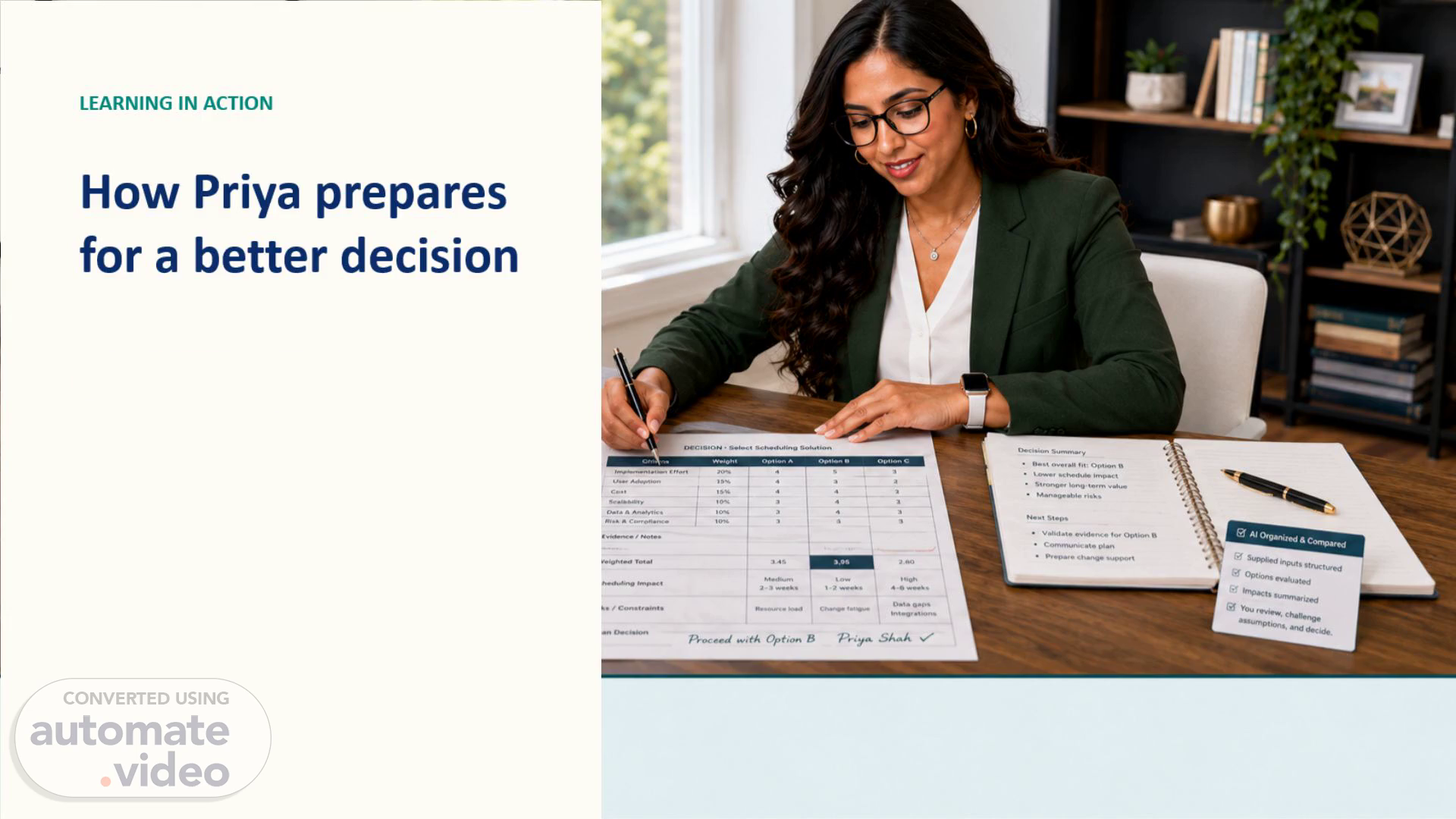
[Audio] Priya has several reasonable scheduling options in front of her. She is not asking AI to choose for her. She is using a structured MJA Academy resource to organize the decision, examine the tradeoffs, and keep human judgment where it belongs—at the center..
Scene 2 (16s)
[Audio] The decision is not simply which option has the highest score. Priya must compare timing, workload, implementation demands, available evidence, and the risks attached to each choice. Every option may solve part of the problem, so she needs a transparent way to see what each one requires..
Scene 3 (36s)
[Audio] This close view shows the actual MJA Decision-Making Matrix. Priya names the decision, defines Options A, B, and C, selects the criteria, assigns weights, adds ratings supported by evidence, and reviews scheduling impacts and risks. The calculated totals support the decision; they do not replace it..
Scene 4 (59s)
[Audio] First, Priya defines the decision, the three options, and the criteria. Then she reveals the weights and supporting evidence. This sequence matters: the values come from Priya—not from AI. AI only receives the information Priya chooses to supply..
Scene 5 (1m 21s)
[Audio] Next, AI organizes Priya's supplied criteria, weights, ratings, and evidence. It can reveal missing information, conflicting constraints, assumptions, and tradeoffs. This is the next stage of the visual sequence—not a final answer. AI does not know which values should lead, and it does not select the option..
Scene 6 (1m 58s)
[Audio] Priya reviews the AI-organized comparison instead of accepting it. After seeing the first comparison, she notices missing evidence and decides one criterion is weighted too heavily. Priya revises the weights, corrects information, identifies a scheduling conflict, and adds context AI did not have. The revised weights are Priya's judgment—not an AI decision..
Scene 7 (2m 27s)
[Audio] In this illustrative example, a responsible leadership decision includes more than the numbers in a table. Priya considers workload, change readiness, communication needs, timing, and the people who will live with the result. She listens, applies context, and decides what actually matters. Human responsibility remains visible..
Scene 8 (2m 52s)
[Audio] The completed matrix creates a transparent decision record. In this illustrative example, the revised comparison supports Option B. Priya records the evidence, tradeoffs, scheduling impact, remaining risk, and her rationale. The score helped her see the pattern. The final decision still belongs to Priya..
Scene 9 (3m 40s)
[Audio] Now try the same thinking yourself. Choose a low-risk decision with three reasonable options. Define the criteria, decide how much each criterion should count, and add the evidence you already have. AI may help organize and compare. You review the assumptions and make the decision..
Scene 10 (4m 0s)
[Audio] AI can assist with organization, comparison, and questions. Human judgment leads. Compare three low-risk options using criteria you define, review what the analysis leaves out, and record the reason for your final choice. Try the MJA Decision-Making Matrix when you are ready..