Scene 1 (0s)
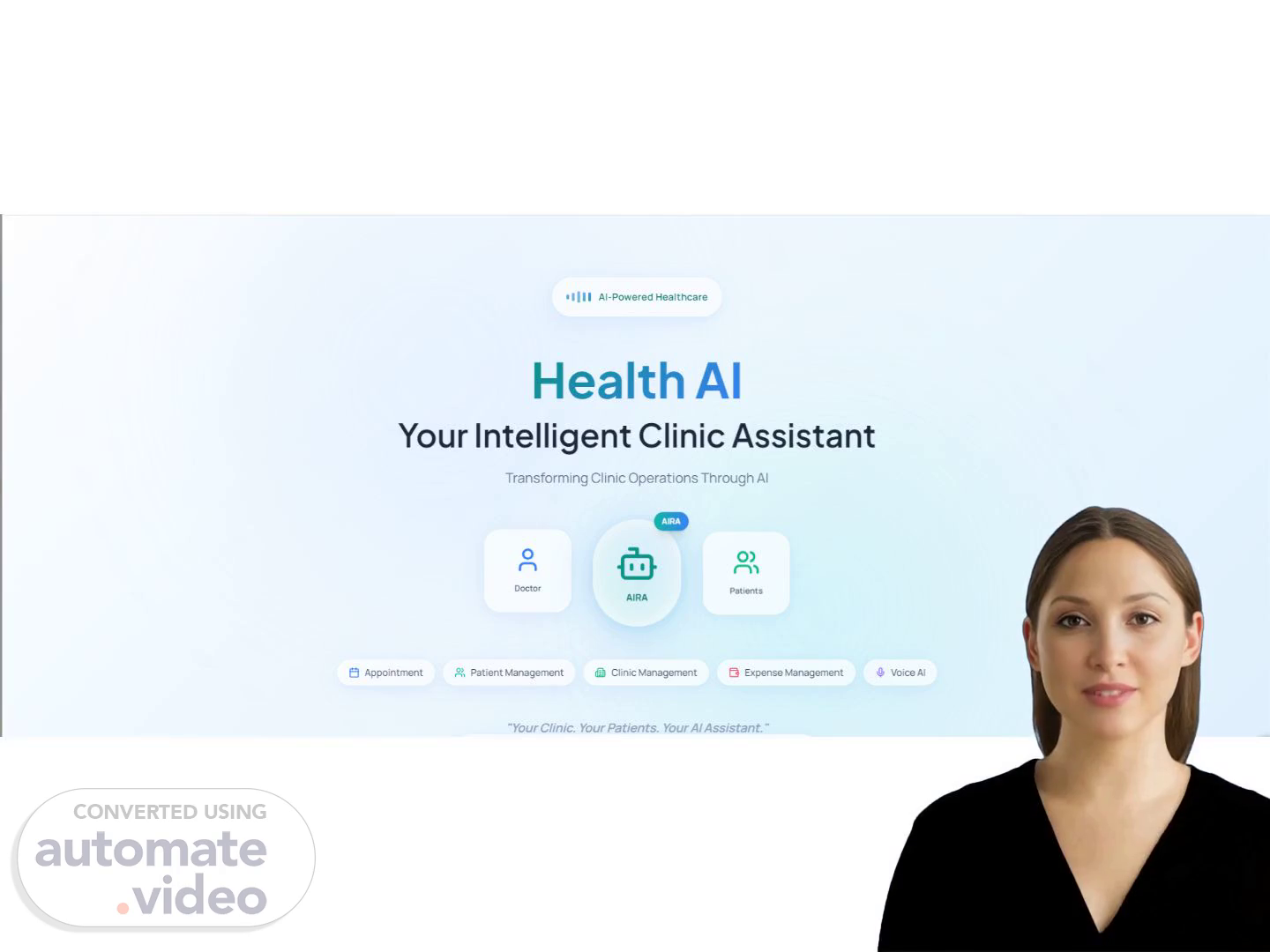
[Virtual Presenter] The new clinic management system, Health A1, offers several key benefits for healthcare providers. Firstly, it enables easy scheduling of appointments, which helps reduce wait times and improves patient satisfaction. Secondly, it allows for seamless tracking of patient records, ensuring that all relevant information is up-to-date and accessible. Thirdly, it automates many administrative tasks, freeing up staff time to focus on more critical aspects of care. Furthermore, Health A1 includes expense management tools, which enable healthcare providers to monitor and control their expenses effectively. These tools help to optimize budgets and ensure that resources are allocated efficiently. Additionally, the system provides a personalized interface, facilitating communication between healthcare providers and patients. This interface enables quick and easy access to medical information, promoting a positive patient experience. Overall, Health A1 represents a significant improvement in clinic management, offering enhanced productivity, improved patient outcomes, and greater financial efficiency..
Scene 2 (1m 17s)
[Audio] The medical profession has become increasingly complex due to various factors such as technological advancements and changes in patient demographics. Doctors must now navigate through a multitude of challenges that affect their ability to deliver high-quality care. Administrative tasks have become a significant burden, taking away from the time doctors can devote to patient care. The sheer volume of paperwork and phone calls can be overwhelming, leading to lost productivity and wasted resources. Furthermore, the use of manual record-keeping systems can result in a substantial accumulation of paper documents, hindering access to patient histories and treatment information. As a result, doctors often struggle to allocate their time effectively, dedicating more time to administrative tasks than to direct patient care. To overcome these challenges, doctors need to adopt innovative solutions that streamline administrative processes and enhance patient care..
Scene 3 (2m 18s)
[Audio] The clinic's new system, AIRA, offers several advantages for streamlining operations and enhancing patient care. The system automates various tasks, including appointment scheduling, billing, and financial record-keeping. Digitizing patient records with AIRA makes it simpler to access and update medical information. This results in significant time savings and a better patient experience. AIRA also facilitates automation of clinical processes, resulting in increased efficiency and productivity. Moreover, the system enables effective management of cash flow and provides immediate access to patient medical records. Overall, AIRA has the potential to transform the way the clinic operates, enabling staff to concentrate on delivering high-quality care to patients..
Scene 4 (3m 16s)
[Audio] The AI-powered virtual clinic assistant, AIRA, helps doctors manage their practices more efficiently by automating tasks such as digitizing patient records, managing appointments, and collecting payments online. Doctors can use AIRA to improve patient experience and productivity by offering advanced voice-based interaction, retrieving medical histories, sending smart reminders, and scheduling follow-ups. The system also enables appointment management and payment collection capabilities, streamlining the workflow and enhancing the clinical practice. The robust patient record management system allows for easy tracking of all patients' information in one place..
Scene 5 (4m 2s)
[Audio] The company has been working on developing its own business software, which they call AIRA. They have developed a comprehensive suite of tools designed to streamline various aspects of running a healthcare facility. The main features include appointment scheduling, payment processing, and patient management. The software is designed to be user-friendly and easy to navigate, even for those who may not be tech-savvy. The company believes that by automating these tasks, they can improve efficiency and reduce costs associated with manual processes. By using AIRA, clinics can save time and resources, allowing them to focus on providing better care to their patients. The company is confident that AIRA will revolutionize the way healthcare facilities operate, making it easier for doctors and staff to manage their workload..
Scene 6 (4m 56s)
[Audio] The appointment workflow we have implemented is designed to streamline patient interactions with our clinic. This includes receiving patient calls, checking the doctor's calendar, collecting advance payments, and sending SMS/WhatsApp confirmations. Our virtual assistant, AIRA, plays a key role in this process by providing answers to patients' queries, suggesting available slots, and confirming appointments. Once an appointment is confirmed, the doctor is notified, ensuring seamless communication throughout the booking process. The system is user-friendly and easy to navigate for both patients and doctors. The virtual assistant helps reduce the workload on staff, allowing them to focus on more complex tasks. The system also provides real-time updates, enabling doctors to stay informed about upcoming appointments and any changes that may occur. Additionally, the system allows for flexible scheduling, accommodating different time zones and preferences. Furthermore, the system offers a secure and reliable platform for storing sensitive information, such as medical records and payment details. Overall, the implementation of this appointment workflow has significantly improved the efficiency and effectiveness of our clinic's operations..
Scene 7 (6m 22s)
[Audio] The patient mobile app is the core component of our platform. It enables patients to access their medical records, schedule appointments, and communicate with their doctors. The doctor mobile app allows healthcare providers to access patient information, manage appointments, and communicate with patients. The clinic dashboard collects and analyzes data from the mobile apps, providing a comprehensive view of patients and their interactions with the platform. The voice A1 layer facilitates speech-to-text conversion, enabling easier communication between patients and doctors. E-business services allow patients to make payments, access online services, and manage their accounts. The large language model assists with natural language processing and understanding. The appointment engine streamlines the scheduling process for patients and doctors. The payment service ensures a secure and seamless payment process. The data layer stores patient information securely, including the patient database and medical records. Analytics helps us make data-driven decisions based on patient data. The context engine personalizes the patient experience by considering patient preferences and history. The notification service keeps patients informed about updates and reminders. Integrations with popular messaging platforms and calendar apps enhance the user experience..
Scene 8 (7m 52s)
[Audio] The patient has been diagnosed with a rare disease called 'Erythema Nodosum Erythematosum' - also known as ENE. This condition affects the skin and causes inflammation and redness. The patient is experiencing symptoms such as fever, joint pain, and swelling of the affected areas. The diagnosis was made based on a combination of clinical findings and laboratory tests. The treatment options are limited, but the patient may benefit from medications that reduce inflammation and alleviate symptoms..
Scene 9 (8m 28s)
[Audio] The company has been using digital patient memory management systems since its inception. The system is designed to manage patient records, medical history, previous visits, prescriptions, reports, lab results, doctor notes, and images and scans. The system uses digital technology to store these documents and information in a secure and organized manner. This allows for instant retrieval and quick search, making it easier for doctors to access the necessary information they need in a timely manner. The system provides long-term storage for patient information, ensuring that all data is safe and easily accessible for future reference. The use of digital patient memory management enables better diagnosis by providing all relevant patient information at once. Doctors can make more accurate and informed decisions with the help of the system. The system also facilitates communication between healthcare professionals and patients..
Scene 10 (9m 32s)
[Audio] The new appointment scheduling system has enabled us to streamline our workflow and reduce no-shows. The system's advanced features include travel planning, smart itinerary setup and coordination, auto-rescheduling, instant slot adjustments for conflicts, reminder management, and task tracking and personal assistant. These features allow us to provide better care to our patients by reducing wait times and improving communication with patients and staff. The system also includes a unified and intelligent daily view, which enables us to visualize our schedule more effectively. This feature helps us identify potential issues early on and make necessary adjustments. Recently, we discovered that some appointments were not being scheduled correctly, so we are now working on sending reminders to patients who need to be rescheduled. We will use this opportunity to inform them about their upcoming appointments and ensure they arrive on time. By using these advanced tools, we aim to improve our overall efficiency and patient satisfaction..
Scene 11 (10m 39s)
[Audio] AirA's unique features set it apart from other clinic management systems. One key differentiator is its availability 24 hours a day, 7 days a week. This means that doctors and staff can access patient information and manage appointments at any time, ensuring seamless operations even outside regular working hours. Additionally, AirA offers personalized support tailored to each clinic's specific needs. This level of customization enables clinics to streamline their administrative tasks more efficiently. Furthermore, AirA's advanced technology ensures that no information is ever missed, with smart reminders and instant retrieval capabilities. The system also handles administrative tasks automatically, freeing up staff to focus on more critical aspects of care. Moreover, AirA scales with growth, adapting to the evolving needs of the clinic as it expands. Its flexible pricing model allows clinics to choose the subscription plan that best suits their budget. With standard storage and full access to the AI assistant, AirA provides a comprehensive solution for managing clinic operations. The premium benefits offered by AirA include additional data packs, extra A1 tokens, and storage expansion, making it an attractive option for clinics looking to upgrade their management system. Overall, AirA's unique combination of features makes it an ideal choice for clinics seeking to improve their operational efficiency and patient experience..
Scene 12 (12m 13s)
Monthly Standard Subscription V fixed Monthly Fee Standard Storage Full A1 Assistant Access Flexible Pricing Model Most Popular Yearly Best Value Discounted Pricirg Higher Storage Allocation Premium Benefits Usage-Based Scale As You Grow Additional Data Packs Additional A1 Tokens Storage Expansion.
Scene 13 (12m 19s)
[Audio] The company has decided to introduce multi-language support for its patients. The new feature will allow patients to select their preferred language from a list of options. The company aims to cater to a wider audience by offering this service. The new feature will be included in the 1.0 version of the company's services. The company has already implemented several features that have improved its operations. These features include appointment management and patient records management. Both of these features have been well-received by the company's clients. They have helped streamline the company's operations and make it more efficient. The company has also introduced a voice assistant for better patient communication. The voice assistant allows patients to communicate with the company through voice commands. This feature has improved the overall experience for patients. In addition to the existing language support, which includes Hindi, English, Tamil, Telugu, and Gujarati, the company is planning to expand its language support. The company currently offers five languages but plans to add more languages in the future. Looking ahead, the company's 2.0 version will include advanced features such as expense management, travel booking, business insights, clinic analytics, and smart financial management. These features will further enhance the efficiency and effectiveness of the company's services. The company's goal is to continue providing top-notch solutions for its clients and staying ahead in the industry. The company aims to deliver high-quality services that meet the needs of its clients. The company is committed to innovation and continuous improvement..
Scene 14 (13m 58s)
[Audio] The use of artificial intelligence (AI) in healthcare has been increasing rapidly over the past few years. The integration of AI in clinical decision support systems (CDSSs) has improved the accuracy of medical diagnoses and treatments. AI algorithms are being used to analyze large amounts of health-related data, identify patterns, and make predictions about patient outcomes. These predictions enable healthcare providers to take proactive measures to prevent complications and improve patient outcomes. Furthermore, AI is being used to automate routine administrative tasks such as scheduling appointments and processing claims. This not only saves time but also reduces errors and improves the overall efficiency of healthcare services. Additionally, AI-powered chatbots are being developed to assist patients with their queries and provide them with relevant information. These chatbots can help patients navigate through the complex healthcare system and provide them with personalized advice and guidance. Moreover, AI is being used to develop personalized medicine approaches that cater to individual patient needs. This approach enables healthcare providers to tailor their treatment plans to each patient's unique characteristics and circumstances. By leveraging AI, healthcare providers can deliver high-quality, patient-centered care that meets the specific needs of each patient..
Scene 15 (15m 33s)
[Audio] The unified healthcare system will be implemented through a series of incremental steps, starting from the local level, beginning with small-scale pilot projects. These pilot projects will focus on specific areas such as patient engagement, disease management, and population health management. The goal is to test the feasibility of the system, identify potential issues, and refine the model before scaling up to larger populations..