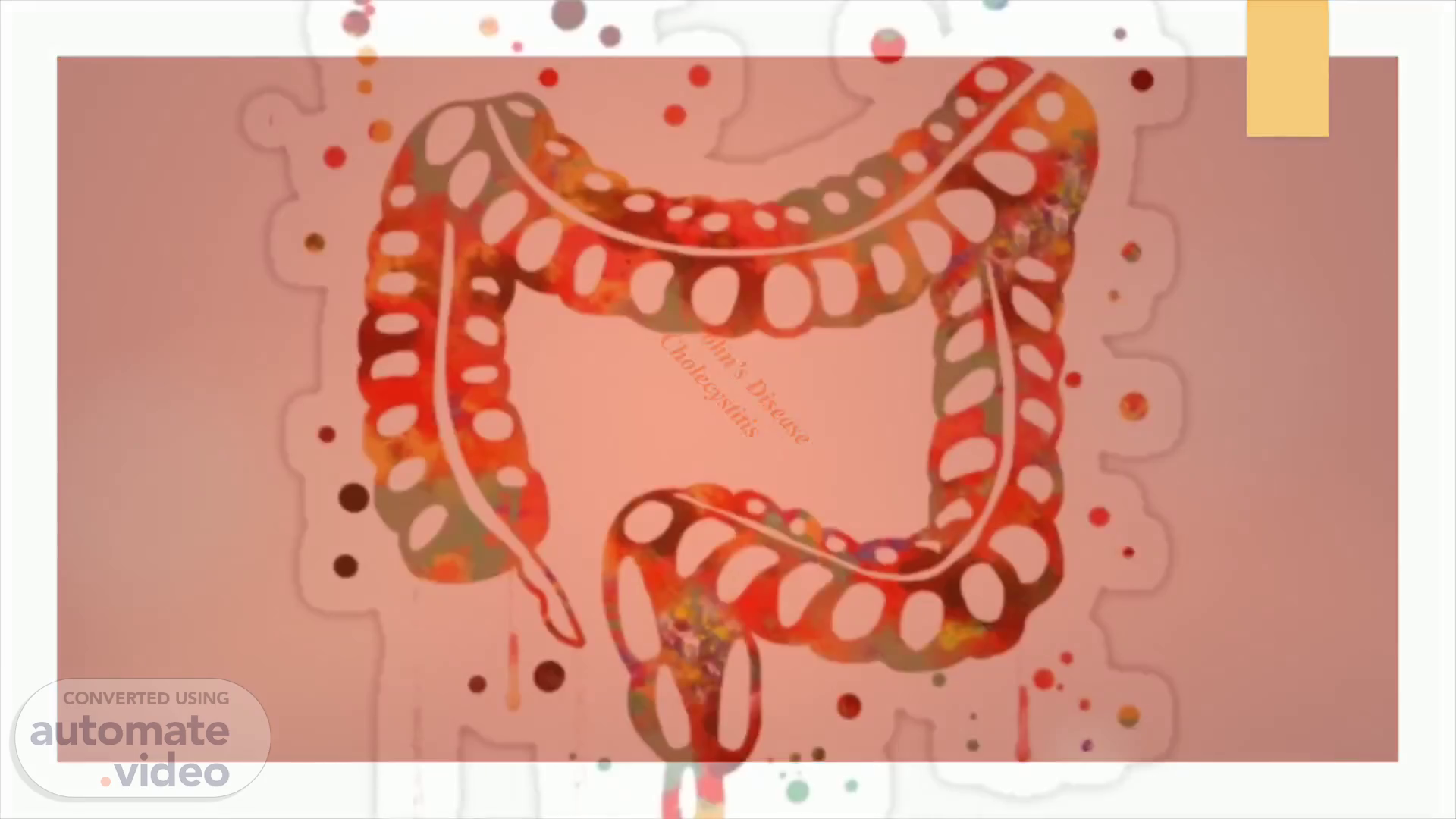
Crohn's Disease Cholecystitis


Scene 1 (0s)
[Audio] Crohn's Disease Cholecystitis. By Jewel White..
Scene 2 (8s)
[Audio] I chose to research Crohn's Disease because I have personally suffered from the adverse effects of IBS (irritable bowel syndrome) for years. I recently decided to see a specialist due to the severe effects of the inflammation during a flare up. I was referred to a gastroenterologist for further treatment because I was told by an emergency room physician that I may possibly have Crohn's Disease. I have done minimal research on this illness, but this project has given me further opportunity to dive deeper into this subject. I am hopeful to discover more information about how this disease starts, and how to prevent it if possible..
Scene 3 (48s)
[Audio] Signs and symptoms of Crohn's disease include, iron deficiency, inflammation of the liver, kidney stones, skin disorders, malnutrition, ulcers, diarrhea lasting more than two weeks, fever, fatigue, abdominal pain and cramping, mouth sores, nausea and vomiting, bloody stool, and reduced appetite causing weight loss..
Scene 4 (1m 11s)
[Audio] Crohn's disease is diagnosed in various ways such as stool tests, blood tests, computed tomography scan, magnetic resonance enterorrhaphy, video endoscopy, x-rays, baseline Mantoux tests with chest radiology, and baseline thiopurine methyltransferase..
Scene 5 (1m 30s)
[Audio] Treatment of Crohn's disease can be performed in several different ways. One treatment to mild or moderately active colitis is with oral immunomodulators such as thiopurines and steroids to treat and prevent flare ups, and relieve colitis symptoms. Moderate to severe colitis can be treated with a combination of immunomodulators and infiximab. Surgical treatments are used for severe complications such as bowel obstructions, abscesses, perforated bowel, and fistulas..
Scene 6 (2m 2s)
[Audio] Chron's disease is a chronic autoimmune, gastrointestinal, inflammatory disorder with no cure. Patients usually have a poor quality of life, despite the various treatment and therapy options available. The majority of patients who develop complications need surgery as the disease progresses, and surveillance endoscopy is usually recommended. If there is no endoscopic recurrence, ileocolonoscopic colonoscopy should be repeated within 1-3 years..
Scene 7 (2m 33s)
[Audio] The body systems affected by Crohn's disease include the digestive system Small Intestine, and beginning of large intestine due to the inflammation and irritation located in the digestive tract. The Circulatory and cardiovascular systems are affected because Chron's can cause blood clots in the veins and the inflammation the Chron's causes can lead to blood vessel lining damage, anemia, and heart disease. The integumentary system is also affected due to increase risk of developing erythema nodosum, and pyoderma gangrenosum. Both disorders are a result of Chron's flare ups..
Scene 8 (3m 9s)
[Audio] Did you know that Crohn's disease is considered a "young person's" condition that lasts a lifetime. The cause of Chron's disease is still unknown. Most people (about 70%) diagnosed with Crohn's disease eventually have to undergo surgery once medication is no longer effective. Researchers have found that more than 160 genes that contribute to inflammatory bowel disease. This genetic research is helping the medical community better understand the cause, and treatments to cure this disease. These are just a few interesting facts regarding Crohn's disease..
Scene 9 (3m 44s)
[Audio] Please refer the the following references for more information regarding Crohn's disease, and remember to always take care of your gut!.