Scene 1 (0s)
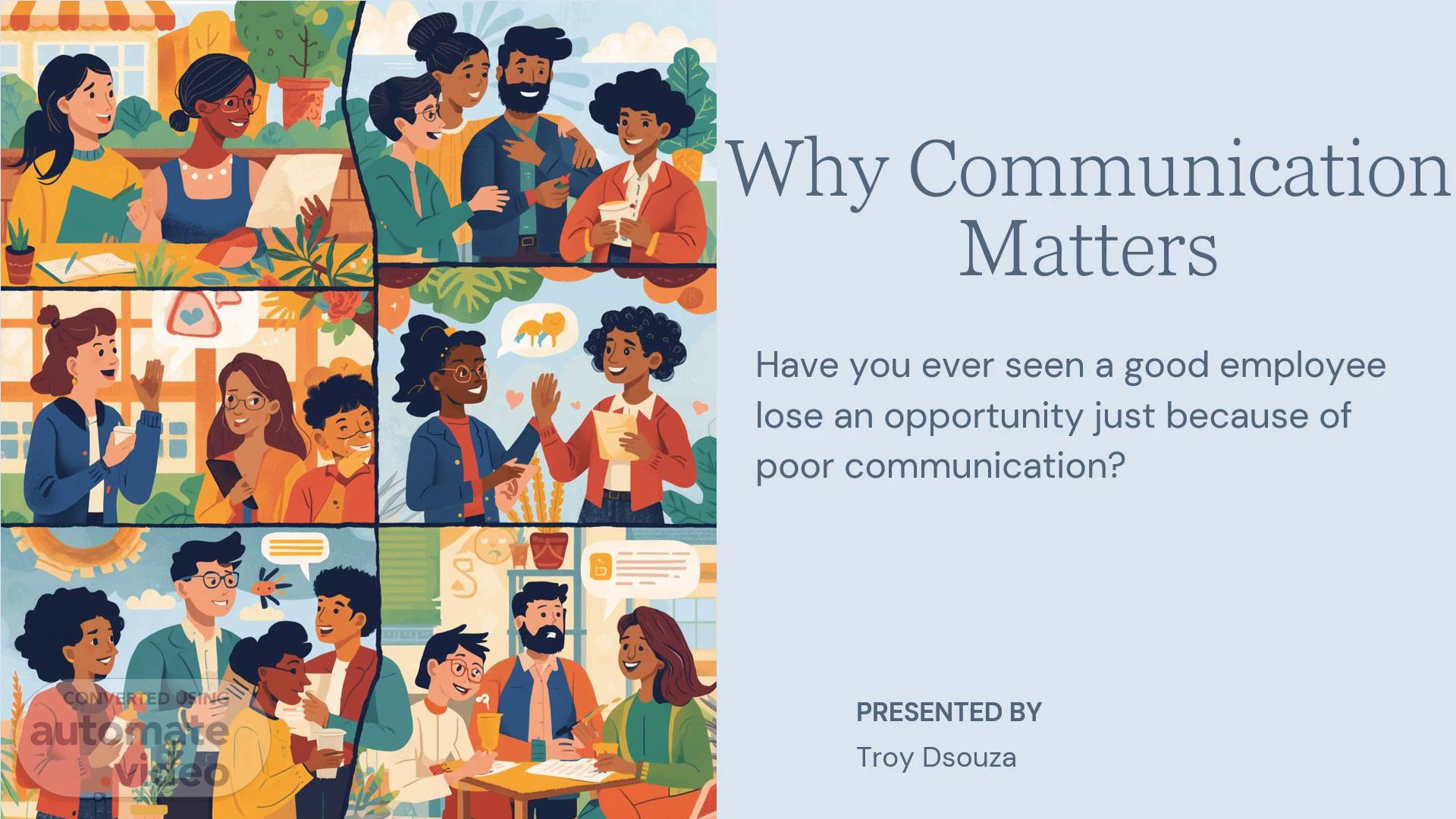
[Audio] Why Communication Matters Have you ever seen a good employee lose an opportunity just because of poor communication? PRESENTED BY Troy Dsouza.
Scene 2 (10s)
[Audio] Introduction to Communication: What It Means UNDERSTANDING THE IMPORTANCE OF COMMUNICATION Communication is the process of exchanging information, ideas, or feelings between people. It's vital for our daily interactions and relationships, allowing us to connect and understand one another..
Scene 3 (29s)
[Audio] Greeting a Friend A simple greeting with a friend illustrates the essence of communication; it encompasses warmth and connection, highlighting how we share feelings and establish relationships through personal interactions. Example 1: Office Email ❌ Poor Communication: "Send the report fast." ✅ Good Business Communication: "Please share the final report by 5 PM today so we can review it before the meeting." Same message, different impact..
Scene 4 (1m 1s)
[Audio] Types of Communication VERBAL COMMUNICATION Verbal communication involves spoken words and tone. It plays a crucial role in classroom discussions where students share ideas, ask questions, and enhance learning through interaction. PHONE CONVERSATIONS Phone calls are a common form of verbal communication, allowing people to connect across distances. The tone of voice can convey emotions, making conversations more personal and engaging..
Scene 5 (1m 31s)
[Audio] Types of Communication BODY LANGUAGE Body language is crucial for conveying emotions and intentions. It includes posture, gestures, and movements that enrich verbal communication and help others interpret our feelings accurately. FACIAL EXPRESSIONS Facial expressions are powerful non-verbal cues. A simple smile can convey warmth and friendliness, while a frown can indicate concern or disagreement, significantly impacting interpersonal interactions..
Scene 6 (2m 2s)
[Audio] Types of Communication: Written EMAILS AND TEXTS Emails and texts are essential tools for modern communication, allowing us to convey messages quickly and effectively. They provide a written record and facilitate distance communication. LETTERS AND NOTES Letters and notes play a personal role in communication, offering a tangible way to express thoughts and feelings. They foster deeper connections through handwritten sentiments and thoughtful messages..
Scene 7 (2m 34s)
[Audio] Types of Communication: Visual SYMBOLS AND SIGNS Visual communication uses symbols and signs to convey messages. For example, traffic lights signal when to stop or go, ensuring safety on the roads. PICTURES AND EMOJIS Pictures and emojis add emotional context to messages. Emojis, often used in texts, can express feelings, making communication more engaging and relatable..
Scene 8 (3m 2s)
[Audio] Importance and Challenges MISUNDERSTANDINGS Misunderstandings often arise from unclear messaging or assumptions. This can lead to confusion, hurt feelings, and damaged relationships, highlighting the need for clarity in communication. LANGUAGE DIFFERENCES Language differences can create barriers in communication, making it difficult to express thoughts and ideas accurately. This challenge emphasizes the importance of patience and understanding in interactions..
Scene 9 (3m 33s)
[Audio] Tips for Effective Communication ACTIVE LISTENING Listening actively involves fully focusing on the speaker, understanding their message, and responding thoughtfully. This practice fosters trust and ensures clearer exchanges of information in conversations. CLEAR MESSAGING Communicating with clarity means using simple, direct language and organizing your thoughts well. Clear messaging helps prevent misunderstandings and promotes effective interactions with others..
Scene 10 (4m 4s)
[Audio] Communication Recap Communication is the exchange of ideas that plays a crucial role in our lives. The main types include verbal, non-verbal, written, and visual, each enhancing our interactions..
Scene 11 (4m 18s)
[Audio] Make your communication clear and kind Business Communication is not just about speaking English fluently — it's about communicating the right message, in the right way, at the right time. If you found this video useful, like, share, and subscribe for more MBA, career, and workplace communication tips..