Scene 1 (0s)
1 | P a g e Pre-Eclampsia Under Supervision Dr. Yousra Gamal 2026-2027.
Scene 2 (9s)
2 | P a g e Prepared by: ناٌروو دمحم ديسلا يقابلادبع ناٌروو دومحم ديسلا اللهدبع ًلاٌ دمحم دبع فيطللا ناٌروو دمحم ديسلا لاعلادبع ناٌروو هميا ديسلا ناٌروو يدبع ًعمج دمحم ًلاٌ رساي دمحم اللهدبع ويري دمحم دومحم يلع رجاٌ دمحا اللهدبع هسح ناٌروو متاح قيفوت رجاٌ اضر ميٌاربإ ديسلا رجاٌ دمحم للاج ديسلا رجاٌ دمحم دمحم فسوي ناٌروو ديعسلا دبع يلوملا ناٌروو ديسلا ديسلا دمحم ديسلا ةريو تأشو دمحم ملاس رجاٌ دلاخ يفىح رجاٌ اللهدبع دمحا لامك رجاٌ دومحم لادبعميكح ًلاٌ داؤف دمحا دمحم.
Scene 3 (31s)
[Audio] The nurse's role in managing preeclampsia involves several key components. Firstly, the nurse must identify and report any warning signs that may indicate preeclampsia. This includes observing for edema, signs of fluid overload, and other symptoms such as hypertension and proteinuria. The nurse must also review laboratory results, including platelet count, renal function, and liver enzymes. Furthermore, the nurse must monitor fetal heart rate and fetal movements as indicated. The nurse should also assess the patient's understanding, anxiety, and need for education, reporting abnormal findings promptly to the obstetric team. The nurse plays a critical role in preventing complications associated with preeclampsia, such as eclampsia and stroke. By providing accurate information and support, the nurse can help prevent these complications from occurring. The nurse must be aware of the patient's medical history, medication regimen, and any allergies or sensitivities. The nurse should also educate the patient on how to manage their condition, including diet, exercise, and stress management techniques. The nurse must work closely with the obstetric team to ensure that the patient receives comprehensive care. The nurse should also communicate effectively with the patient and family members to provide emotional support and reassurance. The nurse plays a vital role in promoting health and well-being throughout the pregnancy period..
Scene 4 (2m 6s)
[Audio] Nurses should recognize the early warning signs of preeclampsia such as high blood pressure, proteinuria, and abdominal pain. They should also monitor the patient's condition closely throughout the pregnancy, performing regular assessments of the mother and fetus. Additionally, nurses should educate the patient on the importance of follow-up care and provide them with information on how to manage symptoms and prevent complications. Furthermore, nurses should work collaboratively with other healthcare professionals to ensure that patients receive comprehensive care. By doing so, they can help prevent serious complications and improve outcomes for mothers and babies..
Scene 5 (2m 48s)
[Audio] The first step in creating a successful business plan is to identify the key elements that will drive success for your company. This includes identifying the target market, understanding customer needs, and developing a unique value proposition. The second step is to develop a comprehensive marketing strategy that aligns with your business goals. This involves creating a detailed plan for reaching and engaging with your target audience, as well as establishing relationships with potential partners and suppliers. Developing a strong brand identity is also crucial. This includes defining your company's mission statement, values, and visual identity. A clear and concise mission statement can help guide decision-making and ensure that all employees are working towards the same goal. A well-defined visual identity can also help differentiate your company from competitors and create a lasting impression on customers. In addition to these steps, it is essential to conduct thorough research on your industry and market trends. This can include analyzing data from previous years, conducting surveys, and gathering information from industry experts. By doing so, you can gain valuable insights into what works and what doesn't, and make informed decisions about how to position your company for success..
Scene 6 (4m 15s)
[Audio] The first thing that comes to mind when I think about the concept of a "good" relationship is the idea of a romantic partnership between two people, where both partners are happy with each other's company. However, this definition may not be universally applicable as it may not apply to all types of relationships such as friendships, familial relationships, or professional partnerships..
Scene 7 (4m 39s)
[Audio] The maternal risk factors listed here include chronic hypertension, chronic kidney disease, pre-existing diabetes mellitus, obesity, autoimmune disorders, family history of preeclampsia, and advanced maternal age. Pregnancy-related risk factors include multiple pregnancy, pregnancy achieved through assisted reproductive technology, a long interval between pregnancies, and certain adverse outcomes in previous pregnancies. It's worth noting that having one or more of these risk factors does not necessarily mean that preeclampsia will develop. However, they do indicate the need for careful risk assessment and antenatal surveillance. This is particularly important because preeclampsia can have serious consequences for both the mother and the fetus. By understanding these risk factors, healthcare providers can take steps to mitigate them and provide better care for their patients..
Scene 8 (5m 41s)
[Audio] The placenta develops from two separate entities: the chorion and the amnion. The chorion is formed by the fusion of two trophoblastic cells, while the amnion forms from the folding of the endoderm into a sac-like structure. The amnion then envelops the chorion, forming the amniotic cavity. The chorion also undergoes significant changes during pregnancy, including the formation of the spiral arteries. These arteries are crucial for the delivery of oxygen and nutrients to the fetus. The spiral arteries are unique because they have a high degree of branching and anastomosis, allowing them remodeling to accommodate changing fetal demands. However, this remodeling process can be disrupted by abnormal placentation, leading to reduced placental blood flow and subsequent placental ischemia. Placental ischemia results in the release of substances that affect maternal vascular function, ultimately leading to the development of preeclampsia. Endothelial dysfunction is a key factor in the pathophysiology of preeclampsia, as it contributes to widespread dysfunction of the maternal vascular endothelium..
Scene 9 (6m 58s)
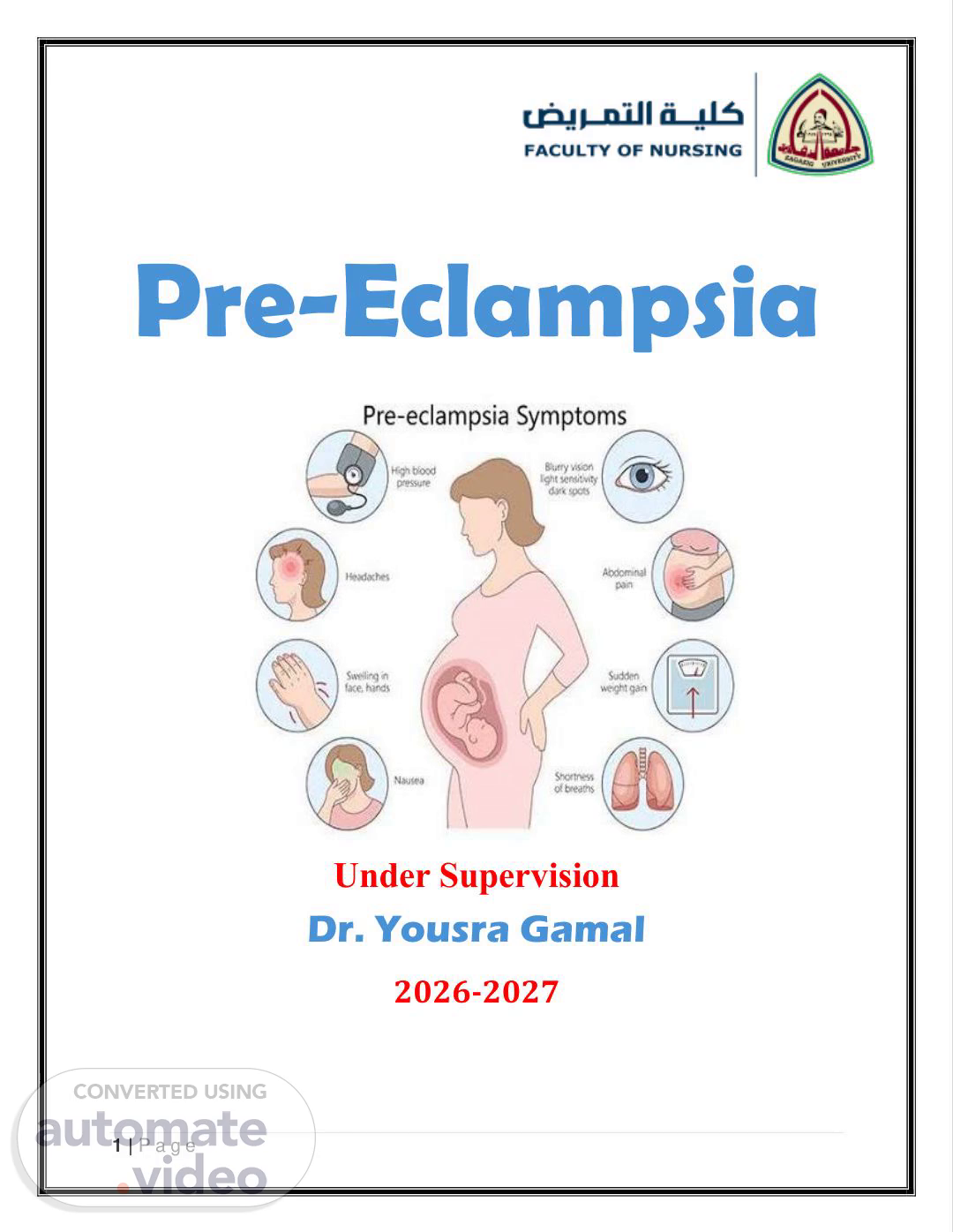
[Audio] The underlying mechanisms of pre-eclampsia involve several physiological changes that affect the body's major organ systems. One key mechanism is vasoconstriction, where increased vascular resistance leads to elevated blood pressure. This increase in blood pressure causes fluid to move from the blood vessels into surrounding tissues, resulting in edema. Additionally, there is increased vascular permeability, allowing fluid to accumulate in various parts of the body. Furthermore, organs such as the kidneys, liver, brain, lungs, and blood-clotting system can become involved, leading to potential complications. Moreover, reduced uteroplacental perfusion impairs blood flow to the fetus, potentially causing growth restriction and other issues. These physiological changes contribute to the development of pre-eclampsia. Common clinical findings include elevated blood pressure, proteinuria, swelling of the face and hands, sudden or excessive weight gain, persistent headaches, visual disturbances, pain in the epigastric region, nausea and vomiting, reduced urine output, shortness of breath, and pain in the lungs. These signs and symptoms can vary in severity and may appear at different stages of pregnancy. Asymptomatic cases can often be detected only through routine prenatal assessments. Nurses should be aware of these common clinical findings to provide appropriate care and management for patients with pre-eclampsia..
Scene 10 (8m 39s)
[Audio] Nurses should recognize that peripheral edema alone is not enough to confirm the diagnosis of preeclampsia. Peripheral edema can also occur during normal pregnancies. To accurately diagnose preeclampsia, nurses should look for other warning signs such as severe hypertension, persistent severe headaches, visual symptoms, upper abdominal pain, breathing difficulties, and reduced fetal movement. These signs indicate more severe disease and require immediate attention from healthcare providers. Preeclampsia can be classified into two main categories based on the presence or absence of severe features. The first category is preeclampsia without severe features, which involves hypertension after 20 weeks of pregnancy accompanied by proteinuria or another qualifying diagnostic feature, but without any severe maternal findings. This type of preeclampsia requires careful monitoring and management to prevent complications. Nurses should be aware of the different types of preeclampsia and their corresponding severity levels to provide accurate and effective care to patients..
Scene 11 (9m 53s)
[Audio] The management of preeclampsia involves several factors including gestational age, maternal condition, fetal well-being, and the ability to provide close follow-up. In cases where severe features are present, such as high blood pressure, severe headaches, thrombocytopenia, impaired liver function, renal insufficiency, or pulmonary edema, immediate medical attention is required. The diagnostic criteria for preeclampsia involve clinical assessment, blood pressure measurements, laboratory findings, and fetal evaluation. Blood pressure measurements are critical in diagnosing preeclampsia, with new onset hypertension typically defined as a systolic blood pressure of at least 140 mmHg or diastolic blood pressure of at least 90 mmHg after 20 weeks of gestation. Urine testing also plays a key role in identifying proteinuria, a common symptom of preeclampsia..
Scene 12 (10m 57s)
[Audio] The various diagnostic tests used to confirm preeclampsia involve assessing the mother's blood and urine. These assessments include blood investigations such as complete blood counts, platelet counts, serum creatinine, and liver function tests. Urine protein levels are evaluated using either a 24-hour urine collection or a urine protein-to-creatinine ratio. Fetal assessment is also crucial, involving ultrasound evaluations of fetal growth, amniotic fluid assessment, and fetal heart rate monitoring. The type and frequency of these investigations will depend on the severity of the disease and the stage of gestation..
Scene 13 (11m 40s)
[Audio] The potential complications of pre-eclampsia include HELLP syndrome, stroke, acute kidney injury, pulmonary edema, liver complications, disseminated intravascular coagulation, placental abruption, and maternal death. These complications can have a significant impact on both the mother and the fetus. The severity of these complications varies widely depending on several factors, including the stage of pregnancy, the presence of other medical conditions, and the effectiveness of treatment. As the pregnancy progresses, the risk of developing these complications increases. Monitoring the condition closely and seeking immediate medical attention if any symptoms arise is crucial. Early intervention can help mitigate the risks associated with these complications. Some of these complications can have long-term effects on the mother and the baby, even after the pregnancy has ended. Comprehensive care is essential for patients with pre-eclampsia throughout their entire pregnancy and beyond..
Scene 14 (12m 45s)
[Audio] The management of preeclampsia involves several key strategies to ensure the safety of both the mother and the fetus. The primary objectives are to prevent maternal complications, control severe hypertension, prevent seizures when indicated, and deliver the baby at the most appropriate time. To achieve these goals, various medical interventions are employed, including the use of antihypertensive medications, magnesium sulfate, corticosteroids, and careful fluid management. These measures require close monitoring of the patient's condition, including respiratory status, deep tendon reflexes, urine output, and other relevant parameters. Obstetric management also plays a crucial role in this process, involving decisions regarding the timing of delivery based on factors such as fetal well-being and maternal cardiovascular stability. By adopting a comprehensive approach to managing preeclampsia, healthcare providers can minimize risks and optimize outcomes for both mothers and babies..
Scene 15 (13m 52s)
[Audio] Nurses must carefully monitor patients with preeclampsia to identify early signs of deterioration, such as changes in blood pressure, headache, visual disturbances, and abdominal pain. They also need to assess the patient's overall condition, including their level of consciousness, respiratory rate, and urine output. The nurse should also evaluate the effectiveness of treatment and report any abnormalities to the healthcare team. This is crucial because preeclampsia can lead to severe complications, such as eclampsia, stroke, and kidney damage, if left untreated or poorly managed. By closely monitoring patients and reporting any concerns, nurses can help prevent these complications and ensure the best possible outcome for both the mother and the baby..
Scene 16 (14m 41s)
[Audio] The nurse should observe for signs of edema and fluid overload, such as swelling in the legs, ankles, or face. The nurse should also review laboratory results, including platelet count, renal function, and liver enzymes, to monitor the patient's condition. Additionally, the nurse should monitor the fetal heart rate and fetal movements as indicated. This information will help the nurse identify any potential problems and provide appropriate interventions. Furthermore, the nurse should assess the patient's understanding, anxiety, and need for education regarding the disease and its treatment. This includes providing clear and concise information about the disease, its symptoms, and its treatment options. The nurse should also report any abnormal findings promptly to the obstetric team to ensure timely intervention. In terms of nursing diagnoses, the nurse may select several diagnoses based on the individual patient's assessment, including risk for injury related to seizures, risk for ineffective cerebral tissue perfusion, excess fluid volume, anxiety, deficient knowledge, and more. These diagnoses require the nurse to develop a plan of care that addresses each of these issues, using interventions such as medication administration, education, and monitoring. By doing so, the nurse can provide high-quality care to the patient and promote optimal health outcomes..
Scene 17 (16m 13s)
[Audio] Nurses should monitor maternal condition closely, assess neurological symptoms, and maintain accurate records of vital signs and laboratory results. A safe environment must be ensured for the patient, particularly during seizures, and prescribed medications administered as directed. Signs of complications such as pulmonary edema, bleeding, and placental abruption should be watched for vigilantly, and any deterioration reported promptly to the healthcare team. This helps mitigate risks associated with impaired placental perfusion and potential fetal compromise..
Scene 18 (16m 52s)
[Audio] The doctor explained that administering antihypertensive medications was a complex process requiring careful consideration of various factors. He emphasized the need for accurate dosing and timing to ensure effective treatment. The doctor noted that monitoring the patient's response to these medications was also crucial, as persistent severe hypertension required prompt reporting to the obstetric team. The doctor highlighted the importance of closely monitoring respiratory rate, reflexes, urine output, and clinical status during magnesium sulfate therapy. The doctor warned that any signs of magnesium toxicity, such as absent reflexes, respiratory depression, or reduced urine output, must be recognized immediately and an emergency response initiated accordingly. The doctor stressed that fetal monitoring was another critical aspect of care, involving the monitoring of fetal heart rate, assessing fetal movements, and preparing the patient for further investigations if necessary. The doctor emphasized the need for collaboration with the obstetric team in the event of suspected fetal compromise. The doctor also stressed the importance of providing psychological support to the patient, including clear explanations of procedures and treatments, and encouraging open communication between the patient and healthcare provider. The doctor noted that involving the family in education and support was essential, particularly when the patient consented. The doctor concluded by emphasizing the importance of health education and prevention throughout the pregnancy and post-delivery period..
Scene 19 (18m 36s)
[Audio] Nurses should closely monitor patients with preeclampsia and provide them with clear instructions on how to manage their condition. This includes following prescribed blood pressure monitoring and laboratory testing, taking medications as directed, and maintaining a healthy lifestyle. Patients should also be educated on recognizing early warning signs such as severe headaches, vision changes, and abdominal pain. Prompt reporting of any concerns or symptoms to healthcare providers is crucial. Additionally, nurses should ensure that patients receive proper follow-up care after delivery, including blood pressure assessments and medication management. By doing so, they can help reduce the risk of complications and improve patient outcomes..
Scene 20 (19m 22s)
[Audio] The nurse assesses the patient's condition and identifies potential risks. The nurse reviews laboratory results, including platelet count, renal function, and liver enzymes. The nurse monitors fetal heart rate and fetal movements as indicated. The nurse assesses the patient's understanding, anxiety, and need for education. The nurse reports any abnormal findings to the obstetric team. Nursing Diagnoses The possible nursing diagnoses are selected based on the individual patient's assessment. These may include risk for injury related to the possibility of seizures secondary to severe preeclampsia. Risk for ineffective cerebral tissue perfusion associated with severe hypertension. Excess fluid volume when supported by assessment of maternal edema. Risk for infection related to urinary catheterization. Risk for impaired gas exchange due to respiratory compromise. Risk for cardiac dysfunction due to hypertension. Risk for hypovolemic shock due to excessive bleeding. Risk for hyperthermia due to inadequate ventilation. Risk for hypoglycemia due to inadequate nutrition. Risk for dehydration due to inadequate hydration. Risk for disorientation due to medication side effects. Risk for anxiety due to uncertainty about diagnosis. Risk for confusion due to altered mental status. Risk for decreased mobility due to bed rest. Risk for decreased activity level due to fatigue. Risk for decreased cognitive function due to medication side effects. Risk for decreased physical strength due to weakness from disease process. Risk for decreased social interaction due to isolation. Risk for decreased sleep patterns due to discomfort. Risk for decreased appetite due to nausea. Risk for decreased elimination habits due to constipation. Risk for decreased hygiene practices due to lack of mobility. Risk for decreased mobility due to pain. Risk for decreased mobility due to immobility. Risk for decreased mobility due to weakness. Risk for decreased mobility due to disease process. Risk for decreased mobility due to medication side effects. Risk for decreased mobility due to fatigue. Risk for decreased mobility due to pain. Risk for decreased mobility due to immobility. Risk for decreased mobility due to weakness. Risk for decreased mobility due to disease process. Risk for decreased mobility due to medication side effects. Risk for decreased mobility due to fatigue. Risk for decreased mobility due to pain. Risk for decreased mobility due to immobility. Risk for decreased mobility due to weakness. Risk for decreased mobility due to disease process. Risk for decreased mobility due to medication side effects. Risk for decreased mobility due to fatigue. Risk for decreased mobility due to pain. Risk for decreased mobility due to immobility. Risk for decreased mobility due to weakness. Risk for decreased mobility due to disease process. Risk for decreased mobility due to medication side effects. Risk for decreased mobility due to fatigue. Risk for decreased mobility due to pain. Risk for decreased mobility due to immobility. Risk for decreased mobility due to weakness. Risk for decreased mobility due to disease process. Risk for decreased mobility due to medication side effects. Risk for decreased mobility due to fatigue. Risk for decreased mobility due to pain. Risk for decreased mobility due to immobility. Risk for decreased mobility due to weakness. Risk for decreased mobility due to disease process. Risk for decreased mobility due to medication side effects. Risk for decreased mobility due to fatigue. Risk for decreased mobility due to pain. Risk for decreased mobility due to immobility. Risk for decreased mobility due to weakness. Risk for decreased mobility due to disease process. Risk for decreased mobility due to medication side effects. Risk for decreased mobility due to fatigue. Risk for decreased mobility due to pain. Risk for decreased mobility due to immobility. Risk for decreased mobility due to weakness. Risk for decreased mobility due to disease process. Risk for decreased mobility due to medication side effects. Risk for decreased mobility due to fatigue. Risk for decreased mobility due to pain. Risk for decreased mobility due to immobility. Risk for decreased mobility due to weakness. Risk for decreased mobility due to disease process. Risk for decreased mobility due to medication side effects. Risk for decreased mobility due to fatigue. Risk for decreased mobility due to pain. Risk for decreased mobility due to immobility. Risk for.
Scene 21 (24m 22s)
[Audio] The American College of Obstetricians and Gynecologists (ACOG) has published guidelines for managing preeclampsia. The guidelines emphasize the importance of early detection and prompt treatment to prevent complications such as eclampsia and preterm birth. ACOG recommends that pregnant women receive regular prenatal check-ups and monitoring to identify potential issues early. The organization also provides guidance on medication management and postpartum care. The World Health Organization (WHO) has developed a classification system for preeclampsia based on severity. This system helps healthcare providers to accurately diagnose and manage the condition more effectively. The WHO classification system categorizes preeclampsia into four stages: mild, moderate, severe, and very severe. Each stage requires different levels of medical attention and interventions. Medscape is an online resource that offers expert advice and guidance on various health topics, including preeclampsia. The website provides detailed information on symptoms, causes, diagnosis, and treatment options for preeclampsia. Medscape's content is written by experienced healthcare professionals who have extensive knowledge of the subject matter. The website is widely used by healthcare providers and patients alike. Preeclampsia is a complex condition that affects millions of people worldwide. It is characterized by high blood pressure and damage to organs such as the kidneys and liver. Preeclampsia can cause significant morbidity and mortality if left untreated or undertreated. Early detection and prompt treatment are essential to preventing complications and improving outcomes. The National Health Service (NHS) in the UK provides comprehensive information on preeclampsia through its website. The NHS offers guidance on symptoms, causes, diagnosis, and treatment options, as well as resources for healthcare providers and patients. The website is regularly updated to reflect the latest research and findings on preeclampsia. Wikipedia is another online resource that provides information on preeclampsia. The website offers a wealth of knowledge on the condition, including its causes, symptoms, and treatment options. Wikipedia's content is written by volunteers who contribute their expertise and experience to create accurate and reliable information. References for preeclampsia can be found on several reputable websites including Mayo Clinic, World Health Organization, National Health Service, Medscape, and Wikipedia. These sources provide comprehensive information on symptoms, causes, diagnosis, and treatment options for preeclampsia. By consulting these references, healthcare professionals and individuals can gain a deeper understanding of this condition and its implications..