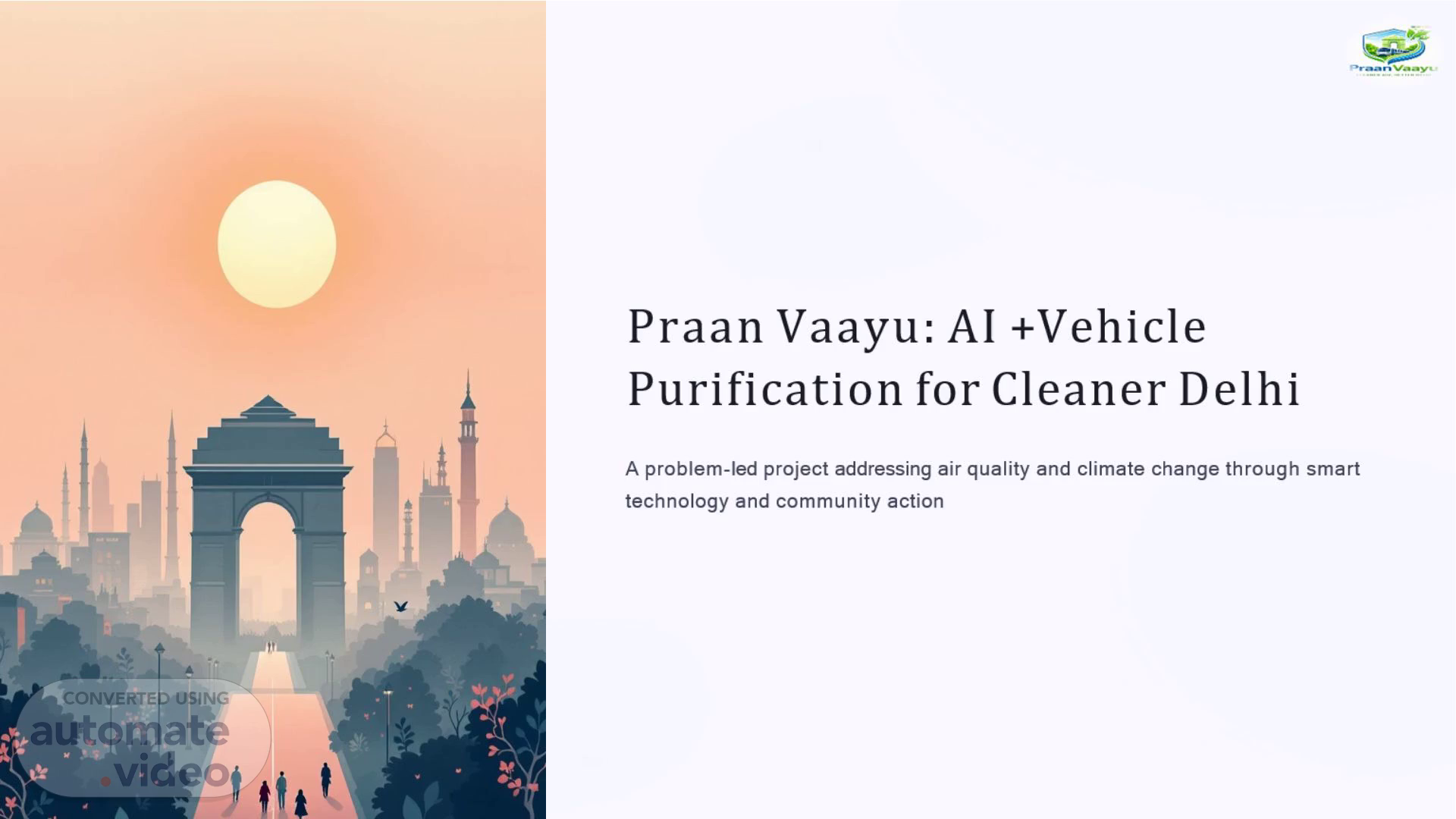
Praan Vaayu: AI + Vehicle Purification for Cleaner Delhi
Scene 1 (0s)
[Audio] HELLO Praan Vaayu: AI + Vehicle Purification for Cleaner Delhi A problem-led project addressing air quality and climate change through smart technology and community action.
Scene 2 (14s)
[Audio] Air Quality & climate change Prann vaayu Team Members – Khushi Sahu ,Dev Meena, Rohit Mentor's name – Sir Suresh Kumar Kalra, Ma'am Surekha Institute name – ITI Mangolpuri.
Scene 3 (32s)
[Audio] What Is Air Pollution? Air pollution occurs when harmful substances—gases, dust, and smoke— contaminate our atmosphere. These invisible enemies threaten both human health and environmental stability. Common Pollutants in Delhi's Air Carbon monoxide (CO) from incomplete combustion Sulfur dioxide (SO₂) from industrial processes Nitrogen oxides (NOₓ) from vehicle emissions Particulate matter (PM2.5 and PM10) from dust, smoke, and exhaust.
Scene 4 (1m 10s)
[Audio] The Delhi Experience: Living With Toxic Air Every winter, Delhi residents face a recurring nightmare. The air becomes thick with smog, visibility drops dramatically, and breathing feels labored. News channels flash AQI readings in the "poor" to "very poor" range, while hospitals see surges in respiratory cases. Heavy Smog and Haze Health Symptoms Daily AQI Alerts Heavy Smog and Haze Winter months bring choking smog that blankets the entire city, reducing visibility and forcing school closures Health Symptoms Residents experience persistent coughing, breathing difficulty, eye irritation, and aggravated respiratory conditions Daily AQI Alerts News reports and apps constantly show alarming air quality indices, warning citizens to stay indoors during peak pollution hours.
Scene 5 (2m 8s)
[Audio] Sources of Delhi's Air Crisis High-Traffic Roads Construction Dust Waste Burning Stubble Burning High-Traffic Roads Millions of vehicles create constant emissions in congested city corridors Construction Dust Rapid urbanization generates massive quantities of airborne particulates Waste Burning Landfills and open burning of garbage release toxic fumes across neighborhoods Stubble Burning Regional crop burning in nearby states contributes seasonal pollution spikes.
Scene 6 (2m 39s)
[Audio] Who Suffers Most From Toxic Air? People With Pre-existing Conditions Individuals with asthma, heart disease, or lung conditions face severe health risks and increased hospitalizations during pollution spikes Outdoor Workers Traffic police, construction workers, street vendors, and delivery personnel spend hours exposed to the highest pollution levels without protection Elderly Population Senior citizens have weakened immune systems and reduced lung capacity, making them particularly vulnerable to respiratory complications Animals and Birds Urban wildlife, stray animals, and birds suffer silently from the same toxic air, facing habitat degradation and health impacts..
Scene 7 (3m 24s)
[Audio] The Core Problem: A Dual Crisis Delhi faces an interconnected dual crisis. Air pollution is worsening primarily due to vehicular emissions, industrial activity, and fuel combustion. Simultaneously, greenhouse gas emissions are accelerating global warming and climate change. This isn't merely an "AQI issue"—it's a complex challenge affecting both immediate public health and long-term environmental sustainability. Why Haven't We Solved This Yet? Multiple Pollution Sources The problem originates from countless sources across transportation, industry, construction, and agriculture—making unified solutions difficult Behavior Change Barriers Solving pollution requires millions of residents to modify daily habits, from transportation choices to waste disposal practices Fossil Fuel Dependency Delhi's economy and infrastructure remain heavily dependent on coal, diesel, and petrol for energy and transportation Rapid Urbanization Population growth and urban expansion continue to outpace pollution control infrastructure and green space development Weak Enforcement Even when regulations exist, limited monitoring, high technology costs, and insufficient penalties result in poor compliance.
Scene 8 (4m 44s)
[Audio] The Connection: Air Pollution Meets Climate Change Air pollution and climate change aren't separate problems—they share the same root causes and amplify each other's impacts. Understanding this connection is crucial for developing effective solutions that address both crises simultaneously. Reduce Emissions, Double Benefits Vehicle emissions Exhaust from cars and trucks Burning fossil fuels Power plants and industry PM2.5: Health impacts Asthma, heart disease risk CO2: Climate impacts Heatwaves, floods, extreme weather Cleaner air safer climate Protects health today and future..
Scene 9 (5m 27s)
[Audio] Introducing Praan Vaayu: A Two-Part Approach 1. Delhi Air Safety AI App 2. Praan Vaayu Vehicle Purifier A mandatory mobile application that empowers every citizen with real-time air quality information and actionable guidance. Core Features Daily AQI displayed with intuitive color coding (green/yellow/red) Bilingual tips and alerts in Hindi and English Area-wise pollution mapping and notifications Safe outdoor activity time recommendations Mask usage reminders during high AQI periods Cleaner travel alternatives: metro, carpooling, walking suggestions.
Scene 10 (6m 12s)
[Audio] Implementation Roadmap: Three Phases to Clean Air Phase 1: Pilot Launch Target: Schools and one municipal ward Roll out AQI awareness programs in educational institutions Install Praan Vaayu units on selected buses and taxis Gather user feedback and system performance data Establish baseline pollution and behavioral metrics Phase 2: Expansion Target: Multiple wards across Delhi Scale app deployment to additional neighborhoods Launch pollution reporting helpline for citizen engagement Form partnerships with public transport operators Expand vehicle purifier installations across fleets Phase 3: City-Wide Rollout Target: All of Delhi NCR Mandate standardized app usage across all residents Implement vehicle compliance roadmap with enforcement Publish annual "Clean Delhi" progress reports Establish long-term monitoring and accountability systems.
Scene 11 (7m 14s)
[Audio] Delhi 2030: Our Vision for a Breathable Future Imagine a Delhi where children play outdoors without masks, where the sky is visible year-round, and where every breath doesn't carry a health risk. This vision is achievable through collective action, smart technology, and sustained commitment. Green Transportation Cycling lanes and pedestrian-friendly streets throughout the city Clean Air Zones Protected school zones with monitored air quality and zero vehicle emissions Urban Greenery Rooftop gardens, vertical forests, and expanded park networks Waste Management Strong segregation systems and circular economy practices citywide.
Scene 12 (7m 59s)
[Audio] THANKYOU. A logo for a company Description automatically generated.