Scene 1 (0s)
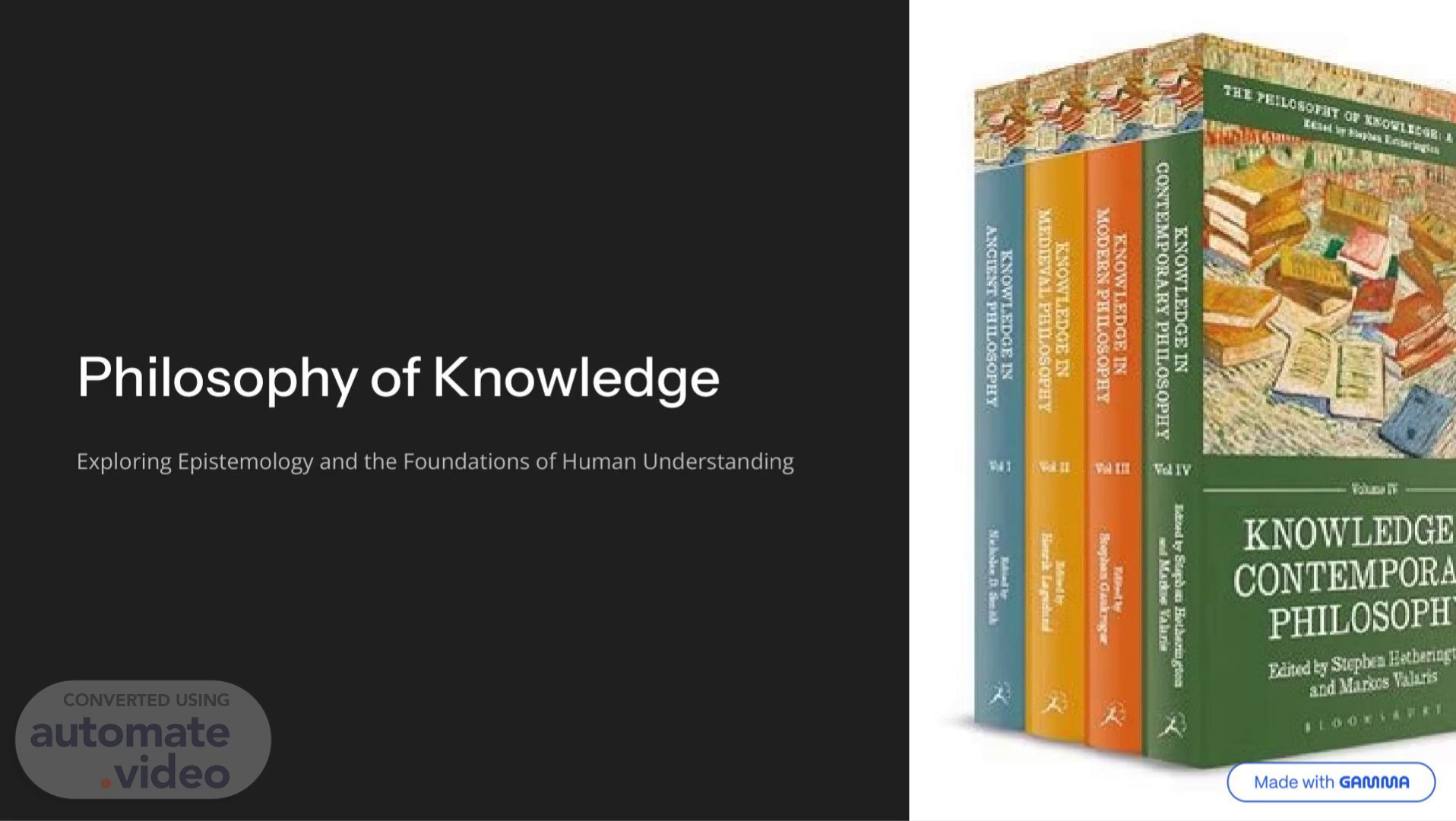
[Audio] Philosophy of Knowledge Exploring Epistemology and the Foundations of Human Understanding.
Scene 2 (7s)
[Audio] What We'll Explore 01 02 Introduction to Epistemology Sensualism & Empiricism Understanding the nature and importance of knowledge Knowledge derived from sensory experience 03 04 Rationalism Utopianism Reason as the primary source of knowledge Ideal forms of knowledge and truth 05 06 Skepticism Comparative Analysis Doubt and questioning as philosophical tools Strengths, weaknesses, and applications.
Scene 3 (37s)
[Audio] What is Epistemology? Epistemology is the branch of philosophy concerned with the nature, methods, validity, and scope of knowledge. It asks fundamental questions: What does it mean to know something? How do we acquire knowledge? What can we truly know? What distinguishes knowledge from belief?.
Scene 4 (1m 0s)
[Audio] Why Knowledge Matters Personal Growth Social Progress Knowledge shapes our identity, Shared knowledge drives beliefs, and understanding of civilization forward through ourselves and the world science, technology, and around us. cultural development. Informed Decisions Understanding how we know things helps us make better choices in life, career, and civic matters..
Scene 5 (1m 24s)
[Audio] Sensualism: The Foundation Definition Sensualism posits that all knowledge originates from sensory experience. We learn about the world through sight, hearing, touch, taste, and smell. Core Principles Senses are our primary source of information Without experience, we have no knowledge Abstract concepts derive from sensory input.
Scene 6 (1m 49s)
[Audio] Sensualism in Practice Child Development Scientific Observation Artistic Creation Infants learn about the world entirely Researchers gather data through direct Artists capture and interpret sensory through sensory exploration and observation and measurement of experiences through visual, musical, or physical interaction. phenomena. literary forms..
Scene 7 (2m 13s)
[Audio] Empiricism: Systematic Experience Definition Empiricism extends sensualism by emphasizing systematic 1 observation and experimentation as the basis for knowledge. Key Philosophers 2 John Locke, George Berkeley, David Hume developed comprehensive theories of knowledge from experience. Scientific Method 3 Empiricism forms the foundation of modern scientific inquiry and evidence-based reasoning..
Scene 8 (2m 50s)
[Audio] John Locke: Tabula Rasa The Blank Slate Locke argued that humans are born without innate ideas. The mind is a tabula rasa (blank slate) filled through experience. Two Types of Experience Sensation: External objects affecting our senses Reflection: Internal observation of mental operations Complex ideas form by combining simple sensory ideas..
Scene 9 (3m 18s)
[Audio] David Hume: Skeptical Empiricist Key Contributions Distinguished between impressions (vivid sensory experiences) and ideas (faint copies) Questioned causal relationships as mere habits of thought Argued that we cannot rationally justify induction Impact Hume's skepticism challenged the certainty of empirical knowledge while maintaining empirical methodology..
Scene 10 (3m 45s)
[Audio] Empiricism: Core Concepts Observation Direct sensory input provides raw data Experimentation Controlled tests verify observations Induction General patterns emerge from specific instances Verification Evidence confirms or refutes hypotheses.