Scene 1 (0s)
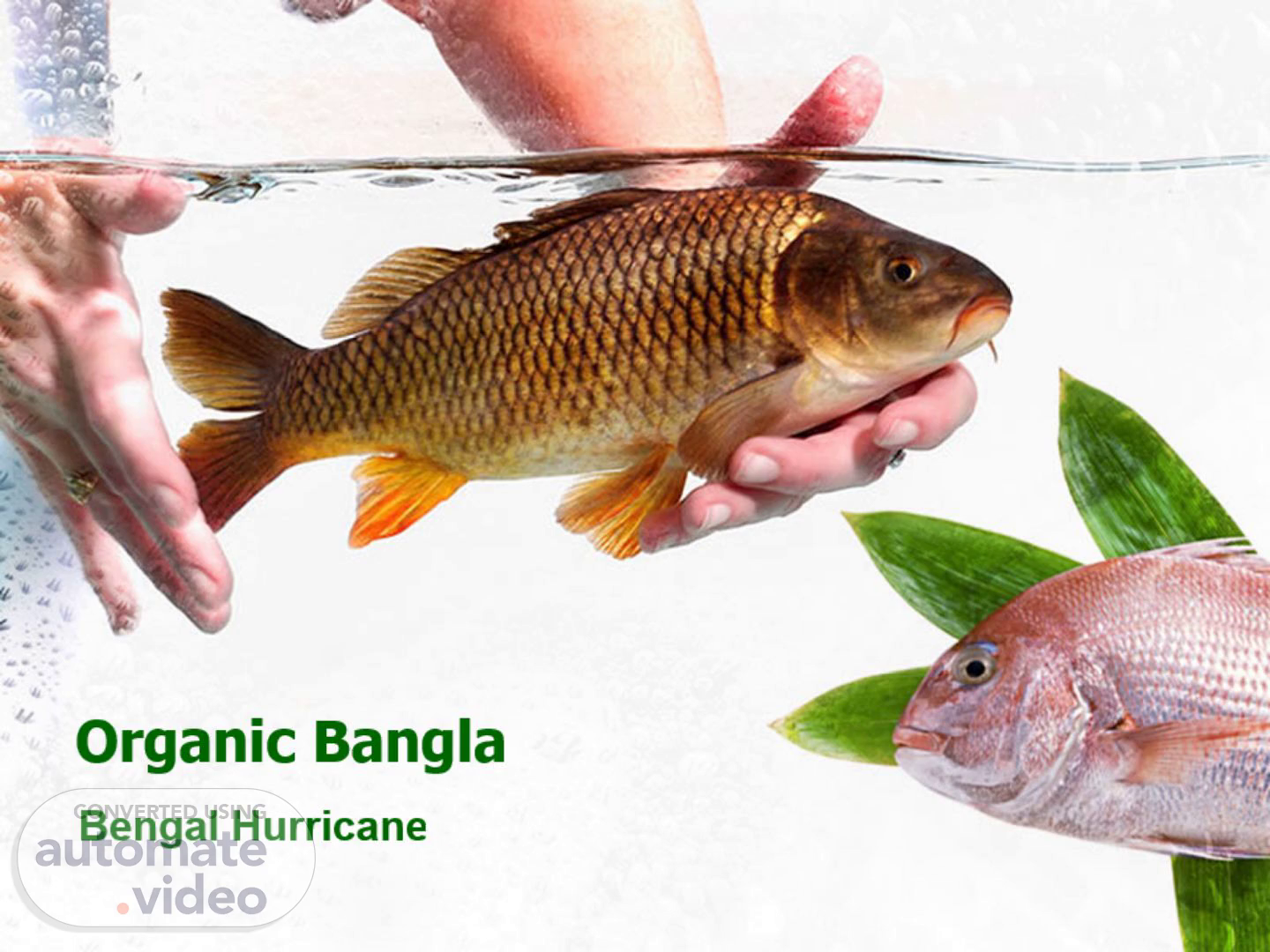
Organic Bangla. Bengal Hurricane Group.
Scene 2 (6s)
[Audio] Introduction : Bengal Hurricane Group commenced its journey in 1998 and has since developed into a leading export-oriented industrial enterprise in the Ready-Made Garments (RMG) sector. The Group currently maintains an annual export turnover exceeding USD 100 million, with its primary export destinations in the United States and Europe..
Scene 3 (31s)
[Audio] CSR Initiative and Strategic Diversification : As part of our Corporate Social Responsibility (CSR) initiatives and long-term strategic vision, we have established an affiliated company named Organic Bangla Fisheries Limited. This venture represents our commitment to sustainable agriculture, food security, and export diversification through environmentally responsible aquaculture practices..
Scene 4 (59s)
[Audio] Project Location and Scale: The project is currently being developed on approximately 25 hectares of land, with substantial scope for future expansion. As the project matures, we intend to increase both the land area and production capacity to meet growing domestic and international demand..
Scene 5 (1m 19s)
[Audio] Project Overview – IPRS-Based Organic Fish Farming: Organic Bangla Fisheries Limited is implementing the In-Pond Raceway System (IPRS) technology to produce high-quality organic fish in an efficient and environmentally sustainable manner. This advanced aquaculture system offers: Continuous water circulation and improved oxygenation Enhanced fish growth and health management.
Scene 6 (1m 47s)
[Audio] Project Overview – IPRS-Based Organic Fish Farming: Higher productivity compared to conventional pond systems At the initial phase, we have established 8 IPRS cells, structured as follows: 6 cells designated for commercial production 2 cells allocated for ongoing Research & Development (R&D)**.
Scene 7 (2m 10s)
[Audio] Project Overview – IPRS-Based Organic Fish Farming: We have a clear roadmap to expand the number of IPRS cells in the near future to scale up operations..
Scene 8 (2m 23s)
[Audio] Organic Feeding Strategy: A key differentiator of our project is our commitment to chemical-free, organic fish production. Fish will be fed with soybean-based feed and other natural ingredients No chemical-based or harmful feed inputs will be used Emphasis on producing safe, nutritious, and export-quality fish.
Scene 9 (2m 44s)
[Audio] Organic Feeding Strategy: Given the importance of soybean meal in aquaculture feed, collaboration with USSEC is highly relevant to ensure quality, sustainability, and efficiency in feed utilization..
Scene 10 (3m 0s)
[Audio] Market Development Strategy: Our market expansion plan will be implemented in phases: Phase 1: Distribution in the domestic market of Bangladesh Phase 2: Preparation for export (certification, compliance, cold chain development) Phase 3: Export to international markets, particularly the USA and Europe, leveraging our existing export expertise.
Scene 11 (3m 28s)
[Audio] Areas of Collaboration with USSEC: To ensure the successful implementation and global competitiveness of this project, we seek technical, marketing, and financial collaboration with USSEC in the following areas: a) Technical and Nutritional Support Optimization of soy-based aquafeed formulations for IPRS systems Feed efficiency improvement and cost optimization.
Scene 12 (3m 54s)
[Audio] Areas of Collaboration with USSEC: Training on best practices in aquaculture nutrition Support in sustainable and responsible feed management.
Scene 13 (4m 5s)
[Audio] Areas of Collaboration with USSEC: b) Technology and Capacity Building Technical guidance on scaling and optimizing IPRS operations Water quality management and system efficiency improvements Training programs for farm operators and technical teams Knowledge transfer on global aquaculture best practices.
Scene 14 (4m 26s)
[Audio] Areas of Collaboration with USSEC: c) Marketing and Market Access Support Insights into global seafood market trends and demand Assistance in accessing premium markets in the USA and Europe Branding support for organic and sustainable fish products Facilitation of buyer linkages and export opportunities.
Scene 15 (4m 45s)
[Audio] Areas of Collaboration with USSEC: d) Financial and Investment Facilitation Advisory support on project financing and investment structuring Access to potential funding sources, grants, or development programs Support in preparing bankable business models and financial projections.
Scene 16 (5m 4s)
[Audio] Areas of Collaboration with USSEC: e) Sustainability and Compliance Guidance on sustainable aquaculture practices Support for certification processes (Organic, Global G.A.P., BAP, HACCP, etc.) Development of traceability systems aligned with international standards.
Scene 17 (5m 25s)
[Audio] Future Vision: Our long-term vision is to: Expand beyond the current 25-hectare project area Increase the number of IPRS cells significantly Establish Bangladesh as a competitive exporter of organic fish products Contribute to foreign exchange earnings and sustainable economic development.
Scene 18 (5m 46s)
[Audio] Conclusion: Organic Bangla Fisheries Limited represents a strategic initiative aligned with global demand for sustainable and organic food products. With the support of USSEC, particularly in soybean-based nutrition, technical expertise, and market development, we are confident in building a scalable, efficient, and export-oriented aquaculture operation. We sincerely look forward to your valuable feedback and guidance on how USSEC can support us in achieving our objectives in both domestic and international markets..