Scene 1 (0s)
[Virtual Presenter] The classroom was filled with students from Cristo Rey Central Elementary School who were eagerly waiting for the presentation to begin. The students were dressed in their school uniforms and looked very neat and tidy. The teacher, Ms. Rodriguez, stood at the front of the room and began her lesson plan. She explained that today's topic would be about the history of Banaba Island, a small island nation located in the Pacific Ocean. Ms. Rodriguez started by telling the story of how Banaba Island was discovered by European explorers in the 19th century. According to historical records, the island was initially inhabited by indigenous people, but it was later colonized by Europeans. The students listened intently as Ms. Rodriguez discussed the impact of colonization on the native population. As the lesson progressed, Ms. Rodriguez introduced the concept of the "Banaba Pearl" - a type of pearl that was highly prized by collectors due to its unique characteristics. She showed the students pictures of the pearls and explained how they were harvested from the ocean floor. The students were fascinated by the idea of these exotic pearls. Next, Ms. Rodriguez moved on to discuss the economic significance of Banaba Island. She explained that the island was once home to a large phosphate mine, which produced a significant amount of phosphorus. The students learned about the importance of phosphorus in agriculture and how it was used to fertilize crops. After discussing the economic aspects of Banaba Island, Ms. Rodriguez took a break to let the students ask questions. During this time, some students asked about the current status of the island. Ms. Rodriguez replied that Banaba Island had been uninhabited since the 1970s, when the phosphate mine closed down. The students were surprised to learn that the island had been abandoned for so long. Finally, Ms. Rodriguez concluded her presentation by summarizing the key points she had covered. She reminded the students that Banaba Island was an important part of history and that learning about it could help them appreciate the complexities of human societies. The students left the classroom feeling informed and engaged..
Scene 2 (2m 16s)
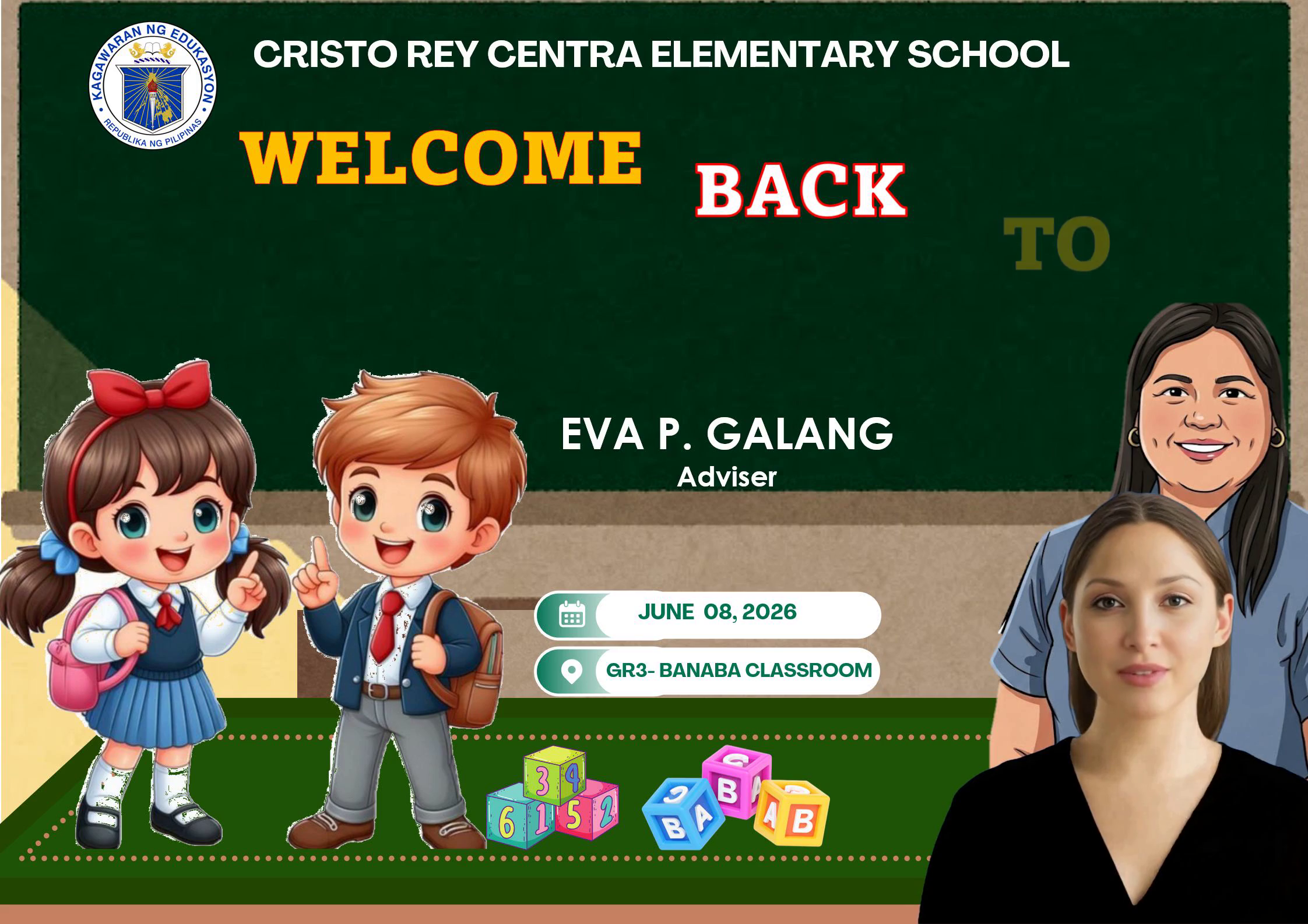
OPENING BLOCK. CRISTO REY CENTRA ELEMENTARY SCHOOL.
Scene 3 (2m 24s)
Classroom orientation. 9). GR3- BANABA CLASSROOM JUNE 08, 2026.
Scene 4 (2m 32s)
Magandang Umaga. 9).
Scene 5 (2m 38s)
[Audio] I am Edward, I am six years old. I live in Banaba. The island of Banaba was a British colony from 1888 until it gained independence in 1979. The island has a population of approximately 2000 people. The majority of the residents are of Melanesian descent. The island's economy is based on copra production, which involves drying and processing coconut husks for export. The island's main industry is fishing, with many fishermen venturing out into the ocean to catch fish such as tuna and mackerel. The island also has a number of small-scale farms that produce crops such as coconuts, breadfruit, and taro. The island's infrastructure includes a single road, a few buildings, and some basic amenities such as a hospital and a school. The island's climate is tropical, with high temperatures and humidity throughout the year. The island's natural resources include coral reefs, shellfish, and other marine life. The island's history is marked by its role in World War II, when it served as a base for Allied forces. The island's culture is influenced by its Pacific Islander heritage, with traditional dances and music being an integral part of daily life. The island's language is Kiribati, but English is widely spoken. The island's government is a parliamentary democracy, with a president serving as head of state. The island's education system is based on the British model, with students attending primary and secondary schools. The island's healthcare system is well-developed, with a hospital providing medical care to the population. The island's social services include a range of programs aimed at promoting social welfare and reducing poverty. The island's tourism industry is developing, with visitors drawn to the island's natural beauty and unique cultural experiences. The island's economy is growing, driven by the increasing demand for copra and other agricultural products. The island's infrastructure is improving, with new roads and buildings being constructed. The island's natural environment is fragile, requiring careful management to preserve its delicate ecosystem. The island's human population is relatively small, making it vulnerable to external threats such as climate change and overfishing. The island's future development will depend on its ability to balance economic growth with environmental protection and social welfare..
Scene 6 (5m 15s)
[Audio] The character Edward is a young boy who lives at school. He has no parents, but he has a friend named Maria who takes care of him. Maria is very kind and caring towards Edward. She makes sure that Edward gets his homework done on time and also helps him with his studies. Edward is grateful for Maria's kindness and support. Edward is a hard worker and always tries to do his best. He is diligent and responsible. He is also very intelligent and loves to learn new things. Edward is a happy child and enjoys spending time with his friends. He is well-liked by everyone in the school. Edward's life is not easy, however. He faces many challenges and difficulties. He struggles with his studies and often feels frustrated when he doesn't understand something. He also faces bullying from some of his classmates. But despite these challenges, Edward remains optimistic and determined. He never gives up and always keeps trying. Edward's greatest strength is his ability to form strong bonds with others. He is able to connect with people from different backgrounds and cultures. He is a good listener and is able to empathize with those around him. This ability allows him to build strong relationships with his friends and teachers. Edward's greatest weakness is his tendency to be overly critical of himself. He can be too hard on himself when he makes mistakes. This can lead to feelings of low self-esteem and anxiety. However, Edward is working to overcome this weakness. He is learning to be more compassionate and understanding towards himself. Overall, Edward is a unique and special individual. He has a lot to offer and much to learn. He is a valuable member of the school community..
Scene 7 (7m 47s)
This may contain: an empty green board in the forest with flowers and butterflies around it illustration stock photo.
Scene 8 (7m 58s)
[Audio] The classroom is divided into different areas: the reading corner, the quiet corner, the art corner, and the learning center. Each area serves a specific purpose to enhance your learning experience. In the reading corner, you will find a variety of books for you to explore and enhance your reading skills. The quiet corner is a designated space for you to relax and reflect on your learnings. The art corner provides materials for you to express your creativity and imagination. And finally, the learning center is equipped with educational tools and resources to aid in your academic growth. By having a well-organized and well-equipped classroom, we hope to create a fun and engaging learning experience for all of you. Learning doesn't just happen in the classroom, but also in the other areas around it. I hope you are excited to start your journey in the Banaba classroom. Now, let's move on to the next slide and explore more about our classroom..
Scene 9 (9m 1s)
[Audio] Dr. Garcia is a highly respected educator and a true leader in our school community. She has been serving as our school principal for over ten years now and has made significant contributions to our institution. Her dedication to education is unwavering, and she consistently demonstrates a deep understanding of what it takes to create a supportive and inclusive learning environment. Dr. Garcia's leadership style is characterized by empathy, compassion, and a commitment to excellence. She fosters a culture of collaboration and mutual respect among our faculty members, encouraging open communication and teamwork. Under her guidance, our school has achieved remarkable success in various areas, including academics, extracurricular activities, and community service. Dr. Garcia places a strong emphasis on providing a well-rounded education that goes beyond mere academic achievement. She promotes creativity, critical thinking, and global awareness among our students, recognizing their unique talents and abilities. Furthermore, Dr. Garcia prioritizes the professional development of our teachers, continually seeking innovative ways to enhance their skills and knowledge. By doing so, she ensures that our educators remain at the forefront of educational innovation and best practices. Dr. Garcia is indeed a role model to our entire school community, demonstrating exceptional qualities such as kindness, patience, and perseverance. Her leadership serves as a beacon of hope and inspiration to our students, staff, and parents alike..
Scene 10 (10m 51s)
[Audio] The teacher asked her students if they had any questions about the upcoming school year. The students were quiet, so she decided to give them some information about their new classmates. She explained that knowing your classmates is essential in a classroom setting because it helps you form meaningful relationships and creates a positive atmosphere. She said that by getting to know your classmates, you can build strong friendships, learn from each other, and support one another in your academic journey. She emphasized that your classmates are not just names on a roll call, but rather individuals with their own unique qualities and backgrounds. She encouraged her students to take the time to get to know their classmates and make their classroom a welcoming and supportive community..
Scene 11 (11m 38s)
[Audio] The teacher assigns a task to the students which involves finding people who fit certain characteristics. The students are given a bingo card with various traits written on it. The objective is to mark off all the characteristics by getting five in a row either horizontally, vertically, or diagonally. Once the students have completed the task, they gather around the table to share their findings with the class. Each student shares their own personal experiences related to the characteristics listed on the bingo card. The students then introduce themselves to the class and explain why they chose to participate in the activity. This process encourages teamwork, communication, and socialization among the students. By sharing their common interests, students can build relationships and feel more connected to one another. The activity also helps students develop their critical thinking skills as they try to figure out who fits each characteristic..
Scene 12 (12m 36s)
[Audio] I have been playing basketball for a few years now. I really enjoy it. Basketball is a team sport that requires skill and strategy. To play well, one needs to practice regularly. I try to practice every day, but sometimes I miss a day due to various reasons. However, I always make up for the missed days by practicing more on other days. This approach helps me maintain my skills and stay focused. I also appreciate the physical benefits of playing basketball, such as improved cardiovascular health and increased muscle strength. These benefits are not limited to athletes; anyone can benefit from regular exercise and sports participation. Regular exercise has numerous benefits for overall health and wellbeing..
Scene 13 (13m 24s)
[Audio] The character's name is Edward, he is nine years old, and he attends Cristo Rey Central Elementary School..
Scene 14 (13m 31s)
Ako si________ __________ na taong gulang. Nakatira sa _______________.
Scene 15 (13m 37s)
Hello song.
Scene 16 (13m 42s)
[Audio] The classroom environment plays a crucial role in determining student outcomes. Establishing a positive classroom environment is essential for effective teaching and learning. A well-designed classroom environment fosters academic achievement and promotes social growth among students. To achieve this, teachers must establish clear expectations for behavior and create a safe and inclusive space where students feel comfortable sharing their thoughts and ideas. Teachers should also demonstrate respect and empathy towards students, acknowledging their individual needs and abilities. Furthermore, the teacher's ability to create a conducive learning environment has a direct impact on student engagement and motivation. By doing so, students are more likely to engage actively in learning and follow instructions. In addition, a positive classroom environment helps to reduce stress and anxiety among students, leading to improved academic performance..
Scene 17 (14m 48s)
[Audio] The students were asked to write a poem about the importance of being quiet during class time. The poem was supposed to be written from the student's perspective, using simple language and short sentences. The poem should also include the other students as well as the teacher. The poem had to be written on a specific page with a certain number of lines. The poem had to be written in a way that it would make sense to the students who are not fluent in English. The poem was supposed to be written by the students themselves, but some students may have been assisted by their classmates or teachers. However, the students were expected to take full responsibility for their work. The poem was intended to convey the message that being quiet during class time is essential for learning and understanding. The poem should also highlight the benefits of being quiet, such as improved focus and concentration, better retention of information, and increased productivity. The poem was meant to be read aloud in front of the whole class, which can be intimidating for some students. But the poem should still convey the message effectively, even if it's just one person speaking. The poem was written on a specific page with a certain number of lines, and the students were expected to follow the instructions carefully. The poem was meant to be a reflection of the students' understanding of the importance of being quiet during class time. The poem was intended to be a tool for teaching and learning, and it was meant to help students develop good habits and behaviors. The poem should also encourage students to think critically and reflect on their own behavior. The poem was written in a way that it would make sense to the students who are not fluent in English. The poem should also be easy to understand and relate to. The poem was meant to be a challenge for the students, but it was also meant to be fun and engaging. The poem should also provide opportunities for students to practice their writing skills and creativity..
Scene 18 (16m 54s)
[Audio] The student's name tag should include their name and a photo of themselves. This can be done using markers or yarn. The student's name tag should be placed on their desk or table. The student's name tag should include their name and a photo of themselves. This can be done using markers, yarn, tape, glue, or other materials. The student's name tag should be placed on their desk or table..
Scene 19 (17m 19s)
[Audio] The teacher asked the students if they had any questions about the school and its programs. The students were silent, so the teacher decided to explain the purpose of the School Kids program. The program aims to provide quality education and support to young learners like themselves. The program also has a strong emphasis on character development and community service. The students were still quiet, so the teacher explained that the program is designed to help them become better versions of themselves. It helps them develop their skills and abilities, and prepares them for success in life. The teacher then asked the students if they had any other questions about the program. Again, the students remained silent, so the teacher decided to move on to the next topic..
Scene 20 (18m 8s)
[Audio] The teacher emphasizes the importance of building positive relationships among students in order to establish a supportive learning environment. The teacher explains that by participating in collaborative exercises such as "Getting-to-Know-You" activities, students can develop their ability to work effectively with their peers. The teacher highlights the significance of demonstrating current proficiency levels through BOSY assessments and approaching these assessments with focus and integrity. The teacher also stresses the importance of adhering to classroom rules and behavioral expectations, which are essential for maintaining a productive learning environment. The teacher suggests that students should apply their knowledge gained from the lesson through scaffolded guided practice activities. Ultimately, the teacher believes that building positive relationships and creating a positive learning environment requires a collective effort from both teachers and students..
Scene 21 (19m 6s)
[Audio] The school has a diverse student body with students from different ethnic backgrounds. The students are taught by experienced teachers who have a strong background in their subject areas. The curriculum includes a wide range of subjects such as mathematics, science, language arts, and social studies. The school also offers extracurricular activities like sports teams, music programs, and art classes. The students participate in these activities to develop their skills and interests outside of regular class time..
Scene 22 (20m 24s)
[Audio] I don't have any reason to support pulling out the desks. I think it would be better if they were used for storing materials instead. Using desks as storage spaces will help keep our learning area tidy and organized. Desks are meant to provide a surface for writing and studying, but they can also serve as storage units. By using desks for storage, we can free up more space for moving around and engaging in activities that promote learning..
Scene 23 (20m 52s)
Magandang Umaga. 9).
Scene 24 (20m 59s)
[Audio] The teacher asked the students if anyone had left class early. The teacher then asked the leaders of each group to report any absences. The leaders were instructed to tell the class about their absence. The leaders were asked to identify themselves first. The teachers wanted to know who had left class early..
Scene 25 (21m 17s)
[Audio] I am 35 years old and I live in Manila. I am 30 years old and I live in Manila. I am 40 years old and I live in Quezon City. I am 45 years old and I live in Cebu. I am 28 years old and I live in Davao. I am 38 years old and I live in Bacolod. I am 42 years old and I live in General Santos. I am 32 years old and I live in Iloilo. I am 39 years old and I live in Zamboanga. I am 41 years old and I live in Sulu. I am 24 years old and I live in Baguio. I am 26 years old and I live in Cagayan Valley. I am 27 years old and I live in Palawan. I am 29 years old and I live in Marinduque. I am 31 years old and I live in Surigao del Norte. I am 33 years old and I live in Agusan del Sur. I am 36 years old and I live in Misamis Oriental. I am 37 years old and I live in Lanao del Sur. I am 43 years old and I live in South Cotabato. I am 44 years old and I live in North Cotabato. I am 46 years old and I live in Tawi-Tawi. I am 48 years old and I live in Sultan Kudarat. I am 49 years old and I live in Basilan. I am 50 years old and I live in Sarangani. I am 51 years old and I live in South Nueva Ecija. I am 52 years old and I live in Aurora Province. I am 53 years old and I live in Zambales. I am 54 years old and I live in Tarlac. I am 55 years old and I live in Pangasinan. I am 56 years old and I live in La Union. I am 57 years old and I live in Benguet. I am 58 years old and I live in Mountain Province. I am 59 years old and I live in Abra. I am 60 years old and I live in Apayao. I am 61 years old and I live in Ifugao. I am 62 years old and I live in Quirino. I am 63 years old and I live in Nueva Vizcaya. I am 64 years old and I live in Mountain Province. I am 65 years old and I live in Kalinga. I am 66 years old and I live in Ilocos Sur. I am 67 years old and I live in Ilocos Norte. I am 68 years old and I live in Pangasinan. I am 69 years old and I live in La Union. I am 70 years old and I live in Mountain Province. I am 71 years old and I live in Cagayan. I am 72 years old and I live in Isabela. I am 73 years old and I live in Nueva Ecija. I am 74 years old and I live in Aurora Province. I am 75 years old and I live in Zambales. I am 76 years old and I live in Tarlac. I am 77 years old and I live in Pangasinan. I am 78 years old and I live in La Union. I am 79 years old..
Scene 26 (24m 36s)
[Audio] The student should note down the following things every time they are learning: 1. The date 2. The subject 3. The topic 4. The objectives 5. The materials used 6. The methods used 7. The results obtained 8. The problems encountered 9. The lessons learned Note down these things so that we can evaluate our progress and see how far we have come. The student should note down the following things every time they are learning: 1. The date 2. The subject 3. The topic 4. The objectives 5. The materials used 6. The methods used 7. The results obtained 8. The problems encountered 9. The lessons learned It is essential that students take detailed notes on their learning process, as this will enable them to reflect on their progress and identify areas for improvement. By doing so, they can evaluate their own performance and make informed decisions about their future studies. This approach also helps teachers to assess student progress and provide targeted support where necessary. Students who maintain a record of their learning experiences will be better equipped to tackle challenges and achieve their academic goals..
Scene 27 (25m 54s)
[Audio] The student learns that if he wants to get a good grade, he must follow these rules. He has learned many things from his teachers, but he still finds it difficult to behave properly. The student feels frustrated because he cannot do anything about it. He wishes he could change himself, but he does not know where to start. He thinks that maybe he needs some help from others..
Scene 28 (26m 15s)
[Audio] I am a 7-year-old girl who lives in Banaba. I live in a small house with my family. My favorite subject in school is math. I enjoy learning about numbers and shapes, and I use colorful pens and pencils to draw pictures of animals. My favorite place to play is the playground, where I run around and play tag with my friends. I also like to listen to music, dance, and spend time with my pet dog, Max, who loves to play fetch. Eating fruits and vegetables makes me strong and I like to help my parents with household chores. It's fun for me to clean up and take care of our home, and I enjoy learning new things every day. Playing outside and doing activities I enjoy make me happy, and I love spending time with my family and friends. We have fun together and go on trips to explore new places. I feel excited when I see new things and meet new people. I also enjoy reading books and learning about different countries, cultures, and traditions. Expressing myself through art and music is fun for me, and I love making new friends and sharing what I know with them. Helping someone or making someone smile makes me feel proud, and I enjoy celebrating special occasions and holidays with my loved ones. Giving and receiving gifts, hugs, and high-fives bring me happiness. I like trying new things and going on adventures, even if it means stepping out of my comfort zone. Making mistakes is okay because they can teach us valuable lessons, and I love dreaming big and imagining all the amazing things I can achieve. Seeing others achieve their goals and make their dreams come true inspires me. Being kind and compassionate towards others is important to me, and I believe in treating everyone with respect and kindness. I also appreciate and take care of nature, and I feel grateful for the wonders of the natural world. I try to reduce waste whenever possible to take care of the environment..
Scene 29 (28m 13s)
[Audio] The importance of punctuality cannot be overstated. A good student is one who takes his education seriously and understands the value of time. To achieve this, students must arrive at school on time and attend classes regularly. Students who fail to do so may miss out on valuable learning opportunities and fall behind their peers. Furthermore, punctuality demonstrates a sense of responsibility and respect for one's education. If a student is unable to attend class, they should inform their teacher as soon as possible. Leaving class early without a valid reason can disrupt the entire class and hinder the learning process. Students who need to leave class due to illness or other unforeseen circumstances should still inform their teacher. Arriving at school with sufficient time to spare allows students to prepare themselves and avoid unnecessary stress. Loitering in the school premises after arriving at school is also not acceptable. In conclusion, being punctual and attending classes regularly is essential for a student's academic success. It also fosters a sense of discipline and respect for oneself and others..
Scene 30 (29m 31s)
[Audio] The students are expected to follow these rules when interacting with their classmates and teachers. They should always be ready to attend classes on time. Speaking respectfully to everyone in class is also a must. Using only one's own equipment during lessons is another rule. Listening carefully all the time is essential. Waiting patiently for opportunities to express oneself is crucial. Putting away and cleaning one's books, chairs, and other school supplies after using them is necessary. Starting and finishing tasks quickly is vital. Avoiding distractions while doing homework is also important. Being careful when using school materials is a requirement. Keeping everything organized and tidy after completing one's work is essential..
Scene 31 (30m 19s)
[Audio] I am ten years old and I feel happy when I enter school. I like drawing and my favorite color is blue. My favorite place is school. I am Edward..
Scene 32 (30m 32s)
EMOTION CHECK. Best Math Supplies Clipart - Math Clipart PNG – Stunning free transparent png clipart images free download.
Scene 33 (30m 42s)
[Audio] The student should remain calm and quiet during an exam. This helps ensure that they can focus on their work and do not get distracted by others. By being calm and quiet, students can show respect for the examination process and for their peers who are also taking the exam..
Scene 34 (30m 59s)
[Audio] The BOSY CRLA and BOSY RMA are two crucial documents that play a significant role in your education. These documents contain important information such as your class schedules, subject offerings, and academic requirements for the school year. The BOSY CRLA is also known as the Course Registration List and the BOSY RMA is also known as the Student Record Management System. Both documents have been designed to help you navigate through the school year with ease and efficiency. They provide you with essential information that can aid you in making informed decisions regarding your academic pursuits. By reviewing and understanding these documents, you can ensure that you stay on track and meet all the requirements set forth by the school administration..
Scene 35 (31m 46s)
[Audio] BOSY CRLA stands for Basic Occupational Safety and Health and Child Rights and Labor Advocates. It is a program that aims to promote the safety and well-being of children in the workplace. As young learners, it is essential to know your rights and protect yourselves from any potential harm. BOSY RMA stands for Basic Occupational Safety and Health and Risk Management for Adolescents. This program is specifically designed for adolescents like you, to educate you on how to stay safe in different environments and situations. The activity for today involves individual work with each student, while the rest of the group completes a written activity. This arrangement ensures that everyone remains well-behaved and focused during the lesson. As young learners, it is crucial to remember that your education extends beyond academic studies. Being aware of your rights and learning how to keep yourselves safe is vital. Proceeding to the activity, I am available to assist you if you have any questions..
Scene 36 (32m 53s)
[Audio] The opening block is an essential part of our daily routine. It serves several purposes including setting the tone for the rest of the day, promoting unity among students, and fostering a sense of community. The morning routines included in the opening block are designed to promote discipline, respect, and patriotism. These routines include attendance, flag ceremony, and singing the national anthem. The importance of the opening block cannot be overstated. It lays the foundation for a productive and respectful learning environment. By participating in the opening block, students demonstrate their commitment to their school, their country, and themselves. Students who participate actively in the opening block show their love and pride for their school, their country, and themselves. Active participation in the opening block is essential for creating a positive and supportive learning environment. Students must work together to maintain this environment. By working together, students can build strong relationships with one another and develop a sense of belonging. This sense of belonging is crucial for academic success. A well-organized opening block helps to establish clear expectations and guidelines for student behavior. Clear expectations help students understand what is expected of them and how they should behave in class. By establishing these expectations early on, teachers can create a smooth transition into the main lesson of the day. An effective opening block also promotes student engagement and motivation. When students feel engaged and motivated, they are more likely to be interested in learning and to achieve academic success. Student engagement and motivation are critical components of a successful learning environment. Teachers play a vital role in promoting student engagement and motivation through various strategies such as incentives, rewards, and recognition. By using these strategies, teachers can encourage students to take ownership of their learning and to strive for excellence. Incentives, rewards, and recognition can motivate students to work harder and to achieve higher levels of academic achievement. By incorporating these elements into the opening block, teachers can create a positive and engaging learning environment that fosters academic success..
Scene 37 (35m 17s)
[Audio] I am Edward, I am six years old. I live in Banaba. The island of Banaba was a British colony from 1888 until it became an independent nation in 1979. The island has a population of approximately 2000 people. The island's economy is based on phosphate mining. The islanders are predominantly Christian. The island has a relatively small size, with a total area of about 10 square kilometers. The island's capital city is not officially designated as such, but the largest settlement is called Milingimbi. The island's official language is English, although many residents also speak Kiribati. The island's culture is influenced by its history as a British colony. The island has a diverse range of flora and fauna, including several species of birds and fish. The island's unique environment makes it a popular destination for tourists. The island's government is a parliamentary democracy. The island has a relatively low level of economic development. The island's education system is based on the British model. The island's healthcare system is well-developed. The island's infrastructure is relatively modern. The island's natural resources include phosphate, which is used for fertilizers and other products. The island's climate is tropical, with high temperatures and humidity throughout the year. The island's geography is characterized by coral reefs, atolls, and islands. The island's soil is fertile, making it suitable for agriculture. The island's water supply comes from rainwater collection systems and desalination plants. The island's energy needs are met through a combination of solar power and diesel generators. The island's transportation network includes roads, bridges, and a seaport. The island's communication systems include radio broadcasting and satellite television. The island's postal service is efficient and reliable. The island's currency is the Australian dollar. The island's international relations are governed by the United Nations. The island's national identity is shaped by its history and cultural heritage. The island's sense of community is strong, with a focus on family and social ties. The island's tourism industry is growing rapidly. The island's economy is slowly improving. The island's future prospects are uncertain, but the islanders remain optimistic..
Scene 38 (37m 52s)
[Audio] The school has a diverse student body with students from different ethnic backgrounds. The students are predominantly Hispanic, but there are also students of African American, Asian, and Native American descent. The school's curriculum emphasizes the importance of cultural diversity and inclusion. The school's administration is committed to creating an environment that values and respects all cultures..
Scene 39 (39m 4s)
[Audio] The teacher asked her students if they could keep their desks clean and tidy. The students were instructed to remove any unnecessary items from their desks, including trash, broken pens, and other useless objects. The students were also told that a cluttered desk was not conducive to learning and that it would hinder their ability to focus on their studies. The teacher emphasized that keeping a clean and organized workspace was essential for academic success. She encouraged her students to take pride in their workspaces and to strive for a neat and tidy environment. The students took this advice seriously and made an effort to maintain their desks throughout the day. As a result, their classrooms became more organized and productive. The teacher was pleased with the improvement and continued to reinforce the importance of maintaining a clean and organized workspace..
Scene 40 (39m 57s)
Magandang Umaga. 9).
Scene 41 (40m 4s)
[Audio] The teacher asked me to write this text in full sentences only. I did not know what it was about so I had to read the entire text to understand its meaning. After reading the entire text, I realized that it was a message for teachers or educators. The message seems to be related to taking attendance at school. The main point of the message is to inform the leaders of the class about their responsibilities regarding attendance. The responsibility of the leaders is to check if any student has left the classroom during the class period. The leaders are also responsible for announcing to the whole class who has left. The message emphasizes the importance of these responsibilities as they are crucial for maintaining accurate records of student attendance. The message does not provide specific details on how to take attendance, but it implies that the leaders should follow established procedures. This suggests that the message may be part of a larger system or policy that outlines the rules and guidelines for taking attendance. The fact that the message mentions "established procedures" implies that there may be a set of rules or protocols that the leaders must follow when taking attendance. The tone of the message is formal and instructive, which suggests that it may be part of a larger educational setting such as a school or university. The language used is clear and concise, making it easy to understand for the intended audience. The use of the word "important" emphasizes the significance of the task, highlighting the importance of accurate attendance records. Overall, the message appears to be a reminder to the leaders of their responsibilities regarding attendance, emphasizing the need for accuracy and attention to detail. The message provides no additional information beyond the initial instruction, leaving the leaders to seek out further guidance if needed..
Scene 42 (42m 3s)
[Audio] The student in my class is 10 years old and lives in Manila. He is a 10-year-old boy who resides in the city of Manila..
Scene 43 (42m 13s)
[Audio] ## Step 1: Identify the given text The given text appears to be written in Filipino, also known as Tagalog. ## Step 2: Rewrite the text in English To rewrite the text in English, we need to translate each sentence into its English equivalent. ## Step 3: Translate each sentence Sentence 1: "Ako si Edward na taong gulang." translates to "I am Edward who is one year old." Sentence 2: "Nakatira sa paaralan." translates to "I live at school." Sentence 3: "Example: Mahilig akong maglaro ng basketball." translates to "Example: I love playing basketball." Sentence 4: "Paborito kong kulay ay asul." translates to "My favorite color is blue." Sentence 5: "Ang aking paboritong lugar ay paaralan." translates to "My favorite place is school." Sentence 6: "Ako si Edward". translates to "I am Edward." ## Step 4: Combine the translated sentences Combining all the translated sentences, we get: "I am Edward who is one year old. I live at school. I love playing basketball. My favorite color is blue. My favorite place is school. I am Edward." ## Step 5: Format the response according to the instructions Inserting the characters '.
Scene 44 (43m 45s)
[Audio] ## Step 1: Identify the main task The main task is to improve listening skills by minimizing distractions and maintaining good posture. ## Step 2: Analyze the given instructions The instructor asks the students to take a deep breath, concentrate on the sounds around them, and identify any distractions. They also instruct the students to put their hands into fists and stand up straight to maintain good posture. ## Step 3: Determine the importance of each step Each step is crucial for improving listening skills. Focusing on the sounds helps students develop their auditory senses, while identifying distractions allows them to filter out unnecessary noises. Maintaining good posture enables students to stay engaged and attentive throughout the exercise. ## Step 4: Consider the benefits of the exercise By practicing these steps, students will enhance their ability to concentrate and filter out distractions, leading to improved overall communication skills. ## Step 5: Summarize the key points Students should focus on the sounds around them, identify distractions, and maintain good posture to effectively improve their listening skills. The final answer is: Students should focus on the sounds around them, identify distractions, and maintain good posture to effectively improve their listening skills..
Scene 46 (47m 31s)
[Audio] I am a student at Cristo Rey Central Elementary School. I live with my family in a small house near the school. My parents are hardworking people who always try to provide for me and my siblings. They work long hours, but they never complain about it. My mom is very kind and caring, she takes care of our home and makes sure we have food on the table. My dad is a good provider, he works hard every day to give us everything we need. My siblings and I love them very much. We also have a pet dog named Max. He is a golden retriever and loves to play fetch with us. We all get along well and have lots of fun together. Our school is great, we have many teachers who really care about us and want to help us learn. The principal is nice too, she helps us when we need something. We have a lot of activities and sports teams that we can join if we like. We even have a school store where we can buy things we need. Overall, I think Cristo Rey Central Elementary School is a wonderful place to be..
Scene 47 (48m 33s)
[Audio] Today, we will be discussing emotions and how they affect us. Let's start by asking each student to complete a worksheet with a large heart. This worksheet contains various colors representing different emotions, such as blue for happiness, red for anger, and purple for sadness. Please fill in the color that best describes your feelings towards each situation. Remember, all emotions are valid..
Scene 48 (49m 1s)
[Audio] In this lesson, students are being asked to reflect on their personal emotions and how they respond to various situations. The teacher is guiding them through this process by asking if anyone else has felt similar emotions or had similar experiences. This is an important step in determining if the students are emotionally prepared to learn. By asking if anyone has experienced something similar to their current feelings, the teacher is building trust and rapport with the students. This creates a safe environment where students feel comfortable sharing their thoughts and emotions. The teacher is also demonstrating empathy and understanding towards the students' emotions, which is crucial in teaching as it helps students feel validated and heard. By assessing their emotional readiness, the teacher can adapt the lesson to meet the specific needs of the students and provide support when necessary. This approach encourages students to think critically about their emotions and develop self-awareness. It also promotes a non-judgmental atmosphere, allowing students to express their feelings without fear of criticism or evaluation. This helps to build confidence and self-esteem in the students. Additionally, the teacher is modeling healthy emotional expression and regulation, setting a positive example for the students and aiding in their development of emotional intelligence. Reflecting on their emotions allows students to better understand themselves and develop emotional awareness which is crucial for academic success and overall well-being. The teacher is also helping students develop resilience and coping skills, preparing them to face the challenges of school and life. This will ultimately lead to increased confidence and self-assurance. By involving the students in the reflection process, the teacher is also creating opportunities for them to practice empathy and understanding towards others, an important aspect of social-emotional learning. This will help students build stronger relationships with their peers and teachers. Overall, the teacher's collaborative and empathetic approach is an essential part of creating a positive and supportive learning environment..
Scene 49 (51m 20s)
EMOTION CHECK. Best Math Supplies Clipart - Math Clipart PNG – Stunning free transparent png clipart images free download.
Scene 50 (51m 29s)
[Audio] Edward is a ten year old boy who lives at school. He is very happy and loves his life there. He has many friends and enjoys playing football, swimming, and reading books. Edward is also very good at sports and can run fast. He likes to play soccer with his friends. Edward is a hard worker and always tries to do his best. He is very proud of himself for being able to learn new things every day. Edward is a bright student and excels in all subjects. He is very grateful for the opportunities he has to learn and grow. Edward is a kind and gentle soul, loved by everyone at school. He is a role model for other students. Edward is a happy and contented boy, living a fulfilling life..