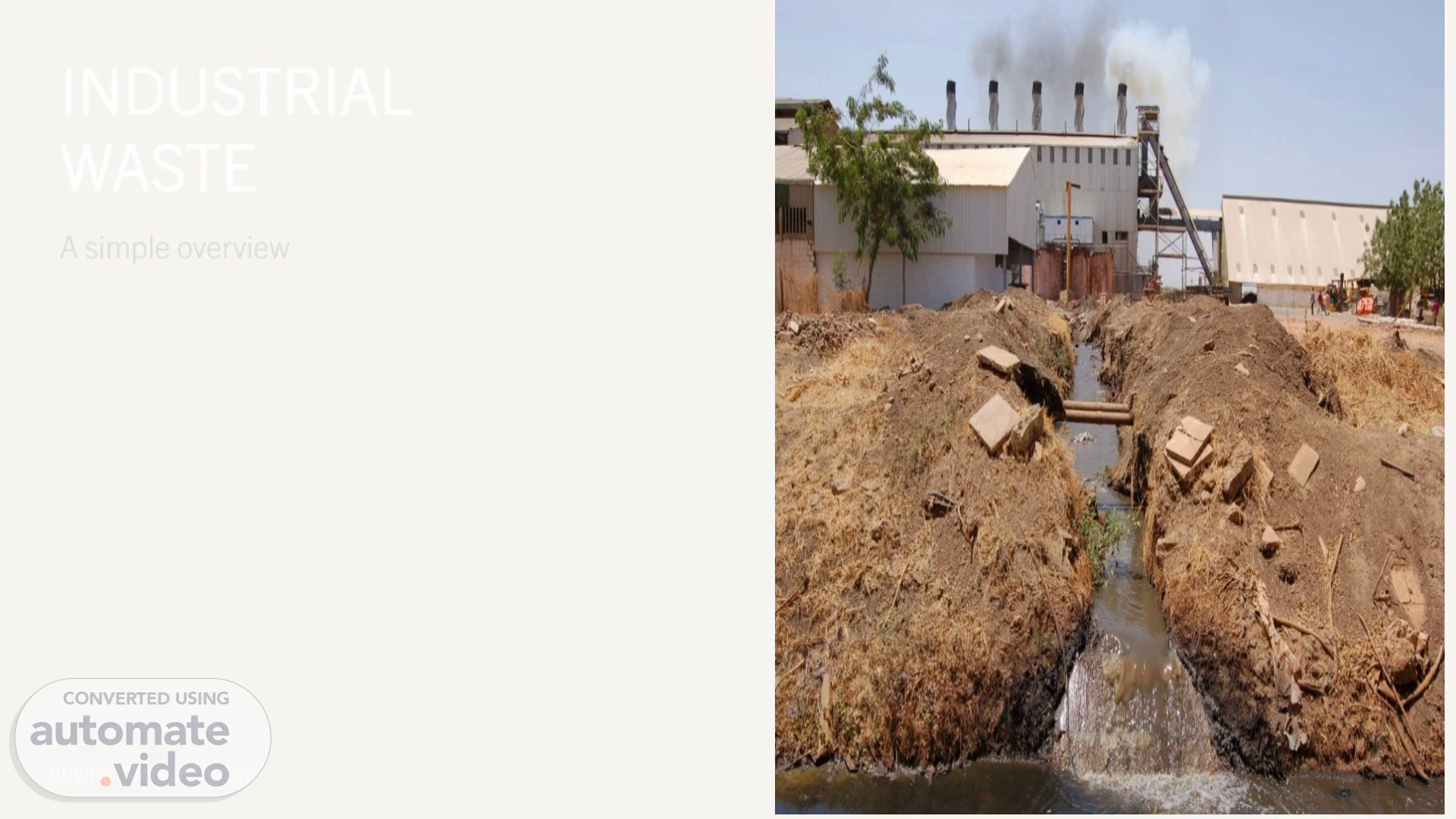
Scene 1 (0s)
KARTHIKEYAN . A 9924001018. INDUSTRIAL WASTE A simple overview.
Scene 2 (15s)
1. Abstract. • Industrial waste is generated during manufacturing, processing and other industrial activities. • It may be present as solid waste, liquid effluent, gaseous emissions or hazardous residues. • If not properly managed, industrial waste can pollute water, air and soil. • Waste reduction, treatment, recycling and safe disposal are important for sustainable industry..
Scene 3 (43s)
2. Introduction. • Industries are essential for economic development but also generate different forms of waste. • The amount and composition of waste depend on the raw materials and production process. • Some wastes are biodegradable, while others may contain toxic or persistent substances. • Proper waste management helps protect the environment and human health..
Scene 4 (1m 10s)
3. Types of Industrial Waste. Liquid waste. Industrial wastewater, oils, chemicals and process effluents..
Scene 5 (1m 39s)
4. Major Sources. • Chemical and pharmaceutical industries • Textile and dyeing industries • Food and beverage processing industries • Mining and metal-processing industries • Paper, pulp and petroleum industries.
Scene 6 (1m 57s)
5. Environmental Impacts. Water pollution. Untreated effluents can reduce water quality and harm aquatic organisms..
Scene 7 (2m 25s)
6. Industrial Wastewater. • May contain organic matter, suspended solids, oils, nutrients and chemicals. • High BOD and COD can reduce dissolved oxygen in receiving water. • Treatment is necessary before discharge or reuse..
Scene 8 (2m 46s)
7. Waste Treatment Methods. • Physical treatment – screening, filtration and sedimentation. • Chemical treatment – neutralization, precipitation and oxidation. • Biological treatment – microorganisms degrade biodegradable organic matter. • Advanced treatment – adsorption, membrane processes and other polishing methods. • Safe disposal or reuse of treated waste..
Scene 9 (3m 10s)
8. Waste Reduction and Prevention. • Use cleaner and more efficient production methods. • Reduce raw-material and water consumption. • Reuse and recycle materials whenever possible. • Segregate hazardous and non-hazardous wastes. • Regularly monitor and maintain treatment systems..
Scene 10 (3m 31s)
9. Conclusion. • Industrial waste is a major environmental concern associated with modern production. • Proper segregation, treatment, recycling and disposal can reduce pollution. • Cleaner production and waste minimization are important for sustainable development. • Effective industrial waste management protects both the environment and public health..