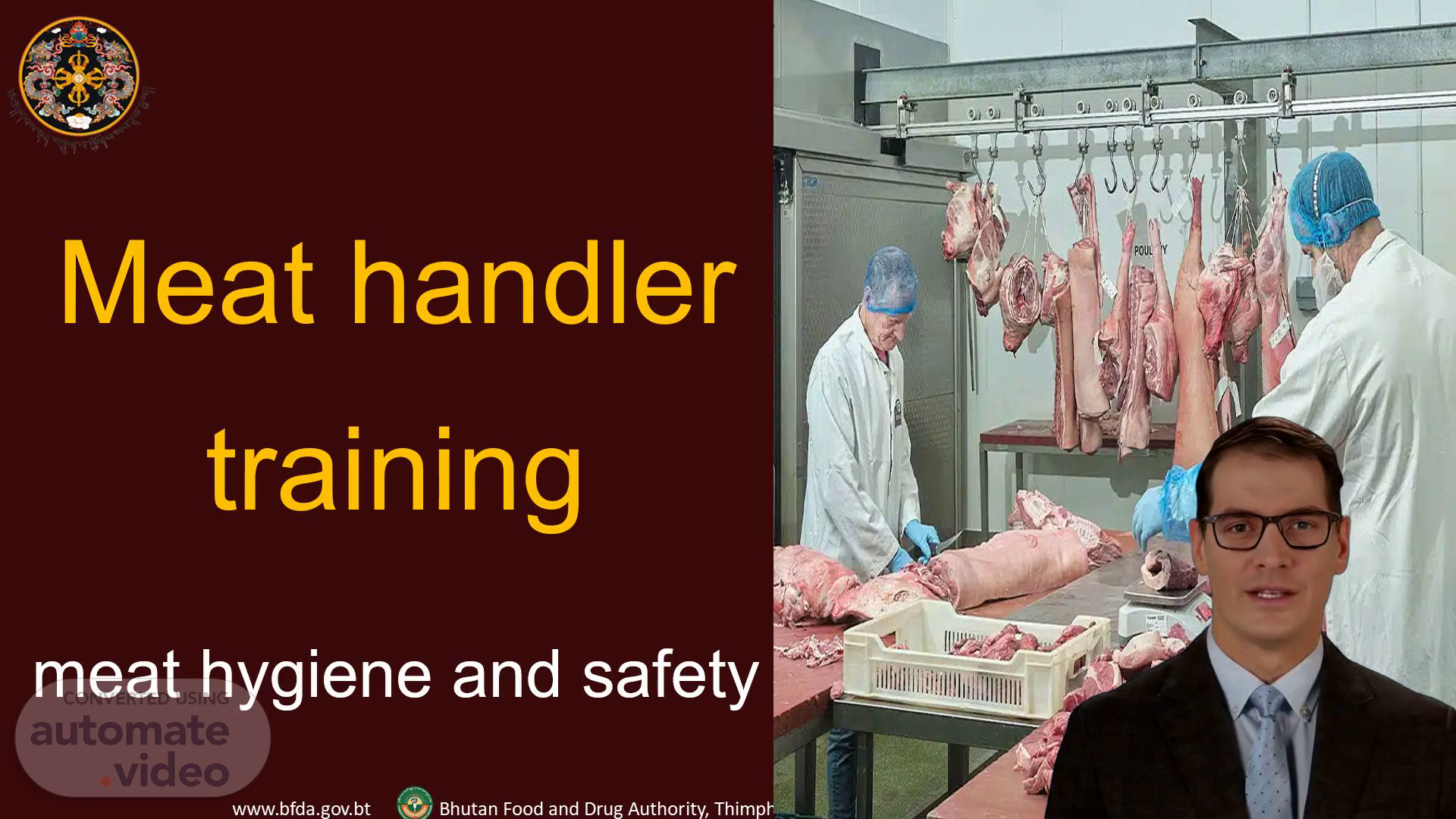
Scene 1 (0s)
[Virtual Presenter] Meat handlers must follow strict guidelines to prevent contamination and maintain a clean environment. This includes washing hands frequently, wearing gloves, and using proper cleaning and sanitizing procedures. Proper ventilation and temperature control are also essential to prevent bacterial growth..
Scene 2 (21s)
[Audio] The meat industry has been plagued by scandals involving the use of antibiotics and hormones in animal feed. The use of antibiotics in animal feed is not only illegal in some countries but it's also widely recognized as being detrimental to human health. The use of hormones in animal feed is also banned in many countries due to its potential to cause harm to humans and other animals. Both of these practices have been linked to antibiotic resistance and the development of superbugs. The meat industry has also faced criticism for its lack of transparency regarding the origin of its ingredients. Many consumers are unaware of where their meat comes from and how it was produced. This lack of transparency has led to concerns about the welfare of animals used in the meat industry..
Scene 3 (1m 10s)
[Audio] Meat handlers are responsible for maintaining the cleanliness and sanitation of their work environment. They must adhere to strict guidelines and regulations set by government agencies to prevent contamination and ensure public health. Failure to follow these guidelines can result in severe penalties, including fines and imprisonment. Furthermore, poor handling practices can lead to serious health issues for consumers, such as food poisoning and other illnesses. To mitigate this risk, it is essential to provide meat handlers with comprehensive training programs that cover all aspects of handling and processing. This includes knowledge of proper cleaning and sanitizing procedures, as well as safe storage and transportation methods. By investing in such training, we can reduce the risk of contamination and promote a safer food supply..
Scene 4 (2m 6s)
[Audio] The scope of this training covers all aspects of meat handling including hygiene and safety. All individuals involved in the meat supply chain are included, such as meat shop owners, meat retailers, and wholesalers. Meat handlers must understand the importance of proper hygiene and safety measures to ensure the quality and safety of the meat products they handle. This protects the health of consumers and helps maintain the reputation and success of their businesses. The responsibilities and considerations of being a meat handler are discussed in detail in the following slides..
Scene 5 (2m 42s)
[Audio] The 2014 regulations provide guidelines for meat handling, hygiene, and safety. They cover all aspects of meat handling, including hygiene, sanitation, and packaging. The regulations require meat handlers to follow specific procedures for cleaning and sanitizing equipment, as well as for storing and disposing of waste. They also specify the types of personal protective equipment (PPE) that should be worn by meat handlers. The regulations emphasize the importance of maintaining a clean and sanitary environment, free from contamination and hazards. The regulations also outline the procedures for reporting accidents and near-misses, as well as for conducting regular inspections and audits. By following these regulations, meat handlers can help prevent the spread of disease and ensure the safety and quality of the meat products. The 2024 training manual provides guidelines and best practices for handling meat in a safe and hygienic manner. It includes information on proper food handling techniques, such as washing hands frequently and using gloves when handling raw meat. The manual also covers topics like temperature control, refrigeration, and freezing. Additionally, it provides guidance on how to identify and handle potential contaminants, such as bacteria and viruses. The manual emphasizes the importance of maintaining accurate records and tracking inventory levels. By following the guidelines outlined in the manual, meat handlers can improve their skills and knowledge, leading to better outcomes for consumers and the meat industry as a whole. The GHP/GMP criteria for licensing of meat businesses were established in 2001. These criteria outline the standards that meat businesses must meet in order to obtain a license. The criteria include requirements for maintaining a clean and sanitary environment, as well as for implementing effective pest control measures. Meat businesses must also demonstrate compliance with regulations related to animal welfare, food safety, and environmental protection. The criteria serve as a framework for ensuring that meat businesses operate in a safe and sanitary manner, and that they adhere to strict standards for quality and cleanliness. The Livestock Act of Bhutan, enacted in 2017, regulates the meat industry by covering all aspects of livestock production, including the handling and transportation of animals for slaughter. The act requires meat producers to implement humane treatment and care of animals, as well as to maintain accurate records and track inventory levels. The act also outlines the procedures for reporting accidents and near-misses, as well as for conducting regular inspections and audits. By complying with the regulations set forth in the act, meat producers can help ensure the safety and quality of the meat products. The Livestock Rules and Regulations of 2025 cover the housing, feeding, and care of animals, as well as the handling of meat during processing. The rules require meat producers to maintain a clean and sanitary environment, as well as to implement effective pest control measures. The rules also outline the procedures for reporting accidents and near-misses, as well as for conducting regular inspections and audits. By adhering to these rules, meat producers can help ensure the health and well-being of the animals, as well as the safety and quality of the meat products. The welfare standards for the transport of animals, established in 2026, aim to ensure that animals are transported in a safe and humane manner. The standards require meat producers to use specialized vehicles and equipment designed for animal transport, as well as to maintain accurate records and track inventory levels. The standards also outline the procedures for reporting accidents and near-misses, as well as for conducting regular inspections and audits. By complying with these standards, meat producers can help ensure the safety and well-being of the animals during transportation. The minimum standards for.
Scene 6 (6m 56s)
[Audio] The slaughter of animals and sale of meat is strictly prohibited on certain lunar dates as per the Buddhist tradition. These dates are marked on the calendar with specific names such as the first lunar month, the fourth lunar month, and the fifteenth lunar date. On these days, all activities related to animal slaughter and meat sales are halted. This prohibition is based on the belief that these dates hold spiritual significance and are considered sacred by many Buddhists. The exact dates may vary depending on the lunar cycle, but they generally fall within the months of April and May. It's essential to note that this prohibition applies not only to commercial establishments but also to individual households and farms. Everyone involved in the livestock industry should be aware of these restrictions to avoid any legal issues or penalties. Furthermore, it's crucial to respect these cultural and religious traditions, even if one does not personally adhere to them. By understanding and adhering to these prohibitions, we can promote a more harmonious coexistence between different communities and cultures..
Scene 7 (8m 4s)
[Audio] The meat handler's license is issued by the Bhutan Agriculture & Food Regulatory Authority (BAFRA) and is mandatory for all meat handlers. The license must be obtained within 30 days of employment. The license holder's name is displayed prominently on the license, along with their CID number. The license is renewed every five years according to the Bhutan Food Rules of 2017. The license is valid for five years from its issue date. The Director General of BAFRA is the issuing authority for the meat handler's license. All guidelines and regulations set by BAFRA must be followed to maintain the safety and hygiene of meat products..
Scene 8 (8m 46s)
[Audio] Meat is the flesh or muscle of animals that humans consume. The pH level of meat decreases within one day of slaughter, becoming more acidic and changing its color to a bright red hue. This natural process is similar to how fruits ripen. Over time, however, this acidity can lead to spoilage if not handled properly. As meat ages, it can undergo oxidation, causing it to turn brown and become unsafe to eat. Understanding these changes is crucial for maintaining proper meat handling and storage practices..
Scene 9 (9m 19s)
[Audio] The meat industry has been around for thousands of years, with evidence of meat consumption dating back to ancient civilizations. The meat industry has evolved over time, with advancements in technology leading to more efficient production methods. Modern meat production involves large-scale farming operations, which can be beneficial but also pose environmental concerns..
Scene 10 (9m 43s)
[Audio] The meat industry is highly regulated and requires adherence to strict standards to prevent contamination and foodborne illnesses. The primary goal is to maintain the highest level of cleanliness and sanitation throughout all stages of production, processing, storage, and distribution. To achieve this, companies must implement rigorous quality control measures, including regular inspections and testing of raw materials, equipment, and finished goods. Sourcing meat from approved suppliers is critical to ensuring compliance with regulations and maintaining high standards of quality and safety. Approved suppliers have undergone thorough inspections and certifications, which include veterinary and export inspections, as well as import permits and laboratory tests. Companies must verify the authenticity of their suppliers and regularly monitor their performance to ensure ongoing compliance. Furthermore, companies must adhere to strict guidelines for handling and storing meat, including proper cleaning and disinfection procedures, and accurate labeling and documentation. By implementing these measures, companies can minimize the risk of contamination and ensure the highest quality and safety standards for meat products..
Scene 11 (11m 1s)
[Audio] The quality of meat is crucial in determining its taste, tenderness, and safety. The level of marbling in beef is a key factor in this regard. Marbling refers to the intramuscular fat deposits that can be found throughout the meat. High levels of marbling are generally considered desirable because they enhance the flavor and tenderness of the meat. Furthermore, beef with high marbling tends to have a higher water binding capacity, resulting in better retention of moisture during cooking. In contrast, pork typically has a lower level of marbling, making it leaner than beef. However, pork's lower marbling does not necessarily mean it lacks flavor or tenderness. Instead, its moderate water binding capacity allows it to retain some moisture during cooking. To ensure the quality and safety of meat, it is essential to understand the differences between various types of meat, including their respective levels of marbling and water binding capacities. Proper selection, preparation, and cooking techniques are necessary to produce high-quality meat products that meet consumer expectations..
Scene 12 (12m 11s)
[Audio] Meat handlers must recognize the signs of fresh and spoiled meat. Normal meat should have a natural, species-specific color. Beef should be bright cherry red, while mutton and pork can be pale pink. Abnormal colors like greenish, brown, or grey indicate spoilage or poor handling. The texture of meat also plays a crucial role in determining its freshness. Fresh meat should be firm and elastic, springing back when pressed. Spoiled meat is characterized by being soft, mushy, or sticky. Surface moisture also provides clues about the freshness of meat. Fresh meat should be slightly moist but not excessively wet or slimy. In contrast, spoiled meat has a slimy or sticky surface. Recognizing these signs allows meat handlers to ensure the quality and safety of the meat they handle..
Scene 13 (13m 4s)
Meat quality. [image] Presence of eeee Foreign Matter • No hair, dirt, bone fragments, or metal pieces • Indicates proper hygiene and handling Visible Defects or Damage • Bruises, cuts, blood clots, or contamination • Indicate poor slaughtering or handling practices Temperature • Fresh meat should be stored at OOC to 40C • Higher temperatures -4 faster spoilage Hair Bruises Dirt Cuts Bone Fragments Blood Clots Metal Pieces Contamination CORRECT TEMPERATURE OOC to 40C HIGH TEMPERATURE Above 40C.
Scene 14 (13m 21s)
[Audio] The normal meat is characterized by its firmness and structure. It does not leak juice or water easily. It has good binding properties with water. This type of meat is typically found in beef..
Scene 15 (13m 34s)
[Audio] The fish has been stored at room temperature for several days. When I opened the fish, I noticed that its skin was dry and cracked, and its flesh was pale and flaky. The fish had a strong, unpleasant odor that seemed to linger even after I closed the fish. The gills were also brown and slimy, which suggested that the fish had been dead for some time. The texture of the fish was soft and mushy, which indicated that it had gone bad. Based on my observations, I would classify the fish as spoiled..
Scene 16 (14m 8s)
Sources of contamination. [image] O PRIMARY CONTAMINATION • Happens inside the anirnal Caused by disease or infected organs • present before slaughter @ DIRECT CONTAMINATION e From dirty tools or equipment Unclean hands or clothing Contact with dirty surfaces @ CROSS CONTAMINATION e Ravs.' meat touches cooked food Sarme knife/board used wtithout cleaning Irnproper storage (rawr above cooked) Contamination is present before slaughter in diseased or infected animals. Dirty tools or equipment Raw meat touches cooked food Unclean hands or clothing Unclean hands or clothing Same ife/board used without cleaning Contact with dirty surfaces Improper storage (raw above cooked).
Scene 17 (14m 29s)
[Audio] The biological hazards associated with meat are caused by bacteria that can multiply rapidly on raw meat, resulting in foodborne illnesses. The use of improper cleaning agents, sanitizers, or pesticides can lead to chemical hazards. Chemical residues from these substances can remain on surfaces or equipment, posing a risk to consumers. Physical hazards are also present in meat handling, including foreign objects like metal fragments, hair, glass, or plastic that can contaminate food and cause harm. To mitigate these hazards, it is essential to identify and control them through proper food handling practices..
Scene 18 (15m 10s)
[Audio] The company has been working on a new project for several years, but it has not yet been completed due to various reasons such as lack of resources and funding issues. The project was initially planned to be completed within two years, but now it seems that it will take much longer than that. The company's management team has decided to re-evaluate the project's feasibility and consider alternative solutions. They have also decided to reduce the number of employees involved in the project by about half. This decision was made in order to cut costs and make the project more financially sustainable. The company has already started implementing some cost-cutting measures, such as reducing energy consumption and increasing efficiency. However, these efforts are still in their early stages and more work needs to be done to achieve significant savings. Despite the challenges, the company remains committed to completing the project and making it successful. They believe that with careful planning and execution, they can overcome the current obstacles and deliver a high-quality result..
Scene 19 (16m 16s)
[Audio] Meat differentiation is a complex process that involves several key factors. These include verifying the animal's species, breed, and age, as well as checking for any signs of substitution or debasement. The goal is to determine whether the meat is genuine and has been produced according to laws and regulations. This requires a thorough understanding of the production process and strict adherence to established protocols. Furthermore, it is essential to consider the welfare of the animals involved in the production process..
Scene 20 (16m 50s)
[Audio] Meat handlers need to differentiate between various types of meat and their uses. This is necessary for maintaining high standards of meat hygiene and safety. The main reason for this differentiation is to ensure that the correct type of meat is used for the intended purpose. For instance, certain cuts of beef are better suited for grilling, while others are more suitable for slow cooking. Some meats are specifically designed for making sausages or jerky. Identifying the correct type of meat enables us to use it in the most effective manner, leading to improved taste and quality. Furthermore, understanding the different types of meat also helps in recognizing potential risks associated with them. Different types of meat may harbor varying levels of bacteria or contaminants, posing a risk to food safety if not handled correctly. To mitigate these risks, we must be aware of the specific requirements of each type of meat. Proper handling and storage of meat can help prevent foodborne illnesses. In summary, the differentiation of meat is vital for ensuring food safety and quality. By utilizing the correct type of meat for its intended purpose, we can minimize risks and maintain high standards of meat handling. Our primary goal as meat handlers is to provide safe and high-quality meat products for our customers..
Scene 21 (18m 21s)
[Audio] The meat handlers must be aware of the importance of maintaining cleanliness and hygiene standards in their workplace. This includes regular cleaning and disinfection of all surfaces and equipment used in the handling and processing of meat. The meat handlers should also take steps to prevent cross-contamination between different types of meat and other products. This can include using separate cutting boards and utensils for each type of meat, and implementing strict protocols for hand washing and sanitizing. Meat handlers must also be aware of the risks associated with foodborne illnesses. Foodborne illnesses can occur when bacteria such as Salmonella and E. coli are present in the meat and are not properly handled or stored. These pathogens can cause serious illness and even death in vulnerable populations such as the elderly and young children. Meat handlers have a critical role in preventing these illnesses by following proper procedures for handling and storing meat. Meat handlers must also be aware of the regulations and laws governing the handling and sale of meat. These regulations vary depending on the country, state, or region, but generally require meat handlers to follow proper procedures for handling and storing meat, as well as reporting any instances of contamination or illness. Failure to comply with these regulations can result in severe penalties, including fines and imprisonment. In addition to these requirements, meat handlers must also be aware of the importance of proper labeling and packaging of meat products. Proper labeling and packaging can help to prevent cross-contamination and ensure the safety and quality of the meat products. This includes using clear and accurate labels, as well as proper packaging materials and techniques. Meat handlers must also be aware of the importance of proper training and education in the handling and sale of meat. This includes receiving training on proper procedures for handling and storing meat, as well as learning about the regulations and laws governing the handling and sale of meat. Proper training and education can help to prevent accidents and illnesses, as well as improve customer satisfaction and loyalty..
Scene 22 (20m 32s)
LOCATION. Chapter 2 GHP/GMP requirements for meat shops.
Scene 23 (20m 49s)
[Audio] The receiving area should have a separate entry point for meat deliveries and should be easily accessible and cleanable. It should not overlap with the customer service area to minimize the risk of cross-contamination. The storage area should have refrigeration between 0-4 degrees Celsius and should be kept separate from raw meat to prevent contamination. The cutting and processing area should have a designated section for chopping and deboning and should be equipped with food-grade materials such as cutting tables, knives, saws, and hooks. Proper lighting and ventilation are essential in this area. The cutting and processing area should also be separated from the display and sales area to prevent cross-contamination. A one-way flow principle should be followed in the design of the meat shop, where the receiving, storage, and cutting/processing areas all flow in one direction. The washing area should have a continuous supply of clean water and separate sinks for hand washing and equipment cleaning. The washing area should also have proper drainage systems and be regularly cleaned. The sales area should have a clean counter for transactions and should be kept separate from the raw meat handling zone. A designated area for cash registers or digital payments should also be provided. Additional design guidelines include having a handwashing station and regular cleaning of equipment, proper drainage systems at the entry, refrigerated display units with glass covers to prevent contamination, and no direct handling of meat by customers. Staff should wear clean uniforms, aprons, head covers, boots, and gloves to maintain high levels of hygiene and safety..
Scene 24 (22m 30s)
[Audio] To maintain proper cleanliness and hygiene during meat handling, attention must be given to the equipment and tools being used. Specifically, the cutting area should be closely examined. The use of stainless steel tables, sharp knives, and washing sinks is crucial in this process. Furthermore, the chopping board being used must meet specific standards, such as being made of food-grade material. If a wooden block is used, it must be hardwood with no harmful paints or glue. The cutting surface should also be smooth and well-maintained. It is important to use separate chopping boards for different types of meat to prevent cross-contamination. It is recommended that these boards are placed at least 1 meter above the floor to ensure a safe and healthy environment for both customers and workers. By adhering to these guidelines, we can guarantee a safe and sanitary meat handling process..
Scene 25 (23m 25s)
[Audio] Keeping a clean and hygienic environment is crucial for flooring in the meat industry. The floor should meet certain criteria such as durability, slip-resistance, and ease of cleaning. These measures are necessary to prevent accidents like slips, trips, and falls, as well as reduce the risk of contamination. Another aspect to consider is the functionality of drains, which play a significant role in facilitating cleaning and preventing water buildup. To ensure efficiency, it may be necessary to install new drains or repair any existing ones. Regular inspections and maintenance of the drainage system are also essential in preventing potential clogs and other issues. By upholding a clean and functional drainage system, we can guarantee a safe and healthy environment for our customers and employees..
Scene 26 (24m 14s)
[Audio] Having a dedicated washing facility for customer use is extremely important. Such a facility promotes hygiene and safeguards the health of both customers and employees. Placing a public washing station near the entrance or exit encourages regular handwashing among customers, thus preventing the spread of diseases. The availability of clean running water, soap dispensers, paper towels or air dryers, and waste bins ensures effective handwashing. Additionally, clear instructional signage is vital in promoting proper handwashing techniques. By providing this facility, businesses can protect themselves and their customers from the risks associated with poor hygiene practices. It also helps to establish trust with customers by demonstrating a commitment to their health and safety. Not only that, but it also prevents the spread of diseases and lowers the risk of outbreaks. Overall, making an investment in a dedicated washing facility is crucial for maintaining high standards of hygiene and safety in the workplace..
Scene 27 (25m 19s)
[Audio] It is crucial for meat handlers to understand the significance of proper equipment and ventilation in maintaining high standards of hygiene and quality in their workplace. This involves utilizing stainless steel rods and hooks for hanging meat and having suitable storage options like deep freezers and refrigerators. Furthermore, exhaust fans can effectively eliminate heat, odors, and smoke from the area, while maintaining humidity levels between 60-70% to prevent the growth of microorganisms. By implementing natural or mechanical ventilation, meat handlers can establish a safer and more sanitary working environment. Adequate equipment and ventilation are vital for guaranteeing the safe storage, preservation, and handling of meat..
Scene 28 (26m 11s)
[Audio] The storage area must be kept clean and dry to prevent bacterial growth. The storage area should be well-ventilated to remove odors and moisture. The storage area should be kept at a consistent temperature between 32°F and 40°F (-1°C to 4°C). The storage area should be kept away from direct sunlight and heat sources. The storage area should be kept away from strong-smelling substances such as chemicals or cleaning products. The storage area should be kept away from pests and rodents. The storage area should be kept away from strong-smelling substances such as chemicals or cleaning products. The storage area should be kept away from pests and rodents. The storage area should be kept away from strong-smelling substances such as chemicals or cleaning products. The storage area should be kept away from pests and rodents. The storage area should be kept away from strong-smelling substances such as chemicals or cleaning products. The storage area should be kept away from pests and rodents. The storage area should be kept away from strong-smelling substances such as chemicals or cleaning products. The storage area should be kept away from pests and rodents. The storage area should be kept away from strong-smelling substances such as chemicals or cleaning products. The storage area should be kept away from pests and rodents. The storage area should be kept away from strong-smelling substances such as chemicals or cleaning products. The storage area should be kept away from pests and rodents. The storage area should be kept away from strong-smelling substances such as chemicals or cleaning products. The storage area should be kept away from pests and rodents. The storage area should be kept away from strong-smelling substances such as chemicals or cleaning products. The storage area should be kept away from pests and rodents. The storage area should be kept away from strong-smelling substances such as chemicals or cleaning products. The storage area should be kept away from pests and rodents. The storage area should be kept away from strong-smelling substances such as chemicals or cleaning products. The storage area should be kept away from pests and rodents. The storage area should be kept away from strong-smelling substances such as chemicals or cleaning products. The storage area should be kept away from pests and rodents. The storage area should be kept away from strong-smelling substances such as chemicals or cleaning products. The storage area should be kept away from pests and rodents. The storage area should be kept away from strong-smelling substances such as chemicals or cleaning products. The storage area should be kept away from pests and rodents. The storage area should be kept away from strong-smelling substances such as chemicals or cleaning products. The storage area should be kept away from pests and rodents. The storage area should be kept away from strong-smelling substances such as chemicals or cleaning products. The storage area should be kept away from pests and rodents. The storage area should be kept away from strong-smelling substances such as chemicals or cleaning products. The storage area should be kept away from pests and rodents. The storage area should be kept away from strong-smelling substances such as chemicals or cleaning products. The storage area should be kept away from pests and rodents. The storage area should be kept away from strong-smelling substances such as chemicals or cleaning products. The storage area should be kept away from pests and rodents. The storage area should be kept away from strong-smelling substances such as chemicals or cleaning products. The storage area should be kept away from pests and rodents. The storage area should be kept.
Scene 29 (29m 58s)
[Audio] Meat storage requires careful consideration to maintain its quality and safety. Storing different types of meat separately is crucial to prevent cross-contamination. Using sealed and labeled containers helps to keep the meat fresh for longer periods. The First In, First Out principle should be followed to ensure that older items are consumed before newer ones. This prevents the growth of bacteria and maintains the overall quality of the meat..
Scene 30 (30m 26s)
[Audio] The packaging of meat is critical in maintaining its quality and safety. The packaging material used should be clean, non-reactive, and suitable for food use. The packaging material should also be made of biodegradable, food-grade plastic. The packaging process should be done in a clean and sanitary environment to prevent contamination. The packaging material should be handled with care and kept clean during use. Proper storage and disposal of packaging materials are also essential..
Scene 32 (31m 2s)
[Audio] The use of a cabinet display for meat products has several advantages. A cabinet display maintains proper temperature for meat products. This is achieved through the use of chilled air and precise controls. As a result, meat stays fresh and safe at a temperature of 20 degrees Celsius or 360 degrees Fahrenheit. Additionally, a cabinet display prevents cross-contamination. The organized compartments keep different meat products separate, reducing the risk of contamination. Furthermore, a cabinet display creates a sealed environment that protects meat from contaminants and airborne particles. This ensures that meat products are handled safely and hygienically. A cabinet display supports food safety compliance by meeting and exceeding industry food safety standards and regulations. It is also HACCP certified and USDA inspected. Moreover, a cabinet display enhances product visibility with its clear glass and bright lighting. This makes meat selections look appetizing to customers. The organized storage and easy access of a cabinet display also optimizes space for efficient storage, stock rotation, and retrieval. A cabinet display extends the shelf life of meat by keeping it at its freshest before date. This preserves the quality and freshness of the product significantly. Finally, a cabinet display builds customer trust. The visible freshness and professional presentation of the meat reassure customers of its quality, building trust and loyalty..
Scene 33 (32m 44s)
[Audio] Sun-drying meat is not allowed in meat handling because it poses serious risks to hygiene and safety. The process involves leaving meat in the sun to dry out, but it does not provide enough heat to destroy harmful bacteria and pathogens that may be present in the meat. This can result in foodborne illnesses and serious health hazards for anyone who consumes the meat. Additionally, sun-drying meat does not provide enough ventilation for the meat to properly dry, leading to the growth of mold and other harmful microorganisms. Flies and other insects are also attracted to sun-dried meat, carrying and spreading diseases. To ensure the safety and quality of meat, proper methods of preservation and handling must be followed. Approved methods such as refrigeration or controlled dehydration provide enough heat and ventilation to prevent the growth of harmful bacteria and microorganisms. Therefore, sun-drying of meat is not allowed due to its potential to cause harm. Proper guidelines and regulations must be followed to ensure the safety of the meat we handle and consume..
Scene 34 (33m 55s)
Temperature Guide. [image]. [image]. Deep freezers are used to store meat at - 18℃ or below..
Scene 35 (34m 7s)
[Audio] The meat van must be thoroughly cleaned and disinfected after every delivery to prevent cross-contamination. The van should have a designated area for storing raw meat, which should be kept away from other products. Heavy items should not be stacked on top of the raw meat. Frozen meat should be stored at a consistent temperature below -18°C to prevent thawing. Meat handlers must wear appropriate personal protective equipment, including gloves and masks, when handling raw meat. Potable water and ice are essential for maintaining a safe environment. Drivers should receive regular training on meat handling procedures..
Scene 36 (34m 44s)
[Audio] The meat handlers were instructed to follow strict guidelines to ensure the quality and safety of the meat they handled. The guidelines included obtaining a medical certificate from a government hospital, which was required by law. The certificate was valid for six months and had to be displayed on the notice board at all times. Meat handlers were also required to undergo regular health checks to ensure their own health and prevent the spread of diseases to the meat. The importance of maintaining high standards of hygiene and safety cannot be overstated. If a meat handler failed to comply with these regulations, they could face serious consequences, including fines and even imprisonment. The regulations were enforced by the government and were strictly monitored. The goal was to protect the public from harm and maintain the integrity of the meat industry..
Scene 37 (35m 35s)
[Audio] The importance of maintaining good hygiene rules in a meat shop cannot be overstated. These rules are essential for ensuring the safety and quality of the meat being handled. By following these rules, we can prevent cross-contamination and reduce the risk of foodborne illness. The use of personal belongings in the shop is also strictly prohibited, as it can create a breeding ground for bacteria and other microorganisms. This includes clothing, bedding, shoes, and other items. To ensure compliance, only individuals who possess a valid Meat Handler License (MH License) are allowed to handle meat. This license is issued by the relevant authorities and serves as proof of the individual's knowledge and skills in handling meat safely. By adhering to these hygiene rules, we can guarantee safe meat for everyone..
Scene 38 (36m 30s)
[Audio] The employee was found guilty of violating health regulations by failing to follow proper hygiene practices when handling meat products. The employee had been warned multiple times about the importance of maintaining cleanliness and adhering to established protocols. Despite repeated warnings, the employee continued to disregard these guidelines, resulting in a serious outbreak of foodborne illness among customers. The company has taken steps to address the issue, including providing additional training on proper hygiene procedures and implementing new safety measures to prevent future incidents..
Scene 39 (37m 7s)
[Audio] The employee must wear protective gear at all times while on duty. The employee must also wash their hands frequently throughout the workplace. The employee should not eat or drink anything while on duty. Eating or drinking while on duty may lead to contamination of the food products being prepared. The employee should always check the cleanliness of the equipment and utensils used in food preparation. The employee should also check the cleanliness of the workspace and storage areas regularly. The employee should never leave food unattended or uncovered. Never leaving food unattended or uncovered may lead to cross-contamination between different types of foods. The employee should always follow proper sanitation procedures when cleaning up spills or accidents. The employee should also take steps to prevent slipping hazards in the kitchen. The employee should never use personal care items such as toothbrushes, razors, or hair clippers in the workplace. Using personal care items in the workplace may lead to contamination of food products. The employee should always follow proper waste disposal procedures. The employee should also take steps to prevent pests from entering the workplace. The employee should never bring food into the workplace. Bringing food into the workplace may lead to contamination of food products. The employee should always follow proper ventilation procedures. The employee should also take steps to prevent odors from spreading throughout the facility. The employee should never use personal computers or electronic devices in the workplace. Using personal computers or electronic devices in the workplace may lead to contamination of food products. The employee should always follow proper cleaning and disinfection procedures. The employee should also take steps to prevent moisture accumulation in the workplace. The employee should never use personal grooming tools such as combs, brushes, or nail clippers in the workplace. Using personal grooming tools in the workplace may lead to contamination of food products. The employee should always follow proper lighting procedures. The employee should also take steps to prevent tripping hazards in the workplace. The employee should never use personal medications or supplements in the workplace. Using personal medications or supplements in the workplace may lead to contamination of food products. The employee should always follow proper temperature control procedures. The employee should also take steps to prevent pest infestations in the workplace. The employee should never use personal perfumes or colognes in the workplace. Using personal perfumes or colognes in the workplace may lead to contamination of food products. The employee should always follow proper waste management procedures. The employee should also take steps to prevent odors from spreading throughout the facility. The employee should never use personal cosmetics or makeup in the workplace. Using personal cosmetics or makeup in the workplace may lead to contamination of food products. The employee should always follow proper cleaning and disinfection procedures. The employee should also take steps to prevent moisture accumulation in the workplace. The employee should never use personal grooming tools such as scissors, shears, or tweezers in the workplace. Using personal grooming tools in the workplace may lead to contamination of food products. The employee should always follow proper ventilation procedures. The employee should also take steps to prevent tripping hazards in the workplace. The employee should never use personal medications or supplements in the workplace. Using personal medications or supplements in the workplace may lead to contamination of food products. The employee should always follow proper lighting procedures. The employee should also take steps to prevent pest infestations in the workplace. The employee should never use personal perfumes or colognes in the workplace. Using personal perfumes or colognes in.
Scene 40 (41m 5s)
Smoking, chewing of tobacco and Doma is strictly prohibited. Preparation and consumption of foods inside the meat shop is strictly prohibited. Provide clean and separate areas fro employees to take breaks and eat meals..
Scene 41 (41m 18s)
[Audio] The establishment of a regular cleaning and sanitation schedule is vital for maintaining a clean environment. Daily tasks include wiping down all surfaces, equipment, and utensils. All areas where food is prepared, stored, or served must be cleaned regularly. It is also essential to cover any cuts, wounds, or sores on hands or arms with waterproof bandages to prevent the spread of infection and ensure employee health. Employees who experience skin infections or illnesses should report them to their supervisor immediately to receive prompt attention and treatment. Following these guidelines helps to maintain a safe and healthy working environment..
Scene 42 (42m 2s)
[Audio] Pest management is a critical aspect of maintaining a clean and safe environment for meat handlers. This includes identifying and eliminating potential entry points for pests, such as insects and rodents, into the facility. Installing screens and air curtains can help prevent these unwanted visitors from entering the premises. A regular pest control schedule should also be implemented to ensure that the area remains free from pests. Furthermore, it's essential to recognize that pests can carry diseases and contaminate meat products, posing a significant risk to consumer health. Therefore, it's crucial to take proactive measures to prevent pest infestations and maintain a high level of hygiene and safety. By conducting regular inspections and implementing effective pest management strategies, meat handlers can significantly reduce the risk of pest-related contamination and ensure a safe food supply..
Scene 43 (43m 0s)
[Audio] The company has been working on improving the hygiene standards of their facilities. They have implemented new procedures to minimize the risk of contamination from human error. One of the key areas they focus on is the proper disposal of waste. The company uses foot pedal bins to dispose of waste, which reduces the risk of cross-contamination. However, this alone is not sufficient; regular emptying of the bins is necessary to maintain their effectiveness. If the bins are not emptied regularly, they can become a source of hygiene hazards and attract unwanted pests. Separating animal feed from other waste is crucial when using foot pedal bins. Animal feed should never be disposed of in the same bin as food waste, as it can lead to the spread of diseases. The company emphasizes the importance of separating animal feed from other waste to prevent the spread of harmful bacteria. Proper disposal of waste is essential to maintaining a clean and safe environment in meat handling. The company encourages customers to follow these guidelines to help prevent the spread of harmful bacteria and ensure the safety of their products..
Scene 44 (44m 11s)
[Audio] Meat shop owners should maintain accurate records of all transactions involving meat. This includes tracking the source of the meat, its expiration date, and any other relevant details. The records must be kept up-to-date and easily accessible by authorized personnel. Failure to maintain proper records may result in severe penalties. Meat shop owners must also report any customer complaints to the relevant authorities, such as the BFDA Livestock officials. This helps address any issues promptly and improves the overall quality of the meat and the shop's operations. Ignoring customer complaints can lead to serious consequences. Meat shop owners must regularly calibrate their measuring and testing equipment to ensure accuracy and reliability. Even minor errors in measurement can have significant consequences. Calibrating equipment is essential to maintaining high-quality standards. Meat shop owners must obtain a No Objection Certificate from the local authority before applying for a license. This certificate ensures that the shop meets all necessary hygiene and safety standards. Without this certificate, a license cannot be issued. Cash receipts must be provided to customers for every meat sale. This receipt serves as proof of purchase and helps track sales and income. Providing cash receipts is essential for maintaining transparency and accountability. Pest control is a critical aspect of meat shop hygiene. Meat shop owners must keep a record of all pest control measures taken to ensure a clean and safe environment. Failing to maintain proper pest control can lead to serious health risks. Meat shop owners must provide hygiene training to all meat handlers and ensure they have a valid license. This training promotes food safety and protects the health of customers and employees. Proper training is essential for maintaining high-quality standards. In summary, maintaining accurate records, reporting customer complaints, calibrating equipment, obtaining a No Objection Certificate, providing cash receipts, controlling pests, and providing hygiene training are all essential for ensuring the hygiene and safety of the meat being sold. By following these guidelines, meat shop owners can guarantee the quality and integrity of their products and satisfy their customers..
Scene 45 (46m 36s)
[Audio] The laws and regulations regarding the sale and handling of meat products are complex and varied. These regulations cover everything from the origin of the meat to its final destination. They also include guidelines on how to handle and store meat products to prevent contamination and spoilage. The regulations vary by country and region, so it is essential to research and understand the specific laws and rules that apply to your business. Failure to comply with these regulations can result in serious consequences, including fines and even criminal charges. The regulations are constantly evolving, so it is crucial to stay informed about any changes or updates to avoid non-compliance..
Scene 46 (47m 21s)
[Audio] The meat establishments are required to follow specific guidelines set forth by the government to ensure the quality and safety of meat products. These guidelines include maintaining proper temperature control, handling and storing meat in a clean environment, and ensuring that all personnel involved in the meat industry are properly trained. Failure to comply with these guidelines can result in fines and penalties, including a fine of Nu. 500 per person for violating sections 132-135. Workers who violate these sections may be suspended until they produce a valid medical certificate. Repeated violations can lead to more severe actions, such as a double fine and suspension from work. The government has established a system of checks and balances to monitor compliance with these regulations. Regular inspections are conducted to identify any violations, and violators are issued warnings and notifications. However, if the violation is repeated, a fine will be imposed. The government aims to ensure that meat establishments maintain high standards of hygiene and safety, and that all personnel involved in the meat industry are aware of the importance of complying with these regulations..
Scene 47 (48m 40s)
nox Yluequu I. www.bfda.gov.bt Bhutan Food and Drug Authority, Thimphu Ministry of Health Toll free no #1555.