Scene 1 (0s)
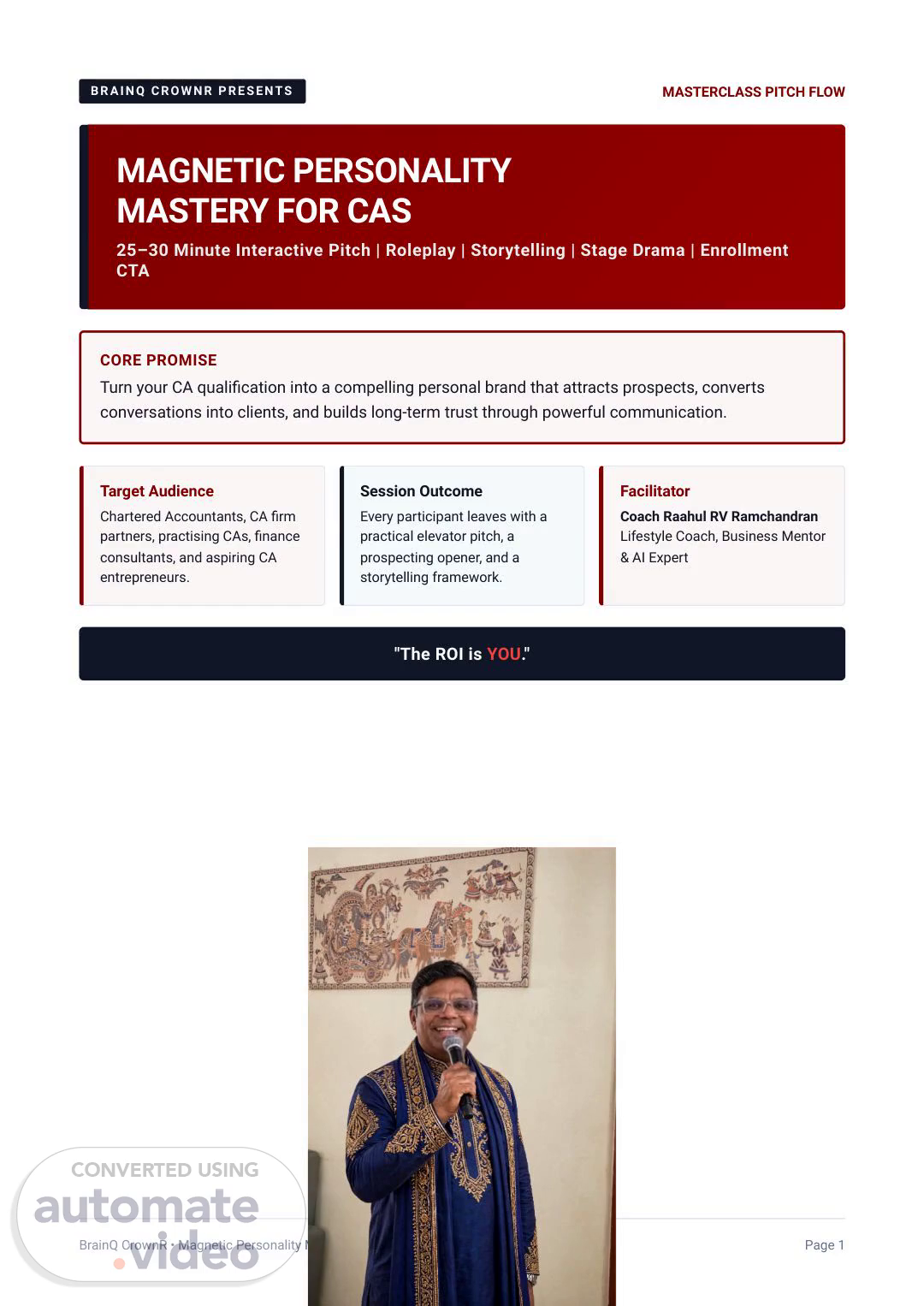
BRAINQ CROWNR PRESENTS MASTERCLASS PITCH FLOW MAGNETIC PERSONALITY MASTERY FOR CAS CORE PROMISE Turn your CA qualification into a compelling personal brand that attracts prospects, converts conversations into clients, and builds long-term trust through powerful communication. Target Audience Chartered Accountants, CA firm partners, practising CAs, finance consultants, and aspiring CA entrepreneurs. Session Outcome Every participant leaves with a practical elevator pitch, a prospecting opener, and a storytelling framework. Facilitator Coach Raahul RV Ramchandran Lifestyle Coach, Business Mentor & AI Expert "The ROI is YOU." BrainQ CrownR • Magnetic Personality Mastery for CAs Page 1 25–30 Minute Interactive Pitch | Roleplay | Storytelling | Stage Drama | Enrollment CTA.
Scene 2 (1m 35s)
[Audio] The company has been working on a new project for several years, but it has not yet been completed. The project was initiated by the CEO, who had a vision for a more sustainable future. The CEO's vision included reducing carbon emissions and increasing energy efficiency. The company has made significant progress in this area, but there are still many challenges to overcome. The CEO has also emphasized the importance of innovation and creativity in driving business growth. The company has implemented various initiatives to promote these values, such as training programs for employees and partnerships with other companies. However, despite these efforts, the company is facing financial difficulties due to increased competition from other industries. The CEO has acknowledged that the company needs to adapt to changing market conditions and invest in new technologies to remain competitive. The company has been exploring ways to address these challenges, including investing in renewable energy sources and developing new products. The CEO has stated that the company will continue to prioritize sustainability and innovation, even if it means making difficult decisions. The company has also established a task force to oversee the implementation of these strategies. The CEO has emphasized the need for transparency and accountability in decision-making processes. The company has taken steps to increase transparency, such as publishing annual reports and providing regular updates to stakeholders. The CEO has also highlighted the importance of employee engagement and empowerment. The company has implemented various programs to support employee development and well-being. Despite the challenges, the company remains committed to its mission and values. The CEO has expressed confidence in the company's ability to overcome the current difficulties and achieve long-term success. The company has a strong track record of innovation and has developed numerous successful products and services. The CEO has emphasized the need for continued investment in research and development. The company has a dedicated team of researchers and engineers working on new projects. The CEO has stated that the company will continue to prioritize innovation and R&D, even if it means allocating additional resources. The company has also established a culture of continuous learning and improvement. The CEO has emphasized the importance of staying up-to-date with industry trends and developments. The company has implemented various programs to support employee learning and development. The CEO has also highlighted the importance of collaboration and teamwork. The company has fostered a collaborative environment where employees can work together effectively. The CEO has expressed confidence in the company's ability to overcome the current difficulties and achieve long-term success. The company has a strong reputation for integrity and ethics. The CEO has emphasized the importance of adhering to high standards of conduct. The company has implemented various programs to promote ethical behavior. The CEO has also highlighted the importance of social responsibility. The company has taken steps to give back to the community through volunteer programs and charitable donations. The CEO has expressed confidence in the company's ability to make a positive impact on society. The company has a diverse workforce and has implemented various programs to support diversity and inclusion. The CEO has emphasized the importance of creating an inclusive workplace culture. The company has taken steps to promote diversity and inclusion. The CEO has also highlighted the importance of supporting underrepresented groups. The company has established a diversity and inclusion committee to oversee the implementation of these strategies. The CEO has expressed confidence in the company's ability to overcome the current difficulties and achieve long-term success. The company has a strong track record of innovation and has developed numerous successful products.
Scene 3 (2m 46s)
3. THREE KEY LEARNINGS (3–6 MINUTES) 1. Elevator Pitch Introduce yourself in 30s. State whom you help, what problem you solve, and what makes you different to create curiosity. 2. Prospecting Ask questions instead of pushing services. Identify real business needs and secure a clear next step (diagnostic/meeting). 3. Storytelling Explain financial value in plain language. Use examples to build trust and turn transactions into long-term partnerships. 4. THE THREE-ACT BUSINESS DRAMA (6–24 MINS) Production Tip: Invite three volunteers on stage. Play the narrator yourself. Use a business card, a mobile phone, and an imaginary financial report as props. Cast of Characters CA Arjun: Technically brilliant, struggles with value communication. Vikram (Prospect): Growing business owner needing more than compliance. Meera (Referral Partner): Business consultant introducing Arjun to Vikram. Narrator / Coach: The facilitator guiding the audience through the drama. ACT 1: The Elevator Pitch Contest (6–12 Mins) — Theme: From Qualifications to Value Scene: A business networking event. Meera introduces Arjun to Vikram. MEERA: "Vikram, meet CA Arjun. Arjun, this is Vikram, an entrepreneur growing his business." ARJUN (VERSION 1 - FORGETTABLE PITCH): [Stands stiffly, speaks fast, looks down] "Hello, I am Arjun. I am a Chartered Accountant. I handle GST, taxation, auditing, accounting, balance sheets, compliance and financial statements. Here is my card." VIKRAM: [Glances at phone] "Oh, nice. Please send me your details. I already have an accountant." BrainQ CrownR • Magnetic Personality Mastery for CAs Page 3.
Scene 4 (3m 2s)
Narrator Analysis & Formula "Ouch! Arjun delivered his qualifications, but did he give Vikram a reason to remember him?" FORMULA: WHO I HELP + WHAT PROBLEM I SOLVE + WHAT VALUE I CREATE ARJUN (VERSION 2 - MAGNETIC PITCH): [Stands tall, smiles, makes eye contact] "Hi, Vikram! I'm CA Arjun. I help growing businesses understand their numbers, strengthen financial discipline and make better-informed decisions. My goal is to help business owners see beyond compliance and understand what their financial numbers are telling them." VIKRAM: "That sounds useful. How do you help a business owner identify where money is getting stuck?" ARJUN: "I start by understanding the business, reviewing available financial information and identifying areas worth investigating. Would you be open to a short conversation about your business?" THE 30-SECOND CA PITCH FRAMEWORK Who: I help [specific type of client]. Problem: They struggle with [specific challenge]. Value: I help them understand or address [desired outcome]. Invitation: "What is the biggest financial challenge your business is facing right now?" ACT 2: Prospecting to Lead (12–18 Mins) — Theme: Discovering Opportunities Scene: Vikram and Arjun meet again after the networking event. VIKRAM: "Arjun, my company is growing, but I am constantly worried about cash flow. Sales look good, yet I am not always sure how much cash will be available." BrainQ CrownR • Magnetic Personality Mastery for CAs Page 4.
Scene 5 (3m 15s)
ARJUN (OLD APPROACH): "No problem! I offer accounting, tax filing, GST and financial services. My packages start at..." VIKRAM: "Please send me your quotation. I'll check later." Narrator: "Arjun rushed to sell before understanding the problem. Let's rewind!" [Clap once, actors freeze and restart] ARJUN (CONSULTATIVE APPROACH): "Vikram, may I ask you three quick questions?" "When do you usually feel the greatest pressure on cash flow?" "How far ahead can you currently forecast your cash requirements?" "What happens to your business decisions when those numbers are unclear?" VIKRAM: "We don't have a consistent forecast. Sometimes we delay decisions or follow up on payments only when cash gets tight." ARJUN: "Thank you for sharing that. It sounds as though you may benefit from a closer look at cash-flow forecasting and payment cycles. I'd first understand your current process before suggesting anything. Shall we schedule a 20-minute discovery meeting?" The ASK Prospecting Framework A Ask Discover the challenge. S Summarise Reflect concern in their words. K Kick off Agree on the next step. ACT 3: Lead to Client & Retention (18–24 Mins) — Theme: Storytelling Scene: Discovery meeting. Arjun has reviewed Vikram's shared details. BrainQ CrownR • Magnetic Personality Mastery for CAs Page 5.
Scene 6 (3m 28s)
[Audio] ARJUN:. VIKRAM: "Arjun, another accountant has offered me a lower fee. Why should I choose you?" ARJUN (WEAK RESPONSE): "I have many years of experience, excellent qualifications, and professional expertise. I provide quality services." Arjun (The Storytelling Response) "Vikram, imagine two business owners who each report strong sales. The first looks only at sales and profit. The second also reviews when customers pay, when suppliers need payment, and how much cash is available. Both appear successful on paper, but the second has information to plan ahead. That is why I don't want our relationship to stop at preparing reports. I want us to agree on the right financial information, review it regularly, and use it to support better decisions." VIKRAM: "That makes sense. I need someone who helps me understand the business, not just file returns. Let's begin." The Retention Twist (Fast-forward 3 Months) VIKRAM: "Arjun, I received the reports, but I haven't heard from you in weeks. Another firm has approached me." ARJUN: "Thank you for telling me. I should have made our review process clearer. Let's schedule a review, discuss current questions, and agree on a regular communication plan within our scope." THE STORY FRAMEWORK FOR CA CLIENT COMMUNICATION S - Situation: What is happening in business? T - Tension: Challenge or uncertainty faced? O - Observation: What do facts & figures reveal? R - Response: Options/next steps explained. Y - Your Next Step: Action agreed upon together. BrainQ CrownR • Magnetic Personality Mastery for CAs Page 6.
Scene 7 (3m 44s)
[Audio] The 4-part structure consists of four parts: Introduction, Problem Statement, Solution, and Conclusion. The 4-part structure is used by many organizations to deliver pitches. Many organizations use the 4-part structure to deliver pitches. The 4-part structure is widely used by organizations to deliver pitches. The 4-part structure is commonly used by organizations to deliver pitches. The 4-part structure is often used by organizations to deliver pitches. The 4-part structure is frequently used by organizations to deliver pitches. The 4-part structure is widely used by organizations to deliver pitches. The 4-part structure is commonly used by organizations to deliver pitches. The 4-part structure is often used by organizations to deliver pitches. The 4-part structure is frequently used by organizations to deliver pitches. The 4-part structure is widely used by organizations to deliver pitches. The 4-part structure is commonly used by organizations to deliver pitches. The 4-part structure is often used by organizations to deliver pitches. The 4-part structure is frequently used by organizations to deliver pitches. The 4-part structure is widely used by organizations to deliver pitches. The 4-part structure is commonly used by organizations to deliver pitches. The 4-part structure is often used by organizations to deliver pitches. The 4-part structure is frequently used by organizations to deliver pitches. The 4-part structure is widely used by organizations to deliver pitches. The 4-part structure is commonly used by organizations to deliver pitches. The 4-part structure is often used by organizations to deliver pitches. The 4-part structure is frequently used by organizations to deliver pitches. The 4-part structure is widely used by organizations to deliver pitches. The 4-part structure is commonly used by organizations to deliver pitches. The 4-part structure is often used by organizations to deliver pitches. The 4-part structure is frequently used by organizations to deliver pitches. The 4-part structure is widely used by organizations to deliver pitches. The 4-part structure is commonly used by organizations to deliver pitches. The 4-part structure is often used by organizations to deliver pitches. The 4-part structure is frequently used by organizations to deliver pitches. The 4-part structure is widely used by organizations to deliver pitches. The 4-part structure is commonly used by organizations to deliver pitches. The 4-part structure is often used by organizations to deliver pitches. The 4-part structure is frequently used by organizations to deliver pitches. The 4-part structure is widely used by organizations to deliver pitches. The 4-part structure is commonly used by organizations to deliver pitches. The 4-part structure is often used by organizations to deliver pitches. The 4-part structure is frequently used by organizations to deliver pitches. The 4-part structure is widely used by organizations to deliver pitches. The 4-part structure is commonly used by organizations to deliver pitches. The 4-part structure is often used by organizations to deliver pitches. The 4-part structure is frequently used by organizations to deliver pitches. The 4-part structure is widely used by organizations to deliver pitches. The 4-part structure is commonly used by organizations to deliver pitches. The 4-part structure is often used by organizations to deliver pitches. The 4-part structure is frequently used by organizations to deliver pitches. The 4-part structure is widely used by organizations to deliver pitches. The 4-part structure is commonly used by organizations to deliver pitches. The 4-part structure is often used by organizations to deliver pitches. The 4-part structure is frequently used by organizations to deliver pitches. The 4-part structure is widely used by organizations to deliver pitches. The 4-part structure is commonly used by organizations to deliver pitches. The 4-part structure is often used by organizations to deliver pitches. The 4-part structure is frequently.
Scene 8 (5m 6s)
[Audio] The founder of a small company, John, had been struggling to manage his finances effectively. He was overwhelmed by the complexity of financial statements and struggled to identify areas where he needed to cut costs. With my guidance, we worked together to create a clear picture of his company's financial situation. We identified key areas for cost reduction and implemented measures to improve cash flow. As a result, John's company began to flourish. His profits increased significantly, and he was able to invest in new opportunities. The experience taught him that having a clear understanding of his financials was essential to making informed business decisions. John's story is just one example of how effective financial management can lead to success. Many other business owners have achieved similar results by working with me to clarify their financial situations and make informed decisions..