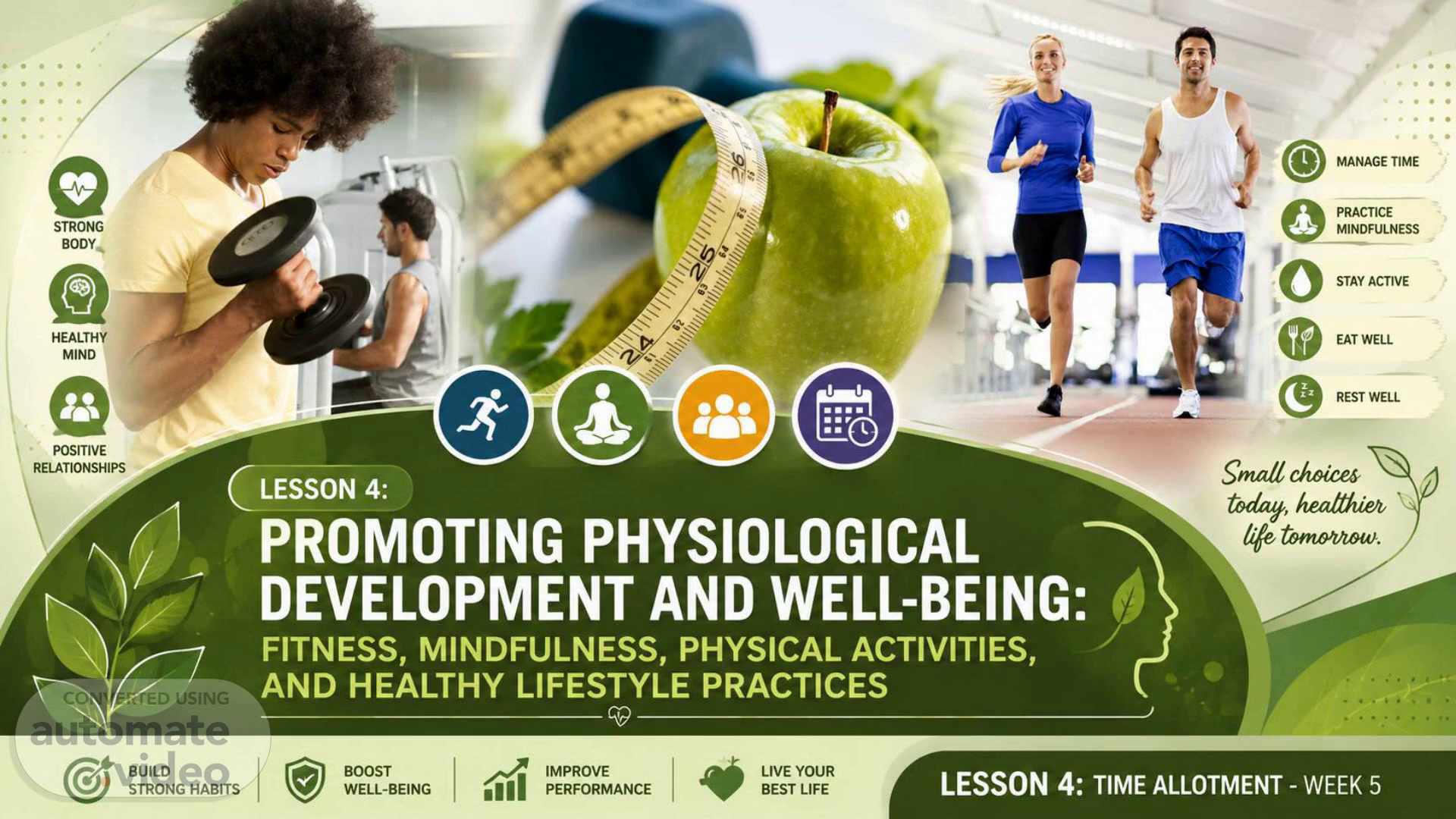
LESSON 4 PROMOTING PHYSIOLOGICAL DEVELOPMENT AND WELL-BEING
Scene 1 (0s)
[Audio] LESSON 4: PROMOTING PHYSIOLOGICAL DEVELOPMENT AND WELL-BEING: FITNESS, MINDFULNESS, PHYSICAL ACTIVITIES, AND HEALTHY LIFESTYLE PRACTICES LESSON 4: TIME ALLOTMENT - WEEK 5.
Scene 2 (12s)
[Audio] LEARNING COMPETENCY LC2. Exhibit understanding of fitness routines that promote physiological development, health, personal development, and well-being. Essential Understanding Physical health and well-being are important foundations for personal growth, academic success, emotional stability, and overall quality of life. Through regular physical activity, healthy lifestyle practices, and mindfulness, adolescents can promote optimal physiological development and improve their overall well-being..
Scene 3 (47s)
[Audio] Essential Question How can fitness, mindfulness, and healthy lifestyle practices help me become a healthier, more productive, and well-balanced individual? Learning Targets At the end of this lesson, I can: explain the importance of physiological development during adolescence; identify components of physical fitness and their benefits; recognize the role of mindfulness in promoting well-being; demonstrate healthy lifestyle practices that support physical and mental health; develop a personal fitness and wellness plan..
Scene 4 (1m 24s)
[Audio] UNDERSTANDING PHYSIOLOGICAL DEVELOPMENT Physiological development refers to the physical growth and biological changes that occur as individuals mature. During adolescence, the body experiences significant changes, including: Growth spurts Increased muscle and bone development Hormonal changes Increased physical strength and endurance Changes in body composition These changes require proper nutrition, adequate rest, regular exercise, and healthy lifestyle choices to support healthy development..
Scene 5 (1m 59s)
WHAT IS WELL-BEING? A PERSON'S OVERALL STATE OF HEALTH, HAPPINESS, & LIFE SATISFACTION O PHYSICAL WELL-BEING Maintaining a healthy body through proper nutrition, exercise, and rest. MENTAL WELL-BEING View Detolls Maintaining positive thinking and healthy coping strategies. View Details SPIRITUAL WELL-BEING Living according to personal values and beliefs. EMOTIONAL @ WELL-BEING Recognizing and managing emotions effectively. SOCIAL WELL-BEING Building positive and meaningful relationships. View Details + TRUE WELLNESS OCCURS WHEN THESE DIMENSIONS ARE BALANCED..
Scene 6 (2m 17s)
WHAT IS WELL-BEING? A PERSON'S OVERALL STATE OF HEALTH, HAPPINESS, & LIFE SATISFACTION O O PHYSICAL WELL-BEING Maintaining a healthy body through proper nutrition, exercise, and rest. O@ MENTAL WELL-BEING View Details View Details Maintaining positive thinking and healthy coping strategies. SPIRITUAL WELL-BEING Living according to personal values and beliefs. EMOTIONAL O WELL-BEING Recognizing and managing emotions effectiveiy. SOCIAL WELL-BEING Building positive and meaningful relationships. View Details + TRUE WELLNESS OCCURS WHEN THESE DIMENSIONS ARE BALANCED..
Scene 7 (2m 36s)
[Audio] PHYSICALFITNESSANDITSIMPORTANCE PHYSICALFITNESSANDITSIMPORTANCE Physicalfitnessistheabilitytoperformdailyactivitiesefficientlywithoutexcessivefatiguewhilemaintainingsufficientenergyforleisureandemergencies. Regularphysicalactivityhelps: Improvecardiovascularhealth Strengthenmusclesandbones Maintainhealthybodyweight Improveconcentrationandacademicperformance Reducestressandanxiety Enhanceself-confidence.
Scene 8 (3m 10s)
[Audio] 2. Muscular Strength 3. Muscular Endurance 4. Flexibility 1. Cardiovascular Endurance 5. Body Composition The ability of muscles to exert force. The ability of muscles to perform repeated movements over time. Examples: Examples: The ability of the heart and lungs to supply oxygen during sustained physical activity. The ability of joints and muscles to move through a full range of motion. Push-ups The proportion of fat, muscle, bone, and other tissues in the body. Sit-ups Examples: Examples: Weight training Planks Running Stretching Resistance exercises Brisk walking Yoga Bodyweight exercises Cycling Dance activities Maintaining a healthy body composition contributes to overall health and wellness. Swimming.
Scene 9 (4m 4s)
HEALTHY LIFESTYLE PRACTICES development and overall well-being. BALANCED NUTRITION A balanced diet provides essential nutrients needed for growth and development. HEALTHY EATING INCLUDES: Fruits and vegetables Whole grains O Lean proteins Healthy fats O Adequate water intake ADEQUATE SLEEP Adolescents need approximately 8—10 hours of sleep each night. BENEFITSOF ADEQUATE SLEEP: Improved concentration Better mood regulation Stronger immune system Enhanced academic performance PERSONAL HYGIENE Good hygiene prevents illness and promotes confidence. EXAMPLES: Regular bathing Handwashing Oral care Proper grooming AVOIDING HARMFUL BEHAVIORS Adolescents should avoid oehaviors that may negatively affect health, such as: Smoking Alcohol use Substance abuse Excessive screen time Sedentary lifestyle.
Scene 10 (4m 26s)
UNDERSTANDING MINDFULNESS Mindfulness is the practice of paying full attention to the present moment wt.th.outju.dgnænt. Thoughts Feelings Bodily Sensations Surroundings Mindfulness helps individuals respond calmly and thoughtfully to challenges. BENEFITS OF MINDFULNESS Reduce stress and anxiety Improve focus and concentration Enhance emotional regulation Promote self-awareness Improve overall well-being.
Scene 11 (4m 40s)
UNDERSTANDING MINDFULNESS PRACTICE OF PAYING FULL ATTENTION TO THE PRESENT MOMENT WITHOUT JUDGMENT MINDFULNESS INVOLVES BECOMING AWARE OF: THOUGHTS 1 REDUCE STRESS AND ANXIETY FEELINGS 6- BODILY SENSATIONS SURROUNDINGS MINDFULNESS HELPS INDIVIDUALS RESPOND CALMLY AND THOUGHTFULLY TO CHALLENGES BENEFITS OF MINDFULNESS 2 IMPROVE FOCUS AND CONCENTRATION FOCUS 3 ENHANCE EMOTIONAL REGULATION PROMOTE 4 SELF-AWARENESS 5 IMPROVE OVERALL WELL-BEING Stress Free 000 Stress Free.