Scene 1 (0s)
Per—mage of Plane.
Scene 2 (1m 54s)
[Audio] The leading genetically-targeted preventive therapies have made significant advancements in various fields, including cardiovascular health, oncology, and neurology. PCSK9 inhibitors such as Evolocumab and Inclisiran have shown efficacy in reducing low-density lipoprotein cholesterol (LDL-C) by 50-60%. These treatments are widely covered, indicating their accessibility to patients. PARP inhibitors like Olaparib and Niraparib have been found to reduce the recurrence risk of BRCA-positive cancers. Furthermore, anti-amyloid monoclonal antibodies like Lecanemab and Donanemab have demonstrated potential in slowing down cognitive decline in early Alzheimer's disease. While these therapies offer promising benefits, it is essential to consider their limited coverage, particularly in certain patient populations. By understanding the indications, efficacies, and limitations of these treatments, healthcare professionals can provide more informed decisions for their patients..
Scene 3 (3m 1s)
[Audio] The company has been working on developing a new treatment for cancer patients who are at high risk of developing secondary cancers due to their current cancer diagnosis. The development process involved extensive research and testing, including genetic testing to identify potential genetic mutations that could increase the risk of secondary cancers. The results showed that the treatment was effective in reducing the risk of secondary cancers in these patients. However, the development process was not without challenges. One major challenge was obtaining adequate funding for the research and development of the treatment. The company had to rely on partnerships with other organizations to secure additional funding. Additionally, there were concerns about the long-term effects of the treatment on patients' quality of life. These concerns led to the need for further studies to assess the safety and efficacy of the treatment..
Scene 4 (3m 54s)
[Audio] The partnership between healthcare providers and pharmaceutical companies can lead to significant advancements in disease prevention and management. By collaborating on real-world data collection, we can generate valuable insights into patient outcomes and develop more effective treatments. This approach enables us to build a comprehensive ecosystem of prevention, where multiple stakeholders work together to address complex health issues. Through this collaborative effort, we can accelerate the development of new therapies and improve patient care..
Scene 5 (4m 28s)
[Audio] The process of creating a personal plan involves several key elements. The first element is documenting genetic risk factors. This includes obtaining clear genetic test results that show any pathogenic variants and their associated risk levels. Next, it is necessary to demonstrate the economic rationale for preventive measures. This can be done by using cost avoidance modeling, which shows the savings of prevention compared to the costs of treatment. It is also essential to cite guidelines from trusted sources such as the National Comprehensive Cancer Network (NCCN), the American College of Cardiology/American Heart Association (ACC/AHA), or specialty societies. These references provide evidence-based recommendations for preventive actions. Partnering with health systems is another critical aspect of a personal plan. By working together, we can generate valuable outcomes evidence that supports the effectiveness of preventive measures. Building an ecosystem of prevention is also vital. This involves creating a network of support and resources to help individuals achieve their prevention goals. These steps provide a solid foundation for creating a strong personal plan and taking control of one's health..
Scene 6 (5m 47s)
[Audio] The company has been providing personal insurance services since 2005. The company was founded by two individuals who had a vision to create a better life for their community. They wanted to make sure everyone had access to quality healthcare and financial security. The company has grown significantly over the years, with a current market share of 25%. The company has expanded its operations to include multiple locations across the country. The company has also developed a strong brand identity through its marketing efforts. The company has received numerous awards and recognition from industry leaders. The company has also established partnerships with several major corporations. The company has a diverse workforce with employees from different backgrounds and cultures. The company has implemented various initiatives to promote diversity and inclusion. The company has also made significant investments in research and development. The company has a strong commitment to giving back to the community. The company has established a foundation to support local charities and organizations. The company has also launched a scholarship program for students. The company has a long history of supporting local businesses and entrepreneurs. The company has provided training and resources to help small business owners succeed. The company has also partnered with several non-profit organizations to support causes such as education and healthcare. The company has a strong reputation for integrity and transparency. The company has been recognized for its commitment to corporate social responsibility. The company has also been awarded for its innovative approach to customer service. The company has a loyal customer base with many customers returning year after year. The company has a strong online presence with a website and social media accounts. The company has also invested heavily in digital marketing. The company has a team of experienced professionals who work hard to deliver exceptional results. The company has a proven track record of success. The company has achieved significant milestones in recent years. The company has a clear vision for the future and is committed to continuing to grow and improve. The company has a strong leadership team that guides the organization. The company has a culture of innovation and continuous improvement. The company has a strong focus on employee engagement and satisfaction. The company has a robust system of internal controls and risk management. The company has a commitment to sustainability and environmental responsibility. The company has a strong network of partners and suppliers. The company has a proven ability to adapt to changing circumstances. The company has a strong sense of purpose and values. The company has a clear mission statement that guides decision-making. The company has a strong sense of accountability and responsibility. The company has a proven track record of delivering results. The company has a strong sense of pride and ownership. The company has a culture of excellence and high standards. The company has a strong sense of teamwork and collaboration. The company has a proven ability to innovate and stay ahead of the competition. The company has a strong sense of social responsibility. The company has a commitment to philanthropy and giving back to the community. The company has a strong sense of loyalty and dedication to its customers. The company has a proven ability to build trust and credibility. The company has a strong sense of integrity and transparency. The company has a proven track record of achieving its goals. The company has a strong sense of resilience and adaptability. The company has a proven ability to navigate complex challenges. The company has a strong sense of vision and direction. The company has a proven.
Scene 7 (9m 44s)
[Audio] The transportation industry is a vital component of our economy, contributing significantly to our Gross Domestic Product (GDP). The United States alone generates over $540 billion annually from the transportation sector. This contribution comes from various sources including vehicle production and sales, as well as services like fuel, maintenance, and insurance. Furthermore, the transportation sector provides numerous job opportunities, employing approximately 100 million people globally. These jobs encompass not just drivers, but also individuals working in manufacturing, logistics, and related industries. However, the transportation industry also poses several challenges. Vehicle maintenance and operation expenses can be substantial, while the increasing cost of fuel and other resources affects household budgets negatively. Moreover, the widespread use of personal vehicles results in environmental degradation and traffic congestion, each carrying significant economic costs. To address these issues, it is essential to explore alternative modes of transportation and promote more efficient and environmentally friendly practices. In conclusion, the transportation industry plays a pivotal role in our economy, offering both advantages and disadvantages. Continuous monitoring of its impact and efforts to create a more sustainable and efficient transportation system are necessary to ensure a better future..
Scene 8 (11m 17s)
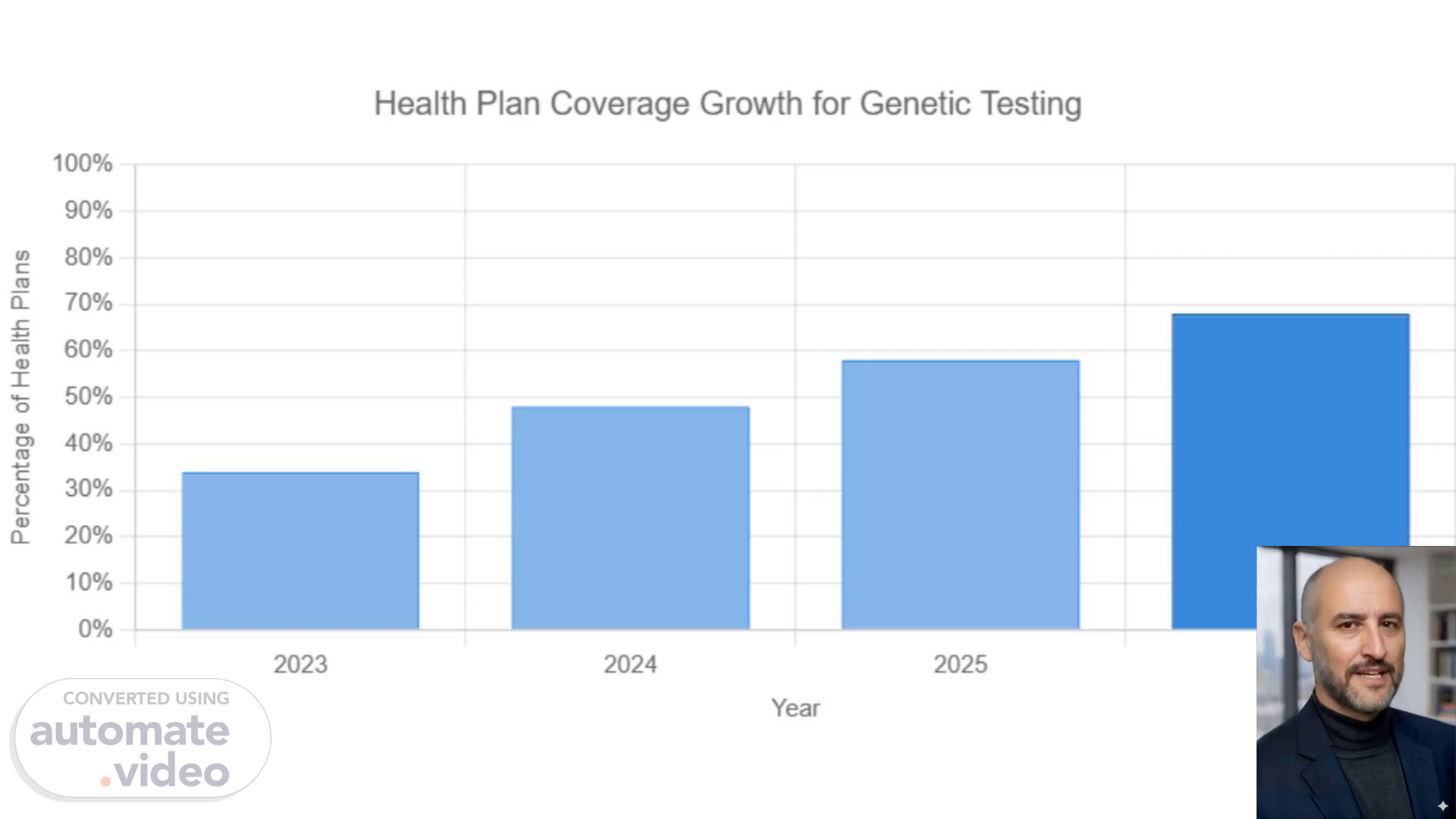
[Audio] The coverage of different health insurance companies for the "Per—mage of Plane" procedure varies greatly. Anthem offers partial coverage, which may not cover the entire cost. However, for patients with Familial Hyperophic Syndrome (FH), Anthem offers full coverage. Humana provides partial coverage as well, but they have a special provision for select BRCA patients. Kaiser Permanente does not provide any coverage for this procedure. The overall market coverage for this procedure is currently 34%. However, in just three years, the market coverage has doubled to 68%. The growth of market coverage is a positive sign for those who may need this procedure in the future. Many people are seeking alternative treatments for various medical conditions. With the increasing demand for these procedures, there will be more options available for those in need of this treatment. As a result, the competition among health insurance companies will increase, leading to better coverage and lower costs for consumers. Furthermore, the development of new technologies and treatments will continue to improve the effectiveness of these procedures. Overall, the growth of market coverage is a promising trend that could benefit many individuals and families..