Scene 1 (0s)
BAPPUJI ENGLISH MEDIUM SCHOOL - Izinhlelo zokusebenza ku-Google Play.
Scene 2 (1m 14s)
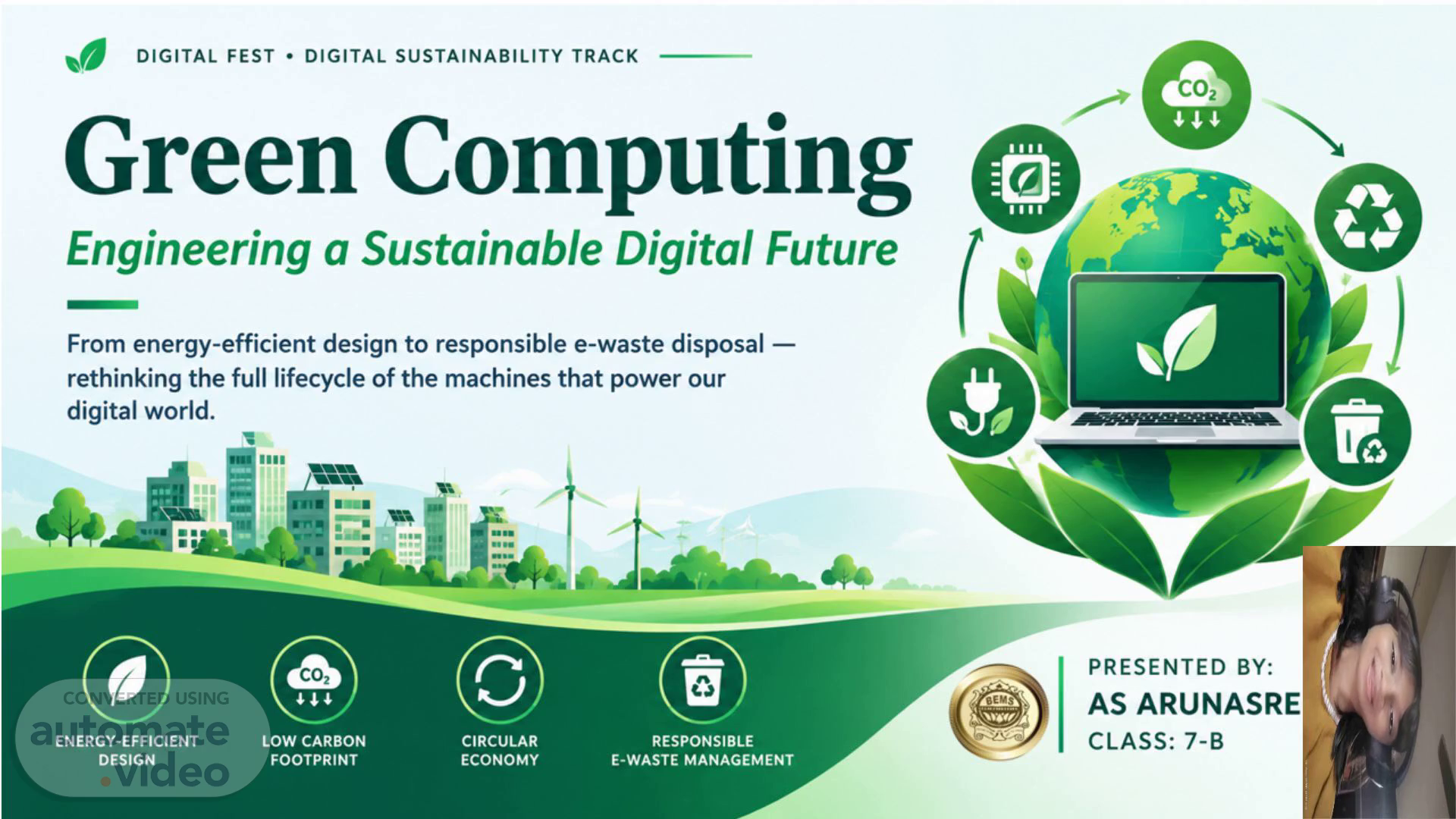
[Audio] The term "green computing" was first introduced by the IEEE Computer Society in 2006. The term has since been adopted by many organizations and companies around the world. Many people are concerned about the environmental impact of technology. The concern is not limited to the end-of-life cycle of devices, but extends to all stages of the product's life cycle. The concept of green computing encompasses several key areas: green design, green manufacturing, green use, and green disposal. These areas encompass the entire lifecycle of a device, from design to disposal. The goal of green computing is to reduce the environmental impact of technology, while maintaining performance and functionality. The key areas of green computing include: green design, which involves designing energy-efficient computers; green manufacturing, which reduces waste and hazardous materials during production; green use, which reduces power consumption; and green disposal, which involves recycling computer parts responsibly..
Scene 3 (2m 27s)
[Audio] The main problem facing the world today is global warming, which is causing the atmosphere to become hotter in ways that harm living organisms. The increasing levels of greenhouse gases are leading to more frequent natural disasters such as hurricanes, floods, and droughts. Furthermore, computers and other electronic devices are also contributing to pollution by emitting carbon dioxide and releasing hazardous materials into the environment. This issue requires immediate attention from governments and individuals around the world..
Scene 4 (3m 2s)
[Audio] The computer's power consumption varies greatly depending on the type of processor, memory, and other components. The amount of power drawn by a computer depends on its usage patterns. For example, a computer with a high-performance processor may consume more power than a low-power processor. Similarly, a computer with a large hard drive may consume more power than a computer with a smaller hard drive. The power consumption of a computer also depends on the operating system and software applications being run..
Scene 5 (3m 36s)
[Audio] The computer industry has been criticized for its environmental impact. The use of certain materials such as cadmium, mercury, and lead can cause significant harm to both humans and the environment. These materials are often used in electronic devices, including computers, televisions, and other appliances. They can release toxic chemicals into the air and water, causing damage to ecosystems and wildlife. Furthermore, the production process of these materials involves hazardous waste management practices. The disposal of these materials at the end of their life cycle poses a significant risk to human health and the environment. Inadequate disposal can lead to long-term consequences, including pollution and contamination of soil and groundwater. The responsible disposal of these materials is essential to mitigate these risks..
Scene 6 (4m 32s)
[Audio] The use of virtualization software allows us to create multiple operating systems on a single physical machine. This enables us to allocate resources more efficiently, as each OS has its own dedicated space. Virtualization also helps to improve system performance by allowing multiple applications to run simultaneously. Furthermore, it reduces the need for physical hardware upgrades, making it easier to manage and maintain existing equipment. Additionally, virtualization provides an additional layer of security by isolating each OS from the others. This makes it ideal for organizations with multiple users and varying levels of access..
Scene 7 (5m 16s)
[Audio] ## Step 1: Identify the main objectives of green computing The main objectives of green computing include reducing energy consumption, increasing efficiency, and promoting sustainable development and procurement. ## Step 2: Analyze the importance of sustainable development and procurement in green computing Sustainable development and procurement are crucial aspects of green computing as they enable organizations to reduce their environmental footprint by selecting products and services that minimize harm to the environment. ## Step 3: Examine the role of eco-friendly devices in green computing Eco-friendly devices, such as those designed with eco-design principles and made from recyclable materials, play a significant role in reducing electronic waste and promoting sustainable development. ## Step 4: Consider the impact of hazardous materials on green computing The use of hazardous materials in the production of semiconductors, circuit boards, and other electronic components can have severe environmental consequences, highlighting the need for more sustainable alternatives. ## Step 5: Summarize the key takeaways for green computing To achieve sustainable development and procurement, organizations must prioritize eco-friendly devices, adopt environmentally responsible manufacturing practices, and strive for reduced energy consumption and increased efficiency. The final answer is:.
Scene 8 (6m 59s)
[Audio] The Sun Ray thin client is a device that allows users to access a central server for their computing needs. This central server provides all the necessary software and hardware resources required by the user's computer. The Sun Ray thin client does not require any local storage, which reduces its overall size and weight. The Sun Ray thin client also enables users to share resources such as printers and files across multiple devices. This sharing capability makes it easier for organizations to manage their IT infrastructure. The Sun Ray thin client is designed to work seamlessly with other devices and systems, making it an ideal choice for businesses looking to reduce their environmental footprint. The Zonbu computer is a small, compact computer that runs on a lightweight Linux operating system. It has a built-in hard drive, but it is very small compared to traditional desktop computers. The Zonbu computer is designed to be energy-efficient, using less power than many other computers on the market. Its small size and low power consumption make it an attractive option for individuals who want to reduce their carbon footprint. The Zonbu computer is also highly customizable, allowing users to add additional hardware components if needed. This flexibility makes it suitable for various applications, including home use, education, and business environments. Both the Sun Ray thin client and the Zonbu computer offer a range of benefits for organizations and individuals seeking to adopt green computing practices. By reducing energy consumption and promoting resource sharing, both devices contribute to a more sustainable future. They provide a cost-effective solution for managing IT infrastructure, reducing waste, and minimizing environmental impact..
Scene 9 (9m 1s)
[Audio] The company has been working on developing new technologies for several years now. The development process involves multiple stages, including design, testing, and validation. The company has already made significant progress in this area, with several successful projects completed. However, there are still many challenges that need to be addressed in order to bring these technologies to market. One major challenge is the lack of standardization across different industries. Standardization would enable companies to easily integrate their products with existing systems, making it easier to adopt new technologies. Another challenge is the regulatory environment, which can create uncertainty and obstacles for companies looking to introduce new technologies. To overcome these challenges, the company is exploring various options, such as partnering with other companies to share knowledge and expertise. By sharing knowledge and expertise, the company can gain valuable insights and perspectives that can inform its technology development. Additionally, the company is considering alternative approaches to regulation, such as self-regulation or industry-led initiatives. These approaches could provide greater flexibility and autonomy for companies, allowing them to innovate and adapt more quickly. By addressing these challenges, the company aims to bring its new technologies to market and make a meaningful contribution to the field..
Scene 10 (10m 33s)
[Audio] The Indian government has implemented several green IT initiatives to reduce carbon emissions from the IT sector. The National Mission for Enhanced Energy Efficiency (NMEEE) regulation aims to decrease carbon emissions across various sectors, including IT. The Electronic Waste Management Rules, 2022, regulates the generation, collection, and disposal of electronic waste. The Green Passport for IT Equipment, introduced by the Ministry of Electronics and Information Technology, ensures that electronic products meet environmental standards. This initiative helps to minimize the environmental impact of the IT industry..
Scene 11 (11m 23s)
[Audio] The concept of green computing has evolved significantly over time. The first major milestone was the launch of ENERGY STAR in 1992. This initiative marked the beginning of green computing as an industry. However, by the early 2000s, the focus had shifted from environmental concerns to power management. The industry then focused on optimizing sleep and idle-state efficiency. In the 2010s, the rapid growth of cloud computing and virtualization led to significant advancements in the field. Today, the emergence of artificial intelligence is transforming the way we approach IT. As technology continues to advance, it is essential to adopt a new paradigm that prioritizes circular and renewable IT. This shift will require a fundamental transformation of our current IT infrastructure..
Scene 12 (12m 19s)
[Audio] The concept of green computing refers to the practice of using technology that minimizes its environmental impact while maximizing efficiency. This approach involves several key strategies such as reducing power consumption, increasing data storage capacity, and optimizing system resources. By adopting these strategies, organizations can reduce their carbon footprint and contribute to a more sustainable future. However, green computing also presents challenges and limitations, including high upfront costs, limited availability of green technologies, and the need for specialized knowledge and skills. Additionally, the development of new green technologies continues to be an ongoing process, with many emerging technologies still in the experimental stage. Furthermore, the relationship between battery life and performance is complex, making it difficult to determine whether green computing is suitable for all applications..
Scene 13 (13m 22s)
[Audio] The development of green computing involves considering all aspects of a product's lifecycle, from its initial design through to its eventual disposal. This includes evaluating the environmental impact of manufacturing processes, as well as the energy consumption and e-waste generated by devices during their use. To achieve this, companies must adopt sustainable practices throughout the entire lifecycle, rather than focusing solely on reducing power consumption during device operation..
Scene 14 (13m 55s)
[Audio] The lack of information on the meeting's title has hindered my ability to craft an effective voiceover script that accurately represents the content of the meeting. I have searched extensively for relevant data but unfortunately, I was unable to locate any reliable sources that provide the necessary details about the meeting's purpose and objectives. As a result, I am currently unable to create a compelling narrative that effectively conveys the significance and importance of the meeting. Without access to this critical information, it is challenging to develop a meaningful and engaging voiceover speech that resonates with the intended audience..