Scene 1 (0s)
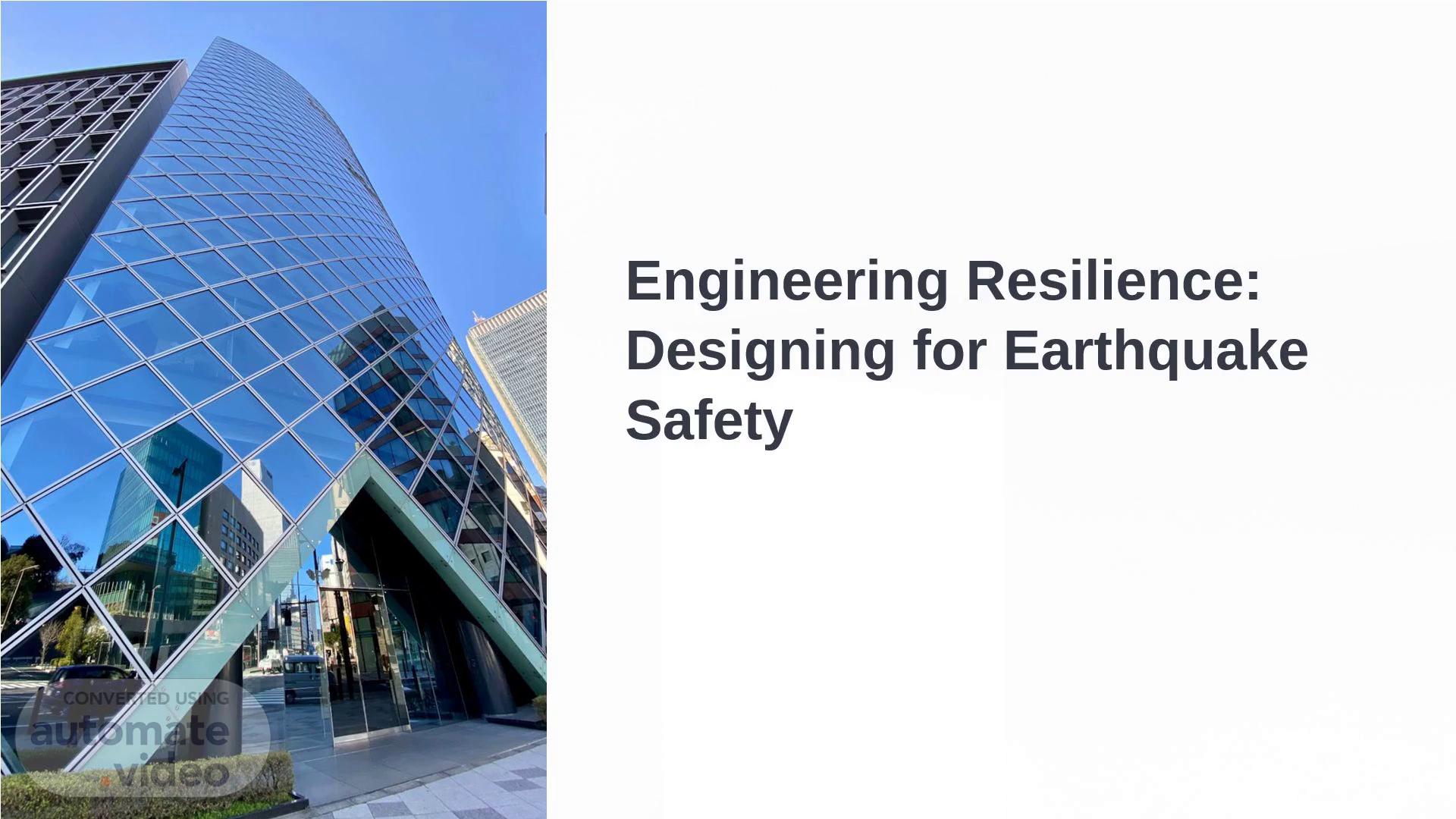
[Audio] preencoded.png preencoded.png Engineering Resilience: Designing for Earthquake Safety Understanding how innovative building and infrastructure design can mitigate earthquake impacts and save lives preencoded.png.
Scene 2 (21s)
[Audio] The Regulatory Framework preencoded.png Government Enforcement Japan and the United States have implemented strict building codes that mandate earthquake-resistant construction materials and techniques. These regulations require that building materials must withstand significant seismic activity. These laws ensure that new constructions incorporate features like shock absorbers, cross bracing, and shear walls—critical elements that have proven effective during major earthquakes..
Scene 3 (54s)
[Audio] Earthquake Resistant Building Systems preencoded.png preencoded.png preencoded.png Shock Absorbers Cross Bracing Shear Walls Base isolators absorb earthquake tremors, reducing forces transferred to the structure Two beams reinforce building walls, providing lateral support during seismic events Concrete steel walls reduce rocking movement caused by earthquake forces.
Scene 4 (1m 27s)
[Audio] preencoded.png Transamerica Pyramid: A Case Study The 1989 Loma Prieta Earthquake Key Takeaway Proper engineering can transform potentially catastrophic events into survivable incidents When a 7.1 magnitude earthquake struck the San Francisco Bay Area in 1989, the Transamerica Pyramid demonstrated the effectiveness of earthquake-resistant design. The building swayed for approximately one minute but did not collapse..
Scene 5 (1m 58s)
[Audio] preencoded.png Infrastructure Design: Bridges Material Selection Energy Dissipation Steel and concrete reinforced with steel bars allow structures to bend without breaking Shock absorbers and flexible bearings reduce earthquake energy transferred to bridge components Structural Reinforcement Modern steel beams strengthen critical connection points and support systems.
Scene 6 (2m 24s)
[Audio] Bridge Engineering in Practice San Francisco Oakland Bay Bridge Material Flexibility Unlike rigid structures that crack under stress, modern bridges use materials that can deform temporarily and return to their original shape—dissipating earthquake energy safely. Following the 1989 earthquake, engineers rebuilt the bridge using advanced steel beam technology. The new design incorporates flexible bearings and shock absorbers that allow controlled movement during seismic events..
Scene 7 (2m 58s)
[Audio] Road Design for Seismic Events Flexible Pavement Modern asphalt roads can bend and warp in response to earthquake tremors without cracking or breaking apart Emergency Access Flexible asphalt enables emergency and rescue vehicles to drive on roads and access earthquake victims during and immediately after seismic events.
Scene 8 (3m 21s)
[Audio] Safety Features: Fire Prevention preencoded.png Fire-Resistant Materials Reinforced concrete and other fireproof materials are used in earthquake-prone areas because they do not ignite easily when exposed to ruptured gas lines or electrical sparks. These materials prevent the chain reaction where earthquakes cause fires that then cause additional casualties and property damage..
Scene 9 (3m 48s)
[Audio] Automatic Shut-Off Valves preencoded.png preencoded.png preencoded.png Installation Detection Prevention Homeowners can install automatic shut-off valves in their homes Valves detect tremors and automatically cut off gas supply Prevents fires caused by gas leaks during earthquakes.
Scene 10 (4m 11s)
[Audio] Key Takeaways Regulatory Standards Save Lives Three Key Building Systems Government-enforced building codes in Japan and the USA mandate earthquake-resistant materials and construction methods Shock absorbers, cross bracing, and shear walls work together to protect structures during seismic events Infrastructure Must Be Flexible Fire Prevention is Critical Bridges, roads, and safety features use materials and designs that bend without breaking, maintaining functionality during earthquakes Fireproof materials and automatic shut-off valves prevent secondary disasters that often cause more casualties than the initial earthquake.