Scene 1 (0s)
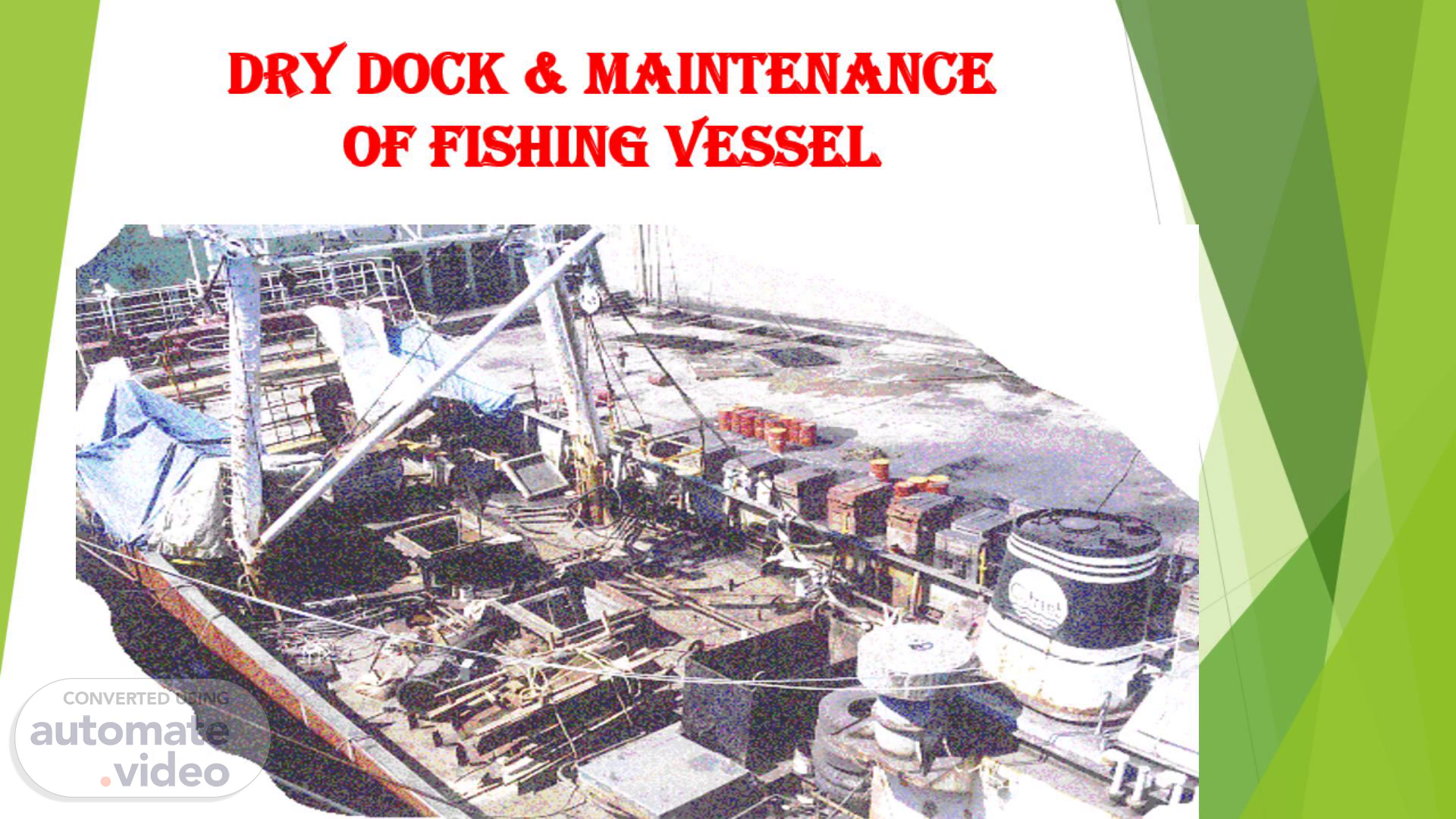
[Audio] Dry Dock & Maintenance of Fishing Vessel.
Scene 2 (7s)
[Audio] Introduction to Vessel Maintenance Importance of Maintenance: Regular maintenance of the hull is as vital as maintaining machineries to ensure vessel longevity. The Challenge: While machineries can be serviced anytime, the hull is submerged and requires careful planning and specialized facilities for access. Primary Objective: Maintenance focuses on both underwater and above-water hull repairs, necessitating taking the vessel out of the water..
Scene 3 (37s)
[Audio] Methods of Hauling Out Depending on the size of the vessel, different methods are utilized to access the underwater hull: Traditional Methods: Beaching or taking the vessel "on hard" (typically for smaller boats) Slipway: The vessel is hauled up an inclined plane via rails on a cradle designed to suit its hull shape. Dry Dock: A specialized waterfront pit with a door that allows water to be filled or pumped out, creating a dry environment for all vessel types..
Scene 4 (1m 10s)
[Audio] Pre-Docking Preparations To ensure a successful docking, preparations must begin well in advance: Procurement: Acquire paints, chipping tools, stern tube bushes, propeller seals, and zinc anodes before entering the dock. Weight Reduction: Off-load heavy fishing gear (nets, otter boards), wire ropes, and loose oil drums. Tank Status: Fresh water tanks should be empty; fuel tanks should be kept as empty as possible. Trimming: The vessel must be made "even keel" before entry..
Scene 5 (1m 44s)
[Audio] Hull Exterior Maintenance Cleaning: Immediately after seating on blocks, the hull is washed with a high-pressure water jet to remove marine growth before it dries. Thickness Testing: Hull plate thickness is measured using ultrasonic techniques. Plate Renewal: Plates worn more than 25% of their original thickness are cut and renewed. Surface Preparation: Rust is removed through chipping or sandblasting..
Scene 6 (2m 14s)
[Audio] Underwater Fittings & Painting Cathodic Protection: Zinc anodes that have wasted more than 50% must be replaced. Electronic Equipment: Transducers for echo sounders, sonars, and speed logs are cleaned and inspected. Painting Systems: Underwater areas receive anti-corrosive, anti-saline, and anti-fouling coatings. Schedules: Common schedules include conventional, epoxy, or chlorinated rubber systems..
Scene 7 (2m 45s)
[Audio] Propeller & Rudder Inspection Critical measurements are taken to assess the condition of bearings and bushes: Drop Tests: A Pocker Gauge measures propeller drop; a Dammel Gauge measures rudder drop. Shafting: Steel fishing vessel propeller systems must be withdrawn for inspection every two years. Propeller Repairs: Blades are checked for edge corrosion, built up, machined, and balanced. Rudder Care: The rudder is cleaned internally and coated with fish oil..
Scene 8 (3m 17s)
[Audio] Engine Room & Internal Maintenance Valve Servicing: All sea suction and overboard valves are cleaned, serviced, and repaired. Thrust Bearings: Inspection of the engine and gearbox thrust bearings. Tank Cleaning: * Fresh Water: Cleaned and cement-washed or treated with special paints. *Fuel Tanks: Cleaned based on necessity and fuel condition. Bilges: Engine room and other bilges are cleaned, chipped, and painted..
Scene 9 (3m 46s)
[Audio] Deck & Miscellaneous Works Anchors and Chains: Lowered, cleaned, and calibrated; shackles and pins are checked for renewal. Steel Structure: The entire steel structure is sandblasted or chipped and painted. Fish Holds: Insulations are repaired or renewed as necessary. Wooden Sheathing: If present, wooden deck planks are inspected for damage, renewed, and caulked..
Scene 10 (4m 14s)
[Audio] . 0/Yvo/_L.