Scene 1 (0s)
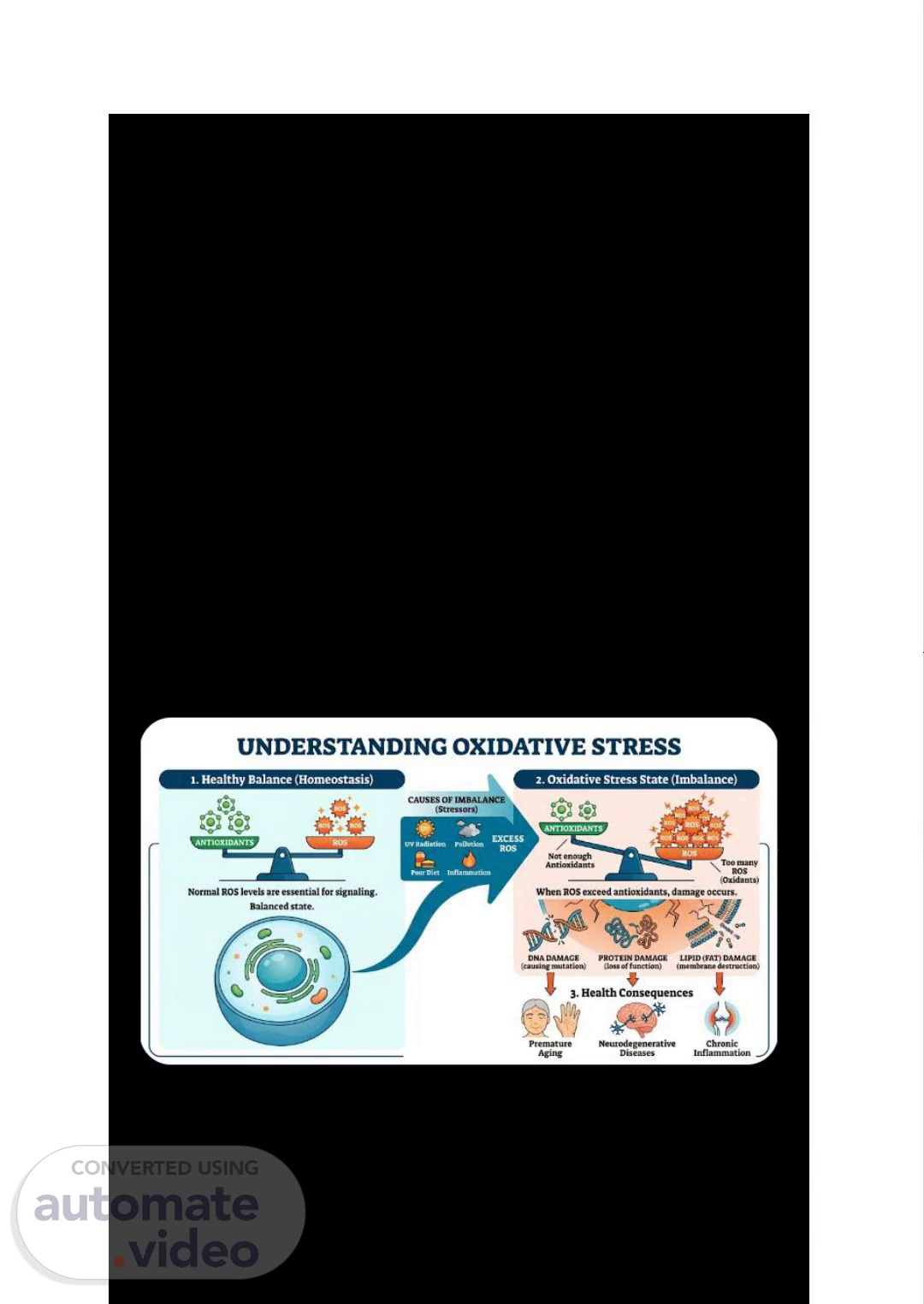
UNDERSTANDING OXIDATIVE STRESS 1. Healthy Balance (Homeostasis) Normal ROS levels are essential for Balanced 2. Oxidative Stress State (Imbalance) When ROS exceed antioxidants , damage Xcurs. DNA DAMAGE 3. Health Consequences Chronic D is eases.
Scene 2 (11s)
Introduction of Oxidative Stress Oxidative stress happens when the body has too many reactive oxygen species (ROS) and not enough antioxidants to fight them. This imbalance causes damage to the cell’s DNA, proteins, and fats. This damage is dangerous because it can lead to serious diseases. To stay healthy, the body needs a good balance between these molecules. Antioxidants from healthy food, like fruits and vegetables, help protect our cells. Without this protection, cells grow old faster and stop working correctly. Halliwell, B., & Gutteridge, J. M. (2015). Free Radicals in Biology and Medicine. Oxford University Press. Basem Samy Nabil 252221.
Scene 3 (41s)
Free Radicals and Reactive Oxygen Species (ROS) Free radicals are unstable molecules with unpaired electrons. Reactive Oxygen Species (ROS) are a type of free radical derived from oxygen (e.g., superoxide, hydrogen peroxide). They are naturally produced during metabolism but become harmful in excess. https://www.mdpi.com/2673-9801/2/2/6.