Scene 1 (0s)
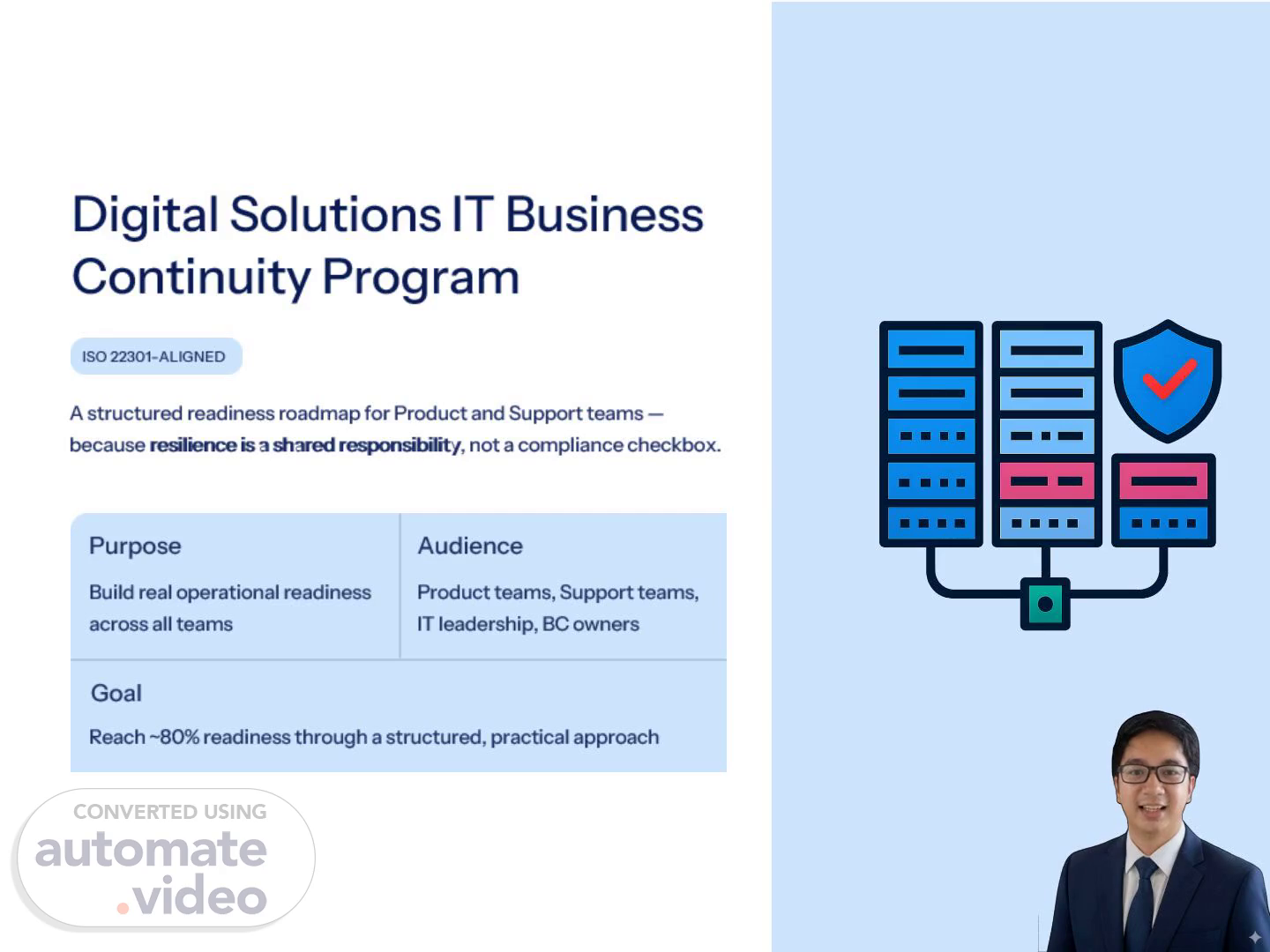
Welcome everyone. This session introduces our (I-T ) Business Continuity Program and explains how Product and Support teams will help strengthen operational resilience across the organization. This initiative is aligned with ISO 22301 and focuses on practical readiness, not just documentation. One key message throughout this presentation is that resilience is a shared responsibility. The BC Manager governs the program, but teams are responsible for continuity readiness within their own services. Today we will cover: Why this initiative matters What teams are expected to do What support will be provided And how we will build readiness progressively.
Scene 2 (46s)
[Audio] Disruptions can happen at any time. System outages, cyber incidents, infrastructure failures, or operational disruptions can affect customers, business operations, and service stability. This initiative exists to improve our ability to respond and recover in a structured and consistent way. Our target is to achieve approximately eighty percent operational readiness through phased improvements. The initial focus is practical crisis response capability. Teams must know: What to do Who is responsible And how recovery will be coordinated during incidents The goal is operational readiness, not just compliance documentation..
Scene 3 (1m 30s)
[Audio] ISO 22301 provides the framework for building and maintaining business continuity capability. In simple terms, it requires organizations to: Define ownership and responsibilities Identify critical services and dependencies Establish recovery priorities Create response and recovery plans Train teams And continuously improve readiness The standard also expects evidence that teams are prepared. Most importantly, business continuity is not only about documents. It is about ensuring teams can respond effectively during real disruptions. That means plans must be understood, maintained, and exercised regularly..
Scene 4 (2m 13s)
[Audio] This slide explains how accountability is divided across the organization. The BC Manager is accountable for: Governance Standards Templates Training Reviews And overall program oversight Product and Support teams are responsible for their own continuity content because they understand their services, dependencies, and operational recovery activities. Leadership teams support prioritization, accountability, and enforcement. This model ensures continuity becomes part of normal service ownership rather than a separate compliance activity..
Scene 5 (2m 48s)
[Audio] Each Product and Support team is responsible for completing several key continuity activities. These include: Business Impact Analysis Critical activity identification Dependency mapping Recovery target proposals Business Continuity Plans And Disaster Recovery Plans Teams are also responsible for updating plans after exercises, incidents, or major operational changes. The BC Manager will provide guidance and support, but operational teams must own the actual continuity content for their services. That ownership is essential for accuracy and effectiveness during real incidents..
Scene 6 (3m 28s)
[Audio] The Business Continuity program will provide centralized support to help teams execute continuity activities more efficiently. This support includes: Templates and worksheets Training materials Example outputs Workshops and coaching Review feedback Governance oversight And reporting metrics The goal is to simplify the process while maintaining consistency across the organization. The BC Manager enables and governs the program, while Product and Support teams execute continuity planning for their own services..
Scene 7 (3m 59s)
[Audio] Our immediate priority is crisis response readiness. The first phase focuses on: Training Awareness sessions Tabletop exercises Simulations And response coordination The objective is to improve team confidence and operational muscle memory during disruptions. Exercises help validate: Decision making Escalation processes Communication flow And recovery coordination Lessons learned from these activities will strengthen continuity plans over time. This phased approach helps us build readiness progressively and practically..
Scene 8 (4m 35s)
[Audio] Our roadmap is divided into four phases. Phase One focuses on governance, ownership, standards, and templates. Phase Two focuses on Business Impact Analysis, recovery targets, and continuity plan development. Phase Three focuses on training, exercises, and validation activities. Phase Four focuses on continuous improvement through reviews, lessons learned, and updates. An important point is that resilience is built gradually. Readiness improves through repeated cycles of planning, exercising, learning, and improving..
Scene 9 (5m 18s)
[Audio] Success means each critical service has: A named continuity owner A completed Business Impact Analysis Agreed recovery targets Approved continuity and recovery plans At least one completed exercise And trained personnel who understand their responsibilities Corrective actions should also be tracked and resolved. The goal is measurable operational readiness, not theoretical compliance. A successful program improves resilience, recovery coordination, and confidence during disruptions..
Scene 10 (5m 52s)
[Audio] To move this initiative forward successfully, active participation from Product and Support teams is essential. The immediate actions are: Nominate continuity owners Attend training sessions Complete required templates Participate in exercises Maintain and review plans regularly And treat continuity as part of service ownership Business continuity is part of delivering reliable and resilient services to the organization. Our goal is to build practical readiness together through ownership, preparation, and continuous improvement..