Scene 1 (0s)
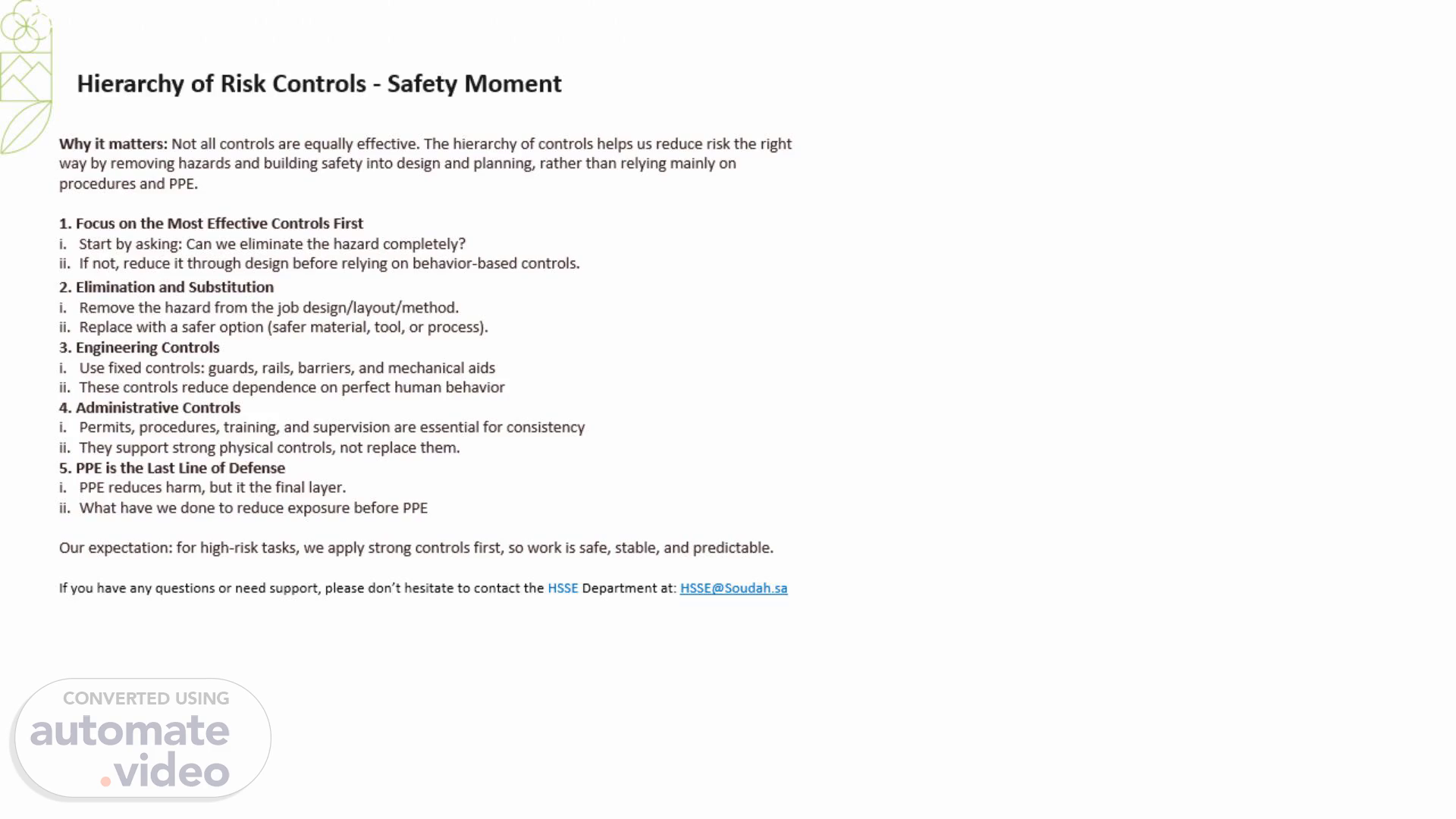
[Audio] People speak up early, so risks get fixed faster. Teams support each other and work safely together People speak up early, so risks get fixed faster. Teams support each other and work safely together Hierarchy of Risk Controls - Safety Moment Why it matters: Not all controls are equally effective. The hierarchy of controls helps us reduce risk the right way by removing hazards and building safety into design and planning, rather than relying mainly on procedures and PPE. 1. Focus on the Most Effective Controls First Start by asking: Can we eliminate the hazard completely? If not, reduce it through design before relying on behavior-based controls. 2. Elimination and Substitution Remove the hazard from the job design/layout/method. Replace with a safer option (safer material, tool, or process). 3. Engineering Controls Use fixed controls: guards, rails, barriers, and mechanical aids These controls reduce dependence on perfect human behavior 4. Administrative Controls Permits, procedures, training, and supervision are essential for consistency They support strong physical controls, not replace them. 5. PPE is the Last Line of Defense PPE reduces harm, but it the final layer. What have we done to reduce exposure before PPE Our expectation: for high-risk tasks, we apply strong controls first, so work is safe, stable, and predictable. If you have any questions or need support, please don’t hesitate to contact the HSSE Department at: [email protected].