Scene 1 (0s)
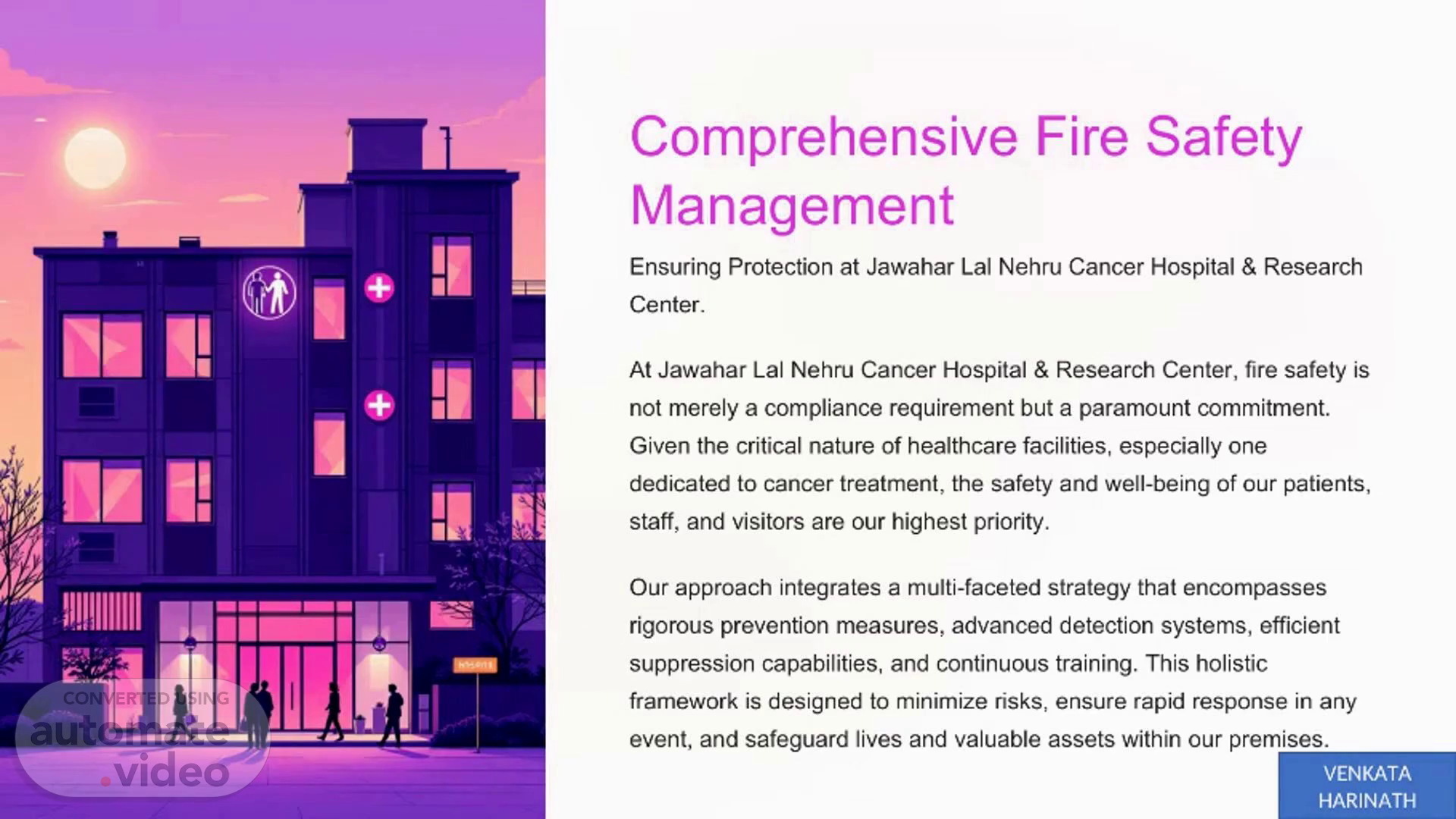
Comprehensive Fire Safety Management Ensuring Protection at Jawahar Lal Nehru Cancer Hospital & Research Center. At Jawahar Lal Nehru Cancer Hospital & Research Center, fire safety is not merely a compliance requirement but a paramount commitment. Given the critical nature of healthcare facilities, especially one dedicated to cancer treatment, the safety and well-being of our patients, staff, and visitors are our highest priority. Our approach integrates a multi-faceted strategy that encompasses rigorous prevention measures, advanced detection systems, efficient suppression capabilities, and continuous training. This holistic framework is designed to minimize risks, ensure rapid response in any event, and safeguard lives and valuable assets within our premises. VENKATA HARINATH.
Scene 2 (47s)
[Audio] The fire extinguishers are strategically located throughout the facility to provide immediate access to firefighting equipment in case of an emergency. The extinguishers are carefully selected and positioned based on the specific risks present in their designated areas. This ensures that the facility can respond effectively to various types of fire incidents, including ordinary combustible fires, electrical fires, and flammable liquid fires. The classification of fires is critical for effective fire safety. Fires can be classified into four main categories: ordinary combustible fires (Class A), flammable liquid fires (Class B), electrical fires (Class C), and cooking oil and grease fires (Class K). The fire extinguishers must be able to handle each type of fire. Our fire extinguishers are designed to minimize damage and ensure rapid control over the affected area. They are also equipped with advanced features such as pressure gauges and temperature sensors to monitor the situation and make informed decisions during an emergency. The maintenance of our fire extinguishers is rigorous and thorough. We regularly inspect and test them to ensure they are functioning properly and ready for use at all times. This ensures that our firefighters are always equipped with reliable and effective firefighting tools..
Scene 3 (2m 16s)
[Audio] The hospital's fire safety policy is based on a comprehensive review of existing literature and research findings. The policy outlines specific procedures for emergency response, evacuation routes, and fire extinguisher placement. The policy also emphasizes the importance of regular maintenance and inspections to prevent accidents. The policy has been updated several times since its inception to reflect changes in local regulations and standards. The policy is enforced by trained personnel who are responsible for ensuring that all equipment is functioning properly. The policy is designed to provide seamless protection around the clock, with no gaps in coverage. The policy is reviewed regularly to identify areas for improvement and optimize processes. The policy ensures that everyone in the hospital is aware of their role in maintaining fire safety and takes responsibility for reporting any hazards or concerns. The policy is implemented through a combination of training programs and regular drills. The policy is effective in preventing accidents and reducing risk of injury or death. The policy is supported by a range of measures including refilling and inspecting equipment, conducting regular safety audits, and providing ongoing support to staff. The policy is continually evaluated and refined to ensure it remains relevant and effective..
Scene 4 (3m 45s)
[Audio] Our specialized fire suppression system utilizes advanced technology to provide a safe environment for our employees and visitors. The system includes modular DCP sprinklers, which can be easily integrated into existing piping systems. This allows us to maintain a consistent level of protection throughout the facility. Additionally, we have installed CO2 extinguishers, which are effective in suppressing fires involving flammable liquids. We also utilize traditional water-based solutions, but with a twist - they are designed to minimize damage to sensitive equipment. Our comprehensive approach ensures that every potential fire risk is addressed effectively..
Scene 5 (4m 28s)
[Audio] The hospital's water power system consists of hoses and hydrants strategically placed throughout the facility. The hoses are conveniently located near all staircases, patient wards, and other critical areas. Each hose is 30 meters long, providing ample reach for water access from multiple points. The hoses are designed for quick and easy deployment by staff in case of an emergency. Regular pressure and flow rate tests are conducted to maintain clear access and facilitate rapid response. The hoses are made of diverse materials and come in various lengths, allowing staff to control water stream patterns from a fine spray to a powerful jet. The hoses are meticulously stored, regularly inspected, and undergo periodic pressure testing to guarantee their reliability and effectiveness. The hydrants are strategically positioned at key locations throughout the hospital. They provide immediate access to a controlled water stream, which can be deployed quickly and easily by staff in the event of an emergency. The hydrants are equipped with pressure gauges and flow rate indicators, allowing staff to monitor the water pressure and flow rate in real-time. This enables them to respond rapidly and effectively to any fire incident. The hydrants also feature a secure locking mechanism to prevent unauthorized access, ensuring that the water supply remains under control even in the event of a fire. The hydrants are regularly tested and maintained to ensure they remain functional and ready for use at all times..
Scene 6 (6m 5s)
[Audio] The fire safety measures at our facility are based on the principle of early warning systems. The early warning systems enable rapid response and minimize potential damage and risk to life. The system consists of smoke and heat detectors strategically placed throughout the facility. The detectors are designed to detect the presence of smoke particles and temperature increases. They are also equipped with advanced technology to provide early warnings within seconds of a fire's inception. The system has been integrated with other safety features such as emergency protocols and fire suppression systems. The detectors are regularly inspected, tested, and calibrated to ensure they remain operational and sensitive. The inspection schedule includes regular functional tests to verify the detectors' operational readiness and sensitivity. The system is designed to provide early warnings of potential fires, allowing for swift evacuations and effective fire suppression. The detectors are strategically located in areas where smoke may be present under normal operating conditions. The system is critical to the safety of our occupants and facilities, and it is essential that we maintain it regularly to prevent accidents..
Scene 7 (7m 22s)
[Audio] Automated sprinkler systems provide automatic fire suppression, activating instantly upon detecting fire to contain and extinguish it, minimizing damage and ensuring safety. These advanced systems are meticulously designed and installed to offer comprehensive protection across all critical areas of our facility, representing a cornerstone of our passive fire protection strategy. Equipped with cutting-edge technology, our sprinkler network delivers precise and localized water deployment, significantly reducing the damage caused by traditional firefighting methods. This proactive approach ensures that fires are addressed at their earliest stages, safeguarding lives and preserving valuable assets. Instantaneous response and localized suppression are provided by our automated sprinkler systems, which activate within moments. Our sprinkler systems provide continuous, round-the-clock fire protection, whether the building is occupied or not. This constant vigilance ensures that fires are detected and suppressed even during off-hours, offering peace of mind and an optimal operational effectiveness. The distribution of sprinkler heads across different floors highlights our commitment to comprehensive protection. With a total of 305 sprinkler heads meticulously distributed, our facility is equipped with a robust and reliable first line of defense against fire incidents..
Scene 8 (8m 53s)
[Audio] The text describes the various schedules and procedures for maintaining fire safety equipment and systems in place. It highlights the importance of regular inspections, testing, and maintenance to ensure that all fire safety equipment remains in optimal working condition. The text emphasizes the need for proactive care and attention to detail to guarantee the reliability and effectiveness of the entire fire safety infrastructure. The procedures described cover everything from monthly inspections of extinguishers and exits to quarterly checks on hoses and reels. Weekly and daily visual inspections of fire pumps are also included. Annual reviews of diesel engines and submersible pumps are necessary. Testing the sensitivity of smoke and heat detectors and the flow rate of sprinkler systems is crucial. Overall, the text presents a comprehensive and rigorous maintenance program that is essential for ensuring the safety and security of people and property..
Scene 9 (9m 58s)
[Audio] The fire buckets are strategically placed at various locations around the facility to provide quick access to firefighting equipment in case of an emergency. The twenty-two designated fire exits are clearly marked and easily accessible from any point within the facility. The pump servicing schedule ensures that all pumps are regularly maintained to prevent breakdowns. The clear evacuation paths through staircases allow for a safe and efficient exit in case of an emergency. The maintenance team performs regular checks on the essential safety assets to ensure their continued effectiveness. The next scheduled maintenance date for these assets is June 3rd, 2025..
Scene 10 (10m 42s)
[Audio] The hospital's mission statement emphasizes its commitment to providing high-quality care to all patients regardless of their financial situation. The hospital has implemented various measures to achieve this goal. These measures include the implementation of a patient-centered approach, which prioritizes the needs and preferences of each individual patient. The hospital also offers a range of services that cater to diverse patient populations. Furthermore, the hospital provides access to cutting-edge medical technology and equipment. Additionally, the hospital offers a variety of educational programs and resources for patients and families. The hospital's commitment to excellence is reflected in its dedication to ongoing quality improvement initiatives. The hospital's leadership team is committed to fostering an inclusive and supportive environment that promotes patient well-being. The hospital's focus on patient-centered care is evident in its efforts to address the unique needs of each patient. The hospital's commitment to excellence is demonstrated through its adherence to strict quality control measures. The hospital's leadership team is dedicated to ensuring that every patient receives personalized attention and care. The hospital's emphasis on patient-centered care sets it apart from other hospitals. The hospital's commitment to excellence is further reinforced by its involvement in various community outreach programs. The hospital's leadership team is committed to promoting a culture of transparency and accountability. The hospital's focus on patient-centered care is evident in its efforts to engage patients and families in the decision-making process. The hospital's commitment to excellence is demonstrated through its adherence to strict quality control measures. The hospital's leadership team is dedicated to ensuring that every patient receives personalized attention and care. The hospital's emphasis on patient-centered care sets it apart from other hospitals. The hospital's commitment to excellence is further reinforced by its involvement in various community outreach programs. The hospital's leadership team is committed to promoting a culture of transparency and accountability. The hospital's focus on patient-centered care is evident in its efforts to engage patients and families in the decision-making process. The hospital's commitment to excellence is demonstrated through its adherence to strict quality control measures. The hospital's leadership team is dedicated to ensuring that every patient receives personalized attention and care. The hospital's emphasis on patient-centered care sets it apart from other hospitals. The hospital's commitment to excellence is further reinforced by its involvement in various community outreach programs. The hospital's leadership team is committed to promoting a culture of transparency and accountability. The hospital's focus on patient-centered care is evident in its efforts to engage patients and families in the decision-making process. The hospital's commitment to excellence is demonstrated through its adherence to strict quality control measures. The hospital's leadership team is dedicated to ensuring that every patient receives personalized attention and care. The hospital's emphasis on patient-centered care sets it apart from other hospitals. The hospital's commitment to excellence is further reinforced by its involvement in various community outreach programs. The hospital's leadership team is committed to promoting a culture of transparency and accountability. The hospital's focus on patient-centered care is evident in its efforts to engage patients and families in the decision-making process. The hospital's commitment to excellence is demonstrated through its adherence to strict quality control measures. The hospital's leadership team is dedicated to ensuring that every patient receives personalized attention and care. The hospital's emphasis on patient-centered care sets it apart from other hospitals. The hospital's commitment to excellence is further reinforced by its.