Scene 1 (0s)
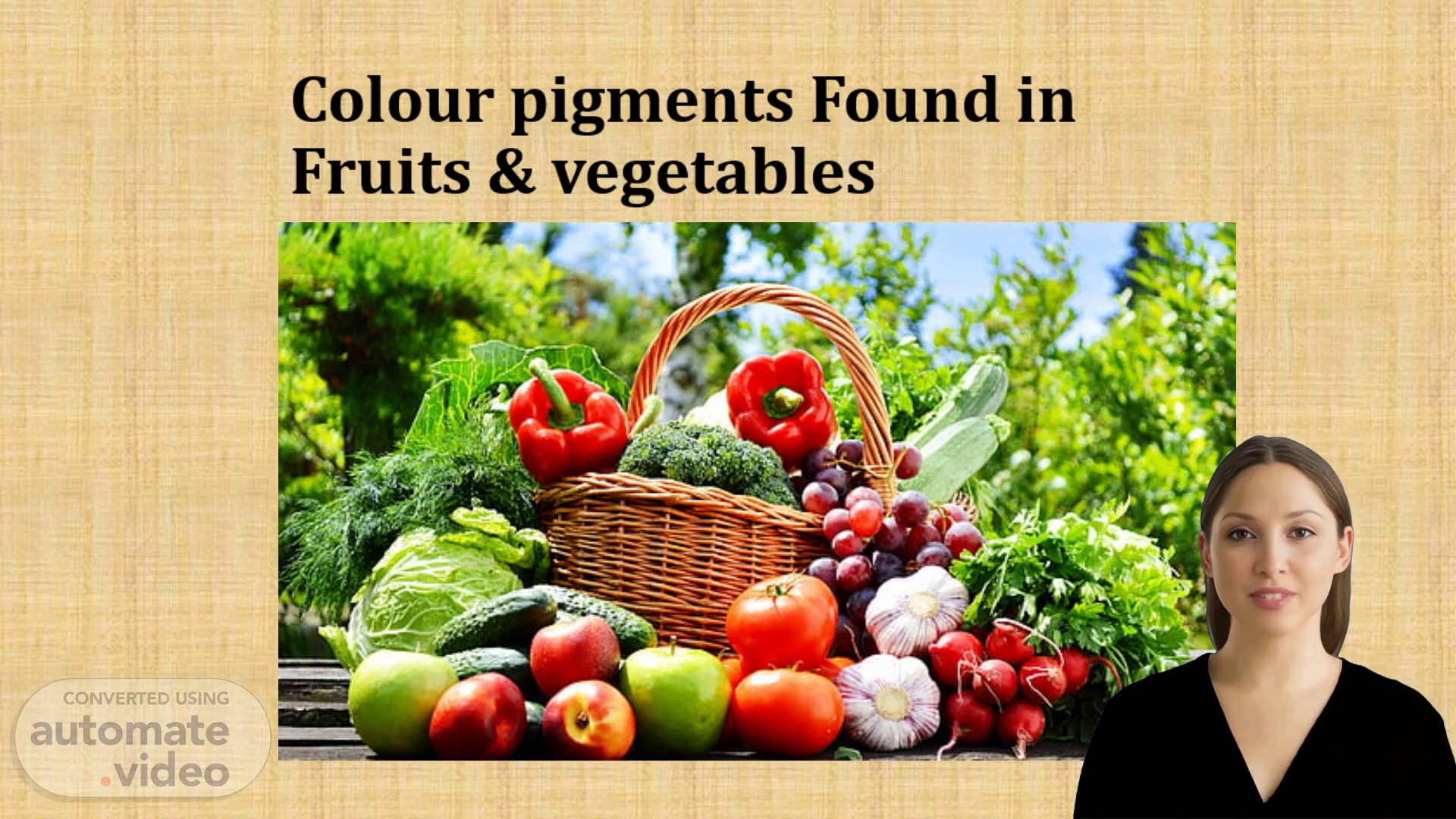
[Virtual Presenter] Welcome to our presentation on Colour pigments Found in Fruits & vegetables. We're excited to explore the vibrant colours found in nature and learn how they contribute to the diversity of fruits and vegetables. Let's start our journey and discover the colourful world of fruits and vegetables. We are going to explore the following colour pigments: Red, Orange, Yellow, Green, Blue, Purple, and White. We will discuss how these colour pigments are found in various fruits and vegetables, and their significance in the food chain. In this presentation, we will delve into the world of fruits and vegetables, and examine the colour pigments that give them their unique colours. We will explore the different types of colour pigments, their sources, and how they are used by the plants to attract pollinators and protect themselves from pests. We will also examine the impact of colour pigments on the nutritional value and taste of fruits and vegetables. We will discuss how the colour pigments interact with each other and with other compounds in the plant to produce the desired effects. By the end of this presentation, we hope that you will have a deeper understanding of the colour pigments found in fruits and vegetables and how they contribute to the diversity of the plant kingdom. We will provide you with the knowledge and tools to appreciate the beauty and complexity of the colourful world of fruits and vegetables. We will begin by exploring the colour pigments found in red fruits and vegetables, such as tomatoes, strawberries, and red apples. We will discuss how these colour pigments are produced and their significance in the plant's defence mechanism. We will also explore the colour pigments found in orange fruits and vegetables, such as carrots, pumpkins, and sweet potatoes. We will discuss how these colour pigments are used by the plant to attract pollinators and protect themselves from pests. In the next section, we will explore the colour pigments found in yellow fruits and vegetables, such as bananas, lemons, and corn. We will discuss how these colour pigments are used by the plant to attract pollinators and protect themselves from pests. We will also explore the colour pigments found in green fruits and vegetables, such as honeydew melons, cucumbers, and green apples. We will discuss how these colour pigments are used by the plant to protect themselves from pests and attract pollinators. In the next section, we will explore the colour pigments found in blue fruits and vegetables, such as blueberries, grapes, and blue potatoes. We will discuss how these colour pigments are used by the plant to attract pollinators and protect themselves from pests. We will also explore the colour pigments found in purple fruits and vegetables, such as eggplants, plums, and grapes. We will discuss how these colour pigments are used by the plant to attract pollinators and protect themselves from pests. Finally, we will explore the colour pigments found in white fruits and vegetables, such as cauliflower, garlic, and onions. We will discuss how these colour pigments are used by the plant to protect themselves from pests and attract pollinators. By examining the colour pigments found in fruits and vegetables, we will gain a deeper understanding of the plant kingdom and the complex interactions between colour pigments and other compounds. We will appreciate the beauty and complexity of the colourful world of fruits and vegetables. We will also discuss the significance of colour pigments in the food chain and how they contribute to the nutritional value and taste of fruits and vegetables. We will examine the impact of colour pigments on the plant's defence mechanism and how they interact with other compounds in the plant. In conclusion, we have explored the colour pigments found in fruits and vegetables and their significance in the plant kingdom. We have discussed how these colour pigments are used by the plant to attract pollinators, protect themselves from pests, and contribute to the nutritional value and taste of fruits and vegetables. We hope that this presentation has provided you with a deeper understanding of the colourful world of fruits and vegetables and the importance of colour pigments in the plant kingdom. We will continue to explore the complex interactions between colour pigments and other compounds in the plant, and examine the significance of colour pigments in the food chain. Thank you for joining us on this journey into the colourful world of fruits and vegetables. We hope that you have enjoyed learning about the colour pigments found in these plants and how they contribute to the diversity of the plant kingdom. We look forward to continuing our exploration of the colourful world of fruits and vegetables and discovering the many wonders that lie within. By the end of this presentation, we hope that you will have gained a deeper understanding of the colour pigments found in fruits and vegetables and their significance in the plant kingdom. We will provide you with the knowledge and tools to appreciate the beauty and complexity of the colourful world of fruits and vegetables..
Scene 2 (4m 59s)
[Audio] The pigments responsible for the red color of fruits and vegetables are called carotenoids. Carotenoids are derived from the breakdown of chlorophyll during photosynthesis. They are found in various types of plants including fruits, vegetables, and flowers. The main function of carotenoids is to protect the plant from excessive sunlight by absorbing light energy and preventing it from being absorbed by the plant's cells. This process helps to prevent damage to the plant's cells and tissues. In addition to their protective role, carotenoids also play a crucial role in the synthesis of vitamin A. They are also involved in the regulation of plant growth and development. Carotenoids are found in many different types of plants, including those that produce edible fruits and vegetables. Many people consume carotenoids through their diet, either directly or indirectly, through the consumption of fruits and vegetables rich in these pigments..
Scene 3 (6m 3s)
[Audio] The orange color found in many fruits and vegetables is primarily due to two types of carotenoid pigments: beta-carotene and alpha-carotene. These pigments are responsible for the vibrant orange hue seen in oranges, mangoes, papayas, apricots, carrots, pumpkins, and sweet potatoes. The high concentration of these pigments in certain foods contributes to their characteristic colors and nutritional value. In particular, beta-carotene has been linked to several health benefits, including enhanced vision and immune function..
Scene 4 (6m 40s)
[Audio] The yellow pigment found in various fruits and vegetables is called xanthophylls. These pigments are responsible for their yellow color. Xanthophylls are composed of carotenoid molecules. Carotenoids are a type of pigment that is found in plants. They are known for their ability to absorb light energy and convert it into chemical energy. This process is essential for photosynthesis. The yellow pigment found in carrots is lutein, which is a type of xanthophyll. Other types of xanthophylls include zeaxanthin and beta-carotene. These pigments are found in many fruits and vegetables, including apples, pears, and sweet potatoes. Flavonoids are another type of pigment that is found in some of these foods. Flavonoids are known for their antioxidant properties. They help protect cells from damage caused by free radicals. The presence of certain pigments in fruits and vegetables can affect their nutritional value and their impact on human health..
Scene 5 (7m 41s)
[Audio] We're now going to explore the green color pigment found in various fruits and vegetables. This pigment is known as chlorophyll, which is responsible for the green color of many plants. We see this pigment in several fruits, including the green apple, kiwi, and green grapes. We also see it in various vegetables, such as spinach, broccoli, cabbage, peas, and coriander. All of these foods contain chlorophyll, which gives them their distinctive green color. We can see that chlorophyll is present in a variety of foods, from fruits to vegetables. It's worth noting that while these foods are all green, they may have slightly different shades of green due to other pigments present. However, chlorophyll is the primary pigment responsible for their green color. In the natural world, chlorophyll plays a crucial role in photosynthesis, allowing plants to convert sunlight into energy. While we're discussing its presence in food, it's interesting to consider its broader significance. We can see that chlorophyll is a vital component of many plants, giving them their green color and allowing them to thrive. Its presence in various foods is a testament to the complex and interconnected nature of the natural world. Now that we've explored the green color pigment found in fruits and vegetables, let's move on to the next topic and see what other colorful pigments are at play. We're now going to explore the yellow color pigment found in various fruits and vegetables. This pigment is known as carotenoids, which are responsible for the yellow color of many plants. We see this pigment in several fruits, including the banana, mango, and pineapple. We also see it in various vegetables, such as sweet potatoes, corn, and yellow peppers. All of these foods contain carotenoids, which gives them their distinctive yellow color. We can see that carotenoids are present in a variety of foods, from fruits to vegetables. It's worth noting that while these foods are all yellow, they may have slightly different shades of yellow due to other pigments present. However, carotenoids are the primary pigment responsible for their yellow color..
Scene 6 (9m 54s)
[Audio] We can see that various fruits and vegetables contain pigments that give them a blue or purple colour. We find that anthocyanins are responsible for this colour. Anthocyanins are a type of flavonoid that can be found in many different types of fruits and vegetables. We can see that blueberries, black grapes, jamun, and plums are all examples of fruits that contain anthocyanins. We can also see that purple cabbage, brinjal, and purple carrot are all examples of vegetables that contain anthocyanins. These pigments are responsible for the blue or purple colour of these fruits and vegetables. They are also known to have various health benefits, such as antioxidant and anti-inflammatory properties. We can see that these pigments are an important part of the diet and are worth further study. We can also see that they have various applications in the food industry, such as in the production of natural food colourings. We can conclude that anthocyanins are an important pigment that is found in many different types of fruits and vegetables. We can see that they have various health benefits and applications in the food industry. We can also see that they are worth further study to fully understand their properties and benefits. We can also see that there are many different types of fruits and vegetables that contain anthocyanins. We can see that these pigments are an important part of the diet and are worth further study. We can also see that they have various applications in the food industry. We can see that the study of anthocyanins is an important area of research. We can see that it has various applications in the food industry and health benefits. We can also see that it is worth further study to fully understand its properties and benefits. We can see that anthocyanins are a type of flavonoid that is found in many different types of fruits and vegetables. We can see that they have various health benefits and applications in the food industry. We can also see that they are worth further study to fully understand their properties and benefits. We can see that the study of anthocyanins is an important area of research. We can see that it has various applications in the food industry and health benefits. We can also see that it is worth further study to fully understand its properties and benefits. We can see that anthocyanins are a type of flavonoid that is found in many different types of fruits and vegetables. We can see that they have various health benefits and applications in the food industry. We can also see that they are worth further study to fully understand their properties and benefits. We can see that the study of anthocyanins is an important area of research. We can see that it has various applications in the food industry and health benefits. We can also see that it is worth further study to fully understand its properties and benefits. We can see that anthocyanins are a type of flavonoid that is found in many different types of fruits and vegetables. We can see that they have various health benefits and applications in the food industry. We can also see that they are worth further study to fully understand their properties and benefits. We can see that the study of anthocyanins is an important area of research. We can see that it has various applications in the food industry and health benefits. We can.
Scene 7 (13m 16s)
[Audio] ```sql SELECT -- The result will be a single value with the given text 'We've reached the end of our journey through the fascinating world of colour pigments found in fruits and vegetables. As we've seen, these natural wonders are not just a feast for the eyes, but also a source of incredible health benefits. Let's take a look at some of the key findings. Brown and white colour pigments are found in flavonoids, allicin, and phenolics. Fruits like apples and pears contain flavonoids and phenolics, respectively. Vegetables like onions, garlic, and cauliflower are also rich in flavonoids, allicin, and flavonoids. We've explored the unique properties of each of these pigments and their corresponding fruits and vegetables. Thank you for joining us on this enlightening journey. We appreciate your attention and hope you've gained a deeper understanding of the importance of colour pigments found in fruits and vegetables. Thank you..