Scene 1 (0s)
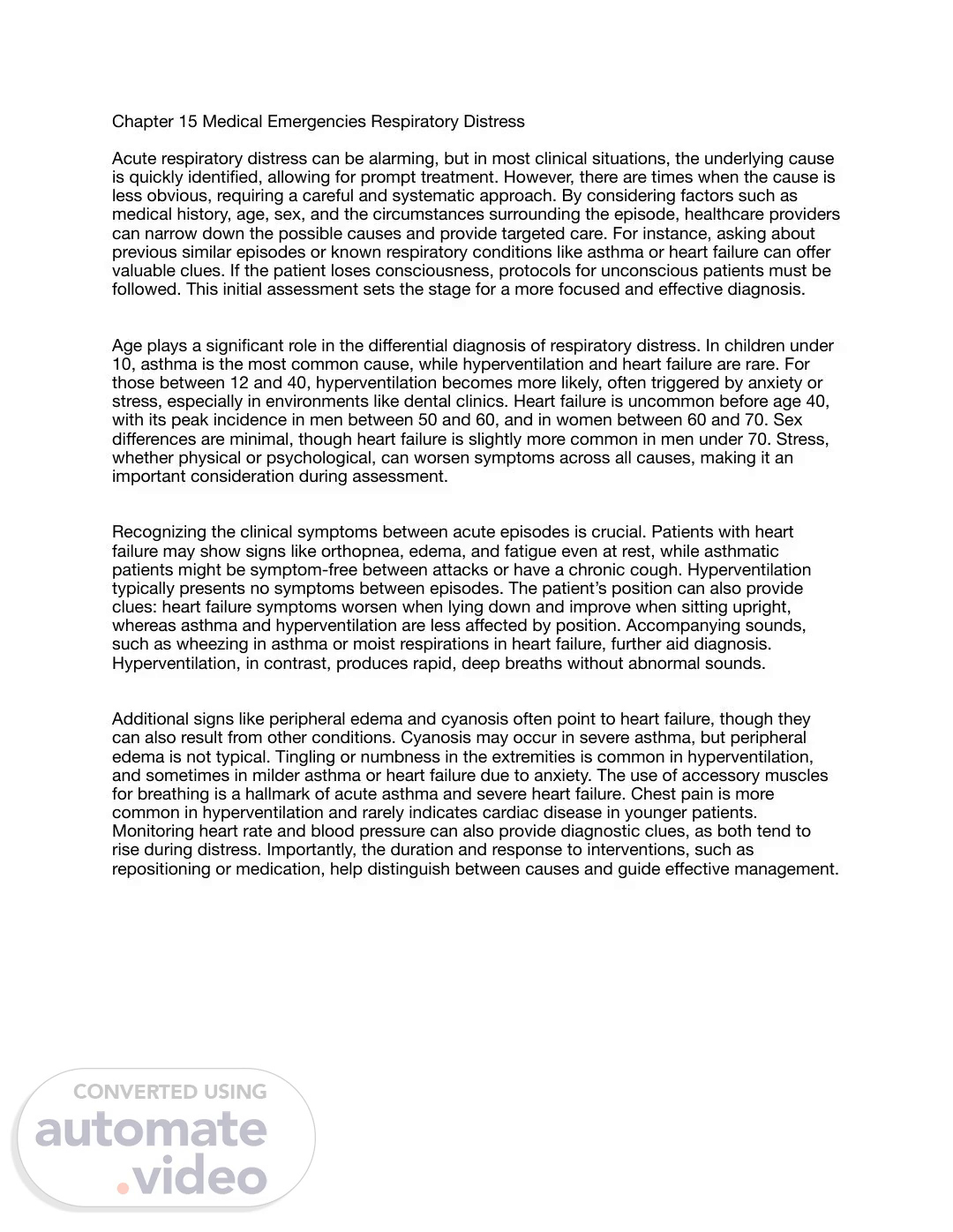
[Audio] Chapter 15 Medical Emergencies Respiratory Distress Acute respiratory distress can be alarming, but in most clinical situations, the underlying cause is quickly identified, allowing for prompt treatment. However, there are times when the cause is less obvious, requiring a careful and systematic approach. By considering factors such as medical history, age, sex, and the circumstances surrounding the episode, healthcare providers can narrow down the possible causes and provide targeted care. For instance, asking about previous similar episodes or known respiratory conditions like asthma or heart failure can offer valuable clues. If the patient loses consciousness, protocols for unconscious patients must be followed. This initial assessment sets the stage for a more focused and effective diagnosis. Age plays a significant role in the differential diagnosis of respiratory distress. In children under 10, asthma is the most common cause, while hyperventilation and heart failure are rare. For those between 12 and 40, hyperventilation becomes more likely, often triggered by anxiety or stress, especially in environments like dental clinics. Heart failure is uncommon before age 40, with its peak incidence in men between 50 and 60, and in women between 60 and 70. Sex differences are minimal, though heart failure is slightly more common in men under 70. Stress, whether physical or psychological, can worsen symptoms across all causes, making it an important consideration during assessment. Recognizing the clinical symptoms between acute episodes is crucial. Patients with heart failure may show signs like orthopnea, edema, and fatigue even at rest, while asthmatic patients might be symptom-free between attacks or have a chronic cough. Hyperventilation typically presents no symptoms between episodes. The patient's position can also provide clues: heart failure symptoms worsen when lying down and improve when sitting upright, whereas asthma and hyperventilation are less affected by position. Accompanying sounds, such as wheezing in asthma or moist respirations in heart failure, further aid diagnosis. Hyperventilation, in contrast, produces rapid, deep breaths without abnormal sounds. Additional signs like peripheral edema and cyanosis often point to heart failure, though they can also result from other conditions. Cyanosis may occur in severe asthma, but peripheral edema is not typical. Tingling or numbness in the extremities is common in hyperventilation, and sometimes in milder asthma or heart failure due to anxiety. The use of accessory muscles for breathing is a hallmark of acute asthma and severe heart failure. Chest pain is more common in hyperventilation and rarely indicates cardiac disease in younger patients. Monitoring heart rate and blood pressure can also provide diagnostic clues, as both tend to rise during distress. Importantly, the duration and response to interventions, such as repositioning or medication, help distinguish between causes and guide effective management..