Scene 1 (0s)
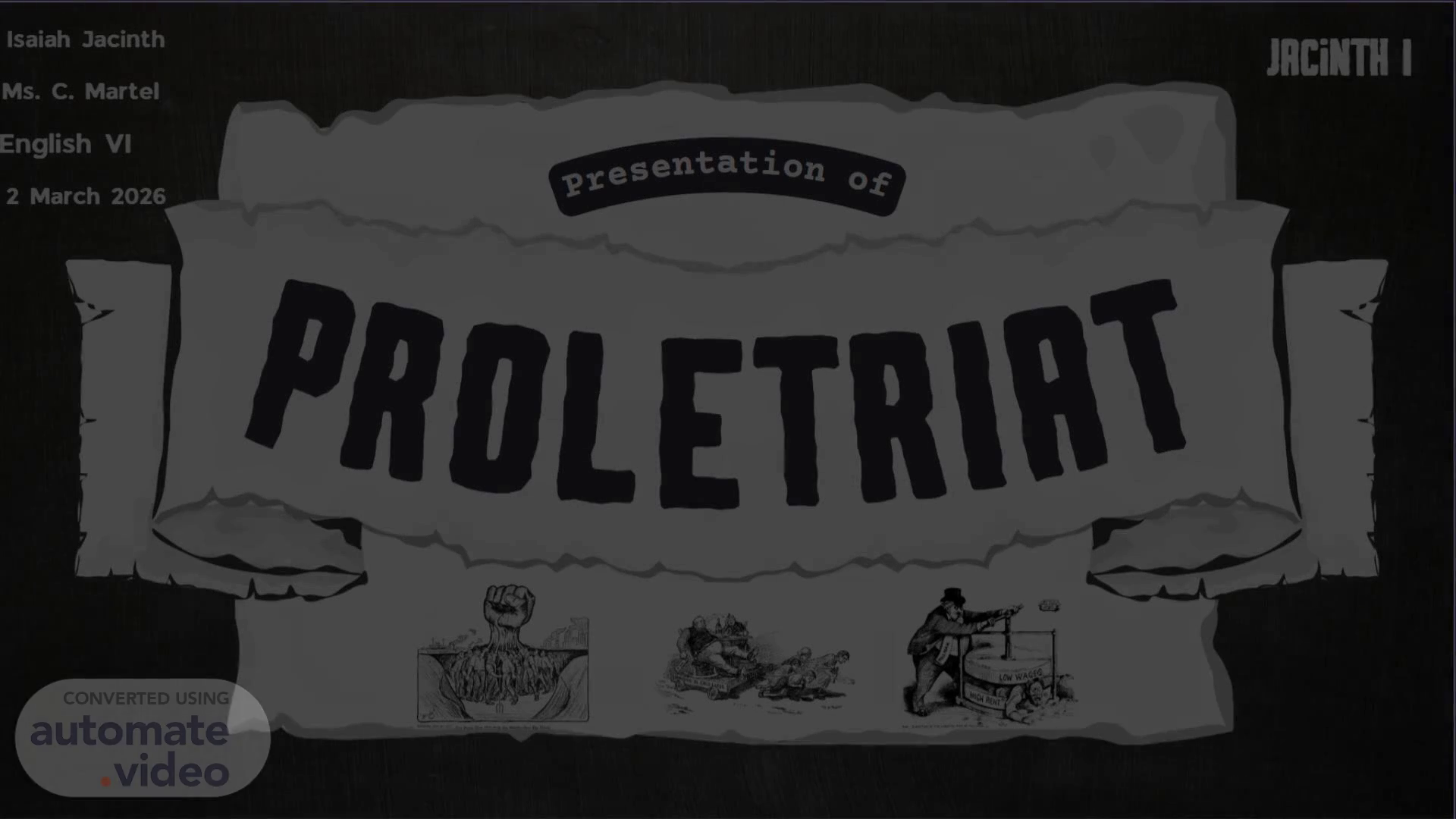
[Audio] The presentation of Proletriat. A white sign with black text AI-generated content may be incorrect..
Scene 2 (9s)
[Audio] Thesis statement. The russian revolution succeeded because the bolsheviks mobilized the proletariat by appealing to their harsh working conditions, political oppression, and demand for economic equality..
Scene 3 (23s)
[Audio] Working Conditions. 12 to 14 hours of factory shifts. Low wages. Unsafe industrial environments..
Scene 4 (33s)
[Audio] Urban Poverty. Overcrowded low-income housing. Poor sanitation. Inflation during world war 1.
Scene 5 (43s)
[Audio] Bloody Sunday. Peaceful march to winter palace. Troops fired on demonstrators. Hundreds killed or wounded.
Scene 6 (55s)
[Audio] Politcal repression. No meaningful voting power. Censorship of newspaper. Arrest of labor organizers.
Scene 7 (1m 5s)
[Audio] Bolshevik promises. End the world war 1. Peace Land and bread. Worked control.
Scene 8 (1m 15s)
[Audio] Soviets and proletariat rule. Worker councils (soviet) formed. Organized factory strike. Supported october revolution.
Scene 9 (1m 26s)
[Audio] Conclusion. Proletariat dissatisfaction fulled revolution.Bloody Sunday destroyed trust in the Tsar.Bolsheviks gained power through worker support.Soviets gave workers political influence.Proletariat became driving force of revolution..
Scene 10 (1m 41s)
[Audio] Ascher, Abraham. "Bloody Sunday." Encyclopaedia Britannica, Encyclopaedia Britannica, 22 Jan. 2023, britannica.com/event/Bloody-Sunday-Russia. Figes, Orlando. "Poor Workers and the Russian Revolution." History Today, History Today Ltd., Mar. 2017, historytoday.com/archive/feature/poor-workers-and-revolution. Fitzpatrick, Sheila. "Russian Revolution." Oxford Research Encyclopedia of History, Oxford University Press, July 2010, oxfordre.com/history/display/10.1093/acrefore/9780199329175.001.0001/acrefore-9780199329175-e-62. Service, Robert. "Lenin and the Russian Revolution." BBC History, BBC, 3 July 2014, bbc.co.uk/history/worldwars/wwone/big_russian_revolution_01.shtml..
Scene 11 (3m 14s)
[Audio] Thank you. A white banner with black text AI-generated content may be incorrect..