Scene 1 (0s)
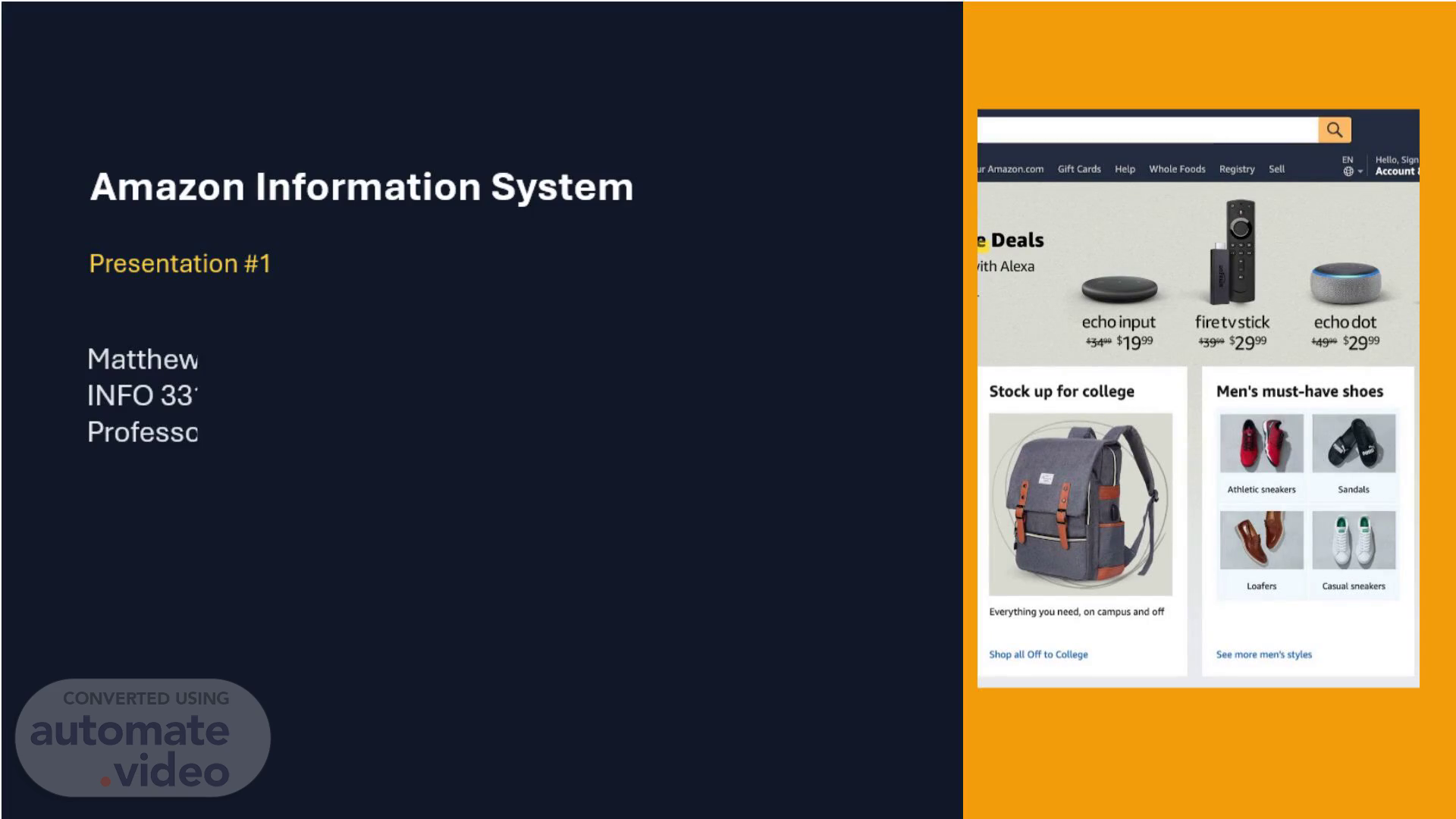
Amazon Information System. Presentation #1. Matthew Daddato INFO 331 Professor: [Add Name].
Scene 2 (2m 30s)
[Audio] The online marketplace connects buyers and sellers through a platform that allows them to list their products and negotiate prices. The platform also provides tools for managing inventory, tracking orders, and processing payments. Additionally, it offers features such as shipping and return policies, which help to ensure a smooth transaction process. The platform uses data analytics to provide personalized product recommendations to customers based on their purchase history and preferences. This helps to increase sales and revenue for both buyers and sellers. Furthermore, the platform's operational efficiency improves over time due to its ability to analyze and optimize business processes..
Scene 3 (3m 17s)
[Audio] The users of this system are diverse and widespread. They include customers who browse products, place orders, and track deliveries. Additionally, there are third-party sellers who manage their listings, pricing, inventory, and fulfillment. Furthermore, Amazon employees play a crucial role in supporting logistics, warehouses, and customer service. Moreover, IT administrators are responsible for ensuring the platform remains secure, available, and scalable. The diversity of these users ensures that the system can cater to various needs and provide efficient services..
Scene 4 (3m 57s)
[Audio] The server-side hardware and software components are essential for operating Amazon's information system. These components include global data centers and network devices that work together to provide a reliable backup and disaster recovery system..
Scene 5 (4m 15s)
[Audio] The server-side software that powers Amazon's online marketplace utilizes a range of technologies including AWS cloud services, databases, order management systems, payment processing systems, and security software to manage various tasks such as storing data, managing orders, and ensuring the security of transactions. These technologies are used to provide a seamless user experience across multiple devices and platforms. The use of these technologies enables Amazon to offer a wide range of products and services to its customers, making it one of the largest e-commerce companies in the world..
Scene 6 (4m 56s)
[Audio] The client-side aspect of Amazon's information system involves multiple devices and platforms. The use of desktop and laptop computers through web browsers enables customers to access Amazon's website and make purchases online. Smartphones and tablets also utilize the Amazon mobile app, allowing users to shop from anywhere. Furthermore, smart devices such as Echo enable seamless communication between customers and Amazon services. Barcode scanners and handheld devices are utilized by employees in operations to manage inventory and fulfill orders. These diverse client-side options provide a convenient and efficient shopping experience for customers across different devices..
Scene 7 (5m 44s)
[Audio] Amazon's online shopping platform utilizes various client-side software to facilitate user interaction, including mobile apps for iOS and Android, web browsers such as Chrome and Safari, and cookies to store user preferences. These technologies enable users to access and utilize the platform across multiple devices and platforms, thereby providing a seamless shopping experience..
Scene 8 (6m 10s)
[Audio] The company has implemented a sophisticated system for managing its vast inventory of products. The system utilizes a combination of human and artificial intelligence to optimize stock levels, predict demand, and automate tasks. This enables the company to maintain a high level of customer satisfaction while minimizing costs. The system also includes features that allow it to track and manage orders, monitor inventory levels, and analyze sales trends. By leveraging these technologies, the company is able to streamline its operations and improve efficiency..
Scene 9 (6m 49s)
[Audio] The system allows customers to add items to their cart and proceed through the checkout process, where they can validate their address, shipping options, and payment method. The system then confirms the transaction and generates an order record, sending confirmation and email notices to the customer automatically. This process happens in real-time, connecting the client interface to the back-end payment and order systems..
Scene 10 (7m 18s)
[Audio] The users have access to a wide range of tools that enable them to manage their orders effectively. They can view their current and past orders, track shipments, receive notifications about shipping and delivery updates, and access additional services such as returning or replacing items, sharing gift receipts, leaving feedback, and writing product reviews. These tools also provide real-time information on logistics and carrier data, which helps to ensure a seamless customer experience and efficient order processing. The integration of these systems enables retailers to streamline their operations and improve customer satisfaction..
Scene 11 (8m 1s)
[Audio] The Amazon information system relies on a combination of hardware and software components to operate effectively. These components include global data centers, cloud servers, storage clusters, network devices, and backup infrastructure. The system processes orders, manages inventory, and delivers products to customers through these various components. Users can browse products, place orders, and track deliveries using this system. Furthermore, third-party sellers have access to tools that enable them to manage their listings, pricing, and fulfillment. In addition, Amazon employs data analytics to provide personalized product recommendations and enhance operational efficiency..