Scene 1 (0s)
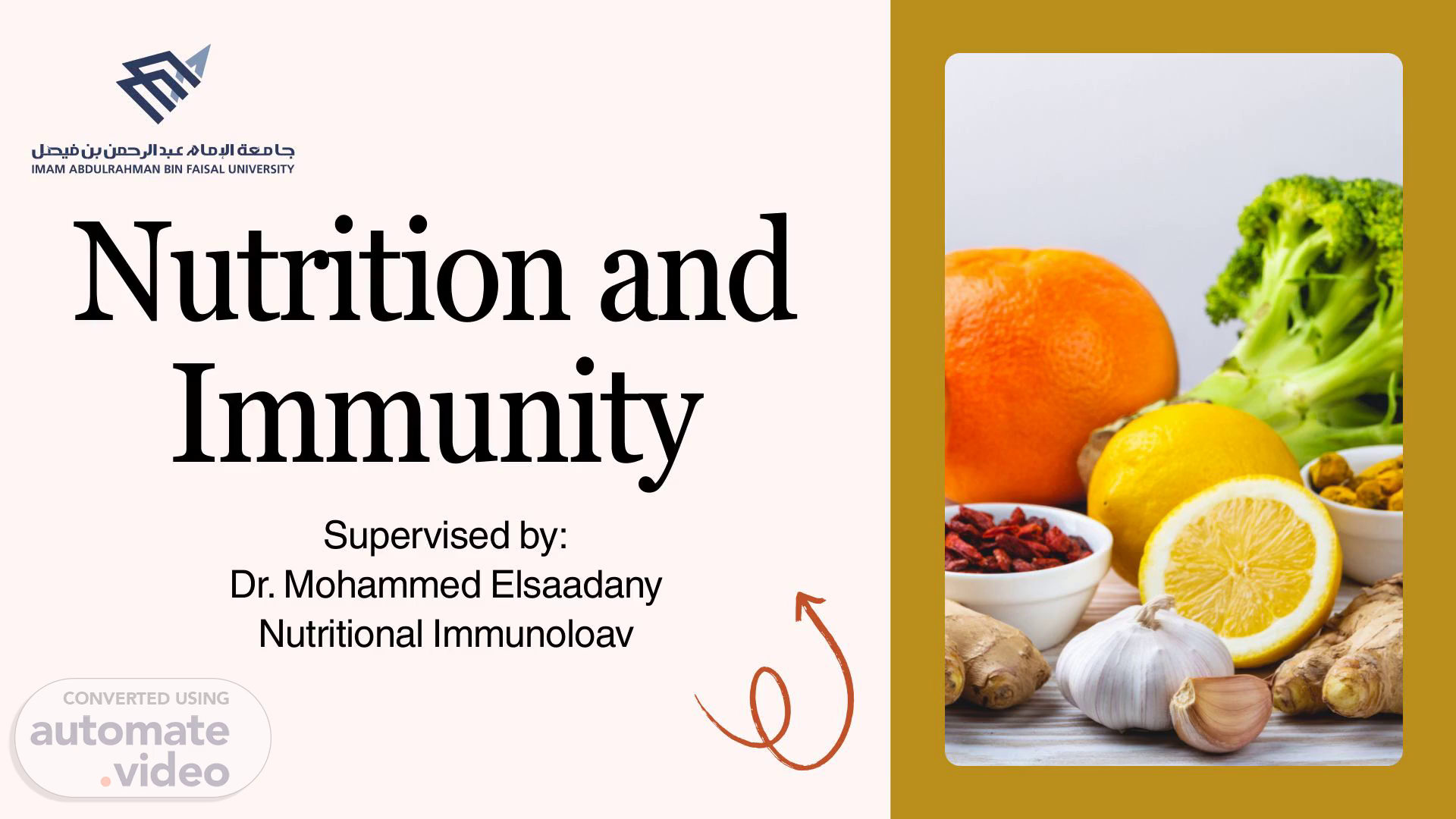
[Audio] Nutrition and Immunity Supervised by: Dr. Mohammed Elsaadany Nutritional Immunoloav.
Scene 2 (7s)
[Audio] Nutrition's Impact on Immunity Nutrition directly influences immune competence by ensuring efficient immune responses. Both malnutrition and overnutrition can compromise immune health, highlighting the importance of balanced dietary intake for optimal immune function..
Scene 3 (26s)
[Audio] Macronutrients and Immune Function Nutritional Status and Immune Efficiency Nutritional Status PEM Vulnerability Associated Deficiencies Nutritional status significantly impacts Protein-Energy Malnutrition (PEM) affects vulnerable populations, Deficiencies in key micronutrients, such as vitamins A, C, E, and minerals like zinc and iron, further compromise immune function and contribute to overall health risks. immune efficiency, where deficiencies can lead to a weakened immune defense, increasing the risk of infections and diseases. especially children and the elderly, leading to impaired immunity and increased susceptibility to infections and diseases. 3.
Scene 4 (1m 19s)
[Audio] Dietary Lipids: Omega-3 and Omega-6 Understanding the roles of Polyunsaturated Fatty Acids (PUFAs) is crucial. Omega-3s support antiinflammatory responses, while excessive Omega6s can lead to inflammation, highlighting the need for balance in dietary fats..
Scene 5 (1m 39s)
[Audio] Conjugated Linoleic Acid Antibody Production and Immune Regulation Conjugated Linoleic Acid (CLA) enhances antibody production while reducing inflammatory cytokines, highlighting the importance of fatty acid balance for optimal immune regulation and overall health. 5.
Scene 6 (2m 0s)
[Audio] Obesity and Inflammation Obesity is linked to low-grade chronic inflammation, affecting immune function. Increased immune cell infiltration in adipose tissue elevates inflammatory cytokines, leading to heightened susceptibility to infections and delayed recovery..
Scene 7 (2m 19s)
[Audio] Caloric Restriction Benefits Caloric restriction has been shown to extend lifespan and enhance immune function. By reducing oxidative stress and improving T cell activity, it supports overall health and decreases the risk of diseases..
Scene 8 (2m 36s)
[Audio] Vitamin A and Immunity Immune Function Epithelial Barrier Deficiency Effects It helps in epithelial cell differentiation, enhancing Vitamin A is essential for maintaining immune barriers against pathogens in skin and gut. A deficiency increases susceptibility to skin and gut infections, leading to serious health issues. function and protecting against infections..
Scene 9 (3m 3s)
[Audio] Vitamin D and Immunity Immune Support Autoimmunity Prevention Infection Resistance Sufficient vitamin D levels bolster the body's Adequate levels of vitamin D are linked to a Vitamin D enhances innate immunity, playing a crucial role in the body's defense system. ability to fight infections effectively. reduced risk of autoimmune disorders..
Scene 10 (3m 30s)
[Audio] Vitamins Impacting Immunity Vitamin E Vitamin C B Vitamins B vitamins, including B6, B12, and folate, are essential Vitamin C is crucial for collagen synthesis and Vitamin E acts as an antioxidant, protecting cell membranes and supporting immune function. for DNA synthesis and immune cell production. enhances the function of immune cells..
Scene 11 (4m 1s)
[Audio] Essential Minerals for Immune Health Essential minerals like zinc, selenium, and iron play a crucial role in supporting immune function. Deficiencies can lead to increased susceptibility to infections and compromised immune responses..
Scene 12 (4m 16s)
[Audio] Summary and Recommendations Nutrients' Role in Immune Health Nutrient Influence Deficiency Effects Importance of Balance A balanced diet enriches the immune system, ensuring that essential nutrients support optimal health and enhance the body's resilience against infections and diseases. Nutrient deficiencies can severely compromise immune function, leading to increased susceptibility to infections and prolonged recovery times, ultimately impacting overall health and wellbeing. Achieving the right balance of macronutrients and micronutrients is crucial; excesses or deficiencies can disrupt immune responses, highlighting the need for a varied and nutrient-dense diet. 12.
Scene 13 (5m 3s)
[Audio] Dietary Recommendations Supporting Immune Function Through Nutrition Balanced Diet Moderation in Fats Adequate Protein It is important to maintain Consuming adequate amounts of A balanced diet provides essential nutrients, including vitamins and minerals, that are critical for maintaining a strong immune system and overall health. protein is vital for the production of immune cells, supporting the body's ability to respond effectively to infections and maintain resilience. moderation in dietary fats, prioritizing healthy sources such as avocados and nuts while limiting saturated and trans fats to support immune health. 13.
Scene 14 (5m 47s)
[Audio] Resilience Names Albatool Abdulaziz Al Fardan 2230004307 Lujain Khalil Abi-Qais 2230004197 Ghada mohammed Aljerani 2230002750 Tuqa Alshubbar 2230005617 HANEAH Alhariri 2230006473 Nutrition is key to health.