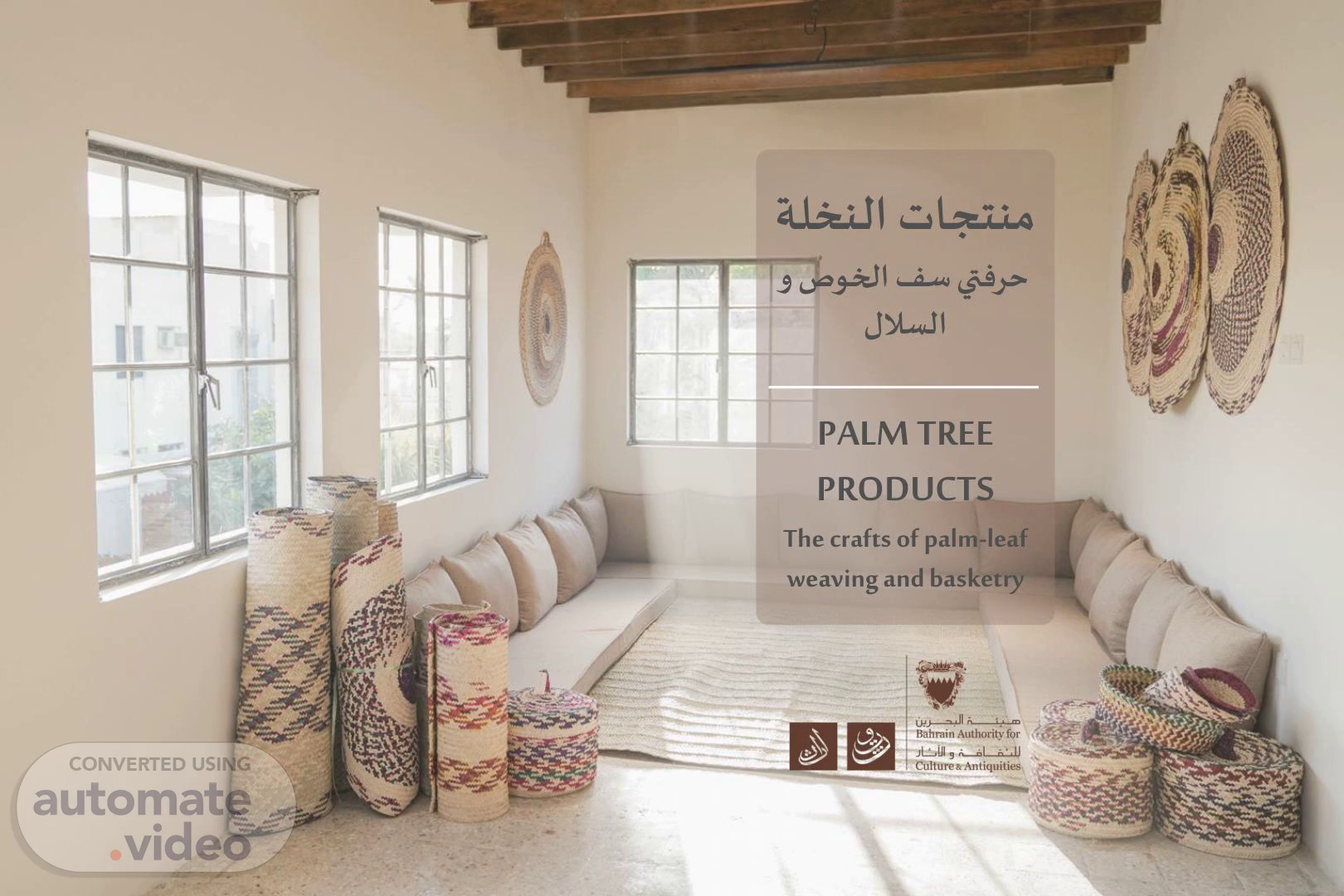
Scene 1 (0s)
ةلخنلا تاجتنم و صوخلا فس يتفرح للاسلا PALM TREE PRODUCTS The crafts of palm-leaf weaving and basketry.
Scene 2 (2s)
ةمدقم تدسجةفرحةَّفسلاةفرحوةعانصللاسلاهجوفرحلاةيديلقتلايفلممةك ،نيرحبلاثيحتلوحيدايلأاةرهلماصوخليخنلاىلإتاودأةيمويمدختحلاةاي نيمدختسماهيفتاودأةطيسبناولأوةيعيبطيفضتًالامجًاايعيبطللكةعطق. دعتونيتاهنيتفرحلانمفرحلاةيوديلاةيثارتلاءزجونمةيوهلاثارتلاويبعشلا ينيرحبلاليصلأاثيحتطبتراةلخنلاةايحبناسنلأاهتئيبوةيلحلما. دمتعتونيتاهنيتفرحلالكشبي ساسأىلعمادختساءازجأنمةلخنلاحأكددراولما ةددجتلما.رشتنتوهذهفرحلايفقطانلمايتلارثكتاهيفراجشأيخنلالزكرمتتويف ةيرقدابابركةروهشلماةعانصبللاسلاثيحعربيًنويفرحلايفليوحتسفعليخنلا ىلإعطقةينفمدختستعنصلتاودأةايحلاةيمويلاًااءدبنمةَّلسلالاوةريصحىلإ ةرفسماعطلا. مغروتاروطتلاتلوحتلاويفعمتجلماللازتهذهفرحلاىظحتةناكمبلىدعمتجلما ،ينيرحبلاىقبتوةدهاشىلعةلاصأ،ي ضالماالمواهلنمرثأردصمكصتقايدا نييفرحللنيذلامهرودباهنوثرويلايجلألةظفاحمللاهيلع. Introduction The crafts of *seffa* (palm-wicker weaving) and basketry represent the essence of traditional craftsmanship in the Kingdom of Bahrain. Skilled hands transform palm wickers into everyday functional objects, using simple tools and colors that lend a natural beauty to each piece. These traditional handicrafts are an integral part of Bahrain’s authentic folk heritage, reflecting the deep-rooted connection between the palm tree, human life, and the local environment. Both crafts rely primarily on utilizing parts of the palm tree a renewable resource. These practices flourish in areas abundant with palm trees; for instance, the village of Karbabad is renowned for its basketry, where artisans skillfully convert palm fronds into a variety of essential daily items ranging from baskets and floor mats to traditional dining mats (*sufra*). Despite the shifts and advancements in society, these crafts continue to hold a significant place within the Bahraini community. They stand as a testament to the authenticity of the past, serving as a vital livelihood for artisans who, in turn, pass these skills down to future generations to ensure their preservation..
Scene 3 (17s)
صوخلا صوخلا يهةدالماةمدختسلمايتفرحلفسلاللاسلاويهوقارولأاةففجلمانمعسفليخنلا ةفرحلا يف مدختسلما صوخلا عاونأ متيرايتخاعونصوخلانمفعسلايذلاعقييفطسوةلخنلاىمسيو(لقلاب)يذلا ًنوكيوذةدوجةيلاعًنوكيوهنوللئامرفصلأل،ًااضيأوصوخلايذلايليقبلةلخنلا ىمسيو(يفاوخلا) ًنوفرعيونيعونلاصوخلابضيبلأاهرابتعلصوخلاىهبلأاًاارظنمولافحتًاانوليذلاو هبستكيةجيتنهضرعتسمشللًلوحتيفهنولرفصلماوأرضخلماىلإاًنوللضيبلأا ةفاضلإابصوخللضيبلأامدختسيًااضيأصوخلارضخلأايذلاجرختسينمصوخ فعسلايفرطلاوأيجراخلاًنوكتوتاجتنلماةعونصلماهنملقأًاانمثنماصوخل ضيبلأا ًااضيأوعونلاثلاثلاصوخلاىمسلما(بَكعلا)ووهصوخلايذاحلمااوشلألكيذلاو لازييفتقوتيبنتةلخنلاوأدنعسيورتةلخنلاربتعيواذهعونلاًيوقلانمصوخلا داوـــــــــــــــــلما.
Scene 4 (20s)
[Audio] The materials used in crafting palm leaf items are typically made from dried palm fronds. The heart of the palm tree is often used, which is of high quality and has a yellowish hue. This type of palm is highly valued for its aesthetic appeal. The outer fronds, also known as white palm wickers, are another common material used in the craft. They have a lighter color due to sunlight exposure. Green palm wickers, which come from the outermost parts of the palm fronds, can be used instead of the heart of the palm tree. They offer more affordable options for certain products..
Scene 5 (32s)
ناولأصوخلا راتخييفرحلاناوللأايتلايفضتىلعجتنلماةيلامجةيوهوةيلحم،ستوصلختًااتداع نمرداصمةيتابنلثمرشقلصبلامكركلاواهريغو،ةيلمعونيولتلادبتأيلغبءالمايف ردق،ريبكعضوتهيفةدامًنوللاعضويوصوخلايفءالماةدلمبستكيلاًنولمثعفري ففجيوتحتةعشأسمشلا تاوطخزيهجتصوخلاةعانصلل كرتيصوخلافجيلتحتةعشأ،سمشلامثًزرفياهدعبورشقيىمستولاةيلمع( ميشكتلا)ةلازلإءزجلاكيمسلاحبصيلواهكمسبسانمنمومثعمجتيفمزح،لبقو مادختسلاوأأدبةيلمعةعانصلاعقنييفالماءةدلمنيتعاسىلعلقلأايلحبصًاانيل لهسيولماعتلاهعمءانثأليكشتلا Wicker colors The artisan selects colors that lend the product both aesthetic appeal and a distinct local identity; these colors are typically derived from plant-based sources, such as onion skins, turmeric, and others. The coloring process begins by boiling water in a large pot, to which the coloring material is added. The palm wickers are then Soaked in the water until they absorb the color, after which they are removed and left to dry under the sun. Steps for preparing wickers for craft production The palm wickers are left to dry in the sun, then sorted and peeled—a process known as (takshim)—to remove the thicker parts and achieve a uniform, suitable thickness. They are subsequently gathered into bundles. Before use or the commencement of the crafting process, they are soaked in water for at least two hours to make them pliable and easier to handle during shaping. صوخلا The Wicker داوـــــــــــــــــلما Materials.
Scene 6 (43s)
قسعلا فيرعت وهًقذعلاًوأًنصغلاًيذلاًلمحيًرامثًبطرلاًرمتلاوًدعبًهديرجتًنمًرامثلاً هفيفجتو،ودعُيًقسعلاًنمًتاماخلاًةيساسلأاًةنيتلماًيتلاًدمتعيًهيلعاًًنويفرحلا اارظنًهتبلاصلًةنراقمًصوخبًليخنلاًًنرلما،ًمدختسُيًقسعلاًداوعأكًتلىنبًلعياهًةلسلاًً اهيطعُتوًاهماوقًًيرئادلاًوأًيطورخلماًنيتلما. موقيًعناصًللاسلاًفيفجتبًقسعلاًًالوأ،ًمثً"هقلف" وأً"هحيرشت" ًاايلوطًىلإًداوعأً ةعيفرًةليوطوًمادختسابًنيكسلانكمتيلًنمًاهجسنًاهليكشتو.تستومدخًهذهً ناديعلاًيفًريثكلاًنمًتاعانصلاًاهنمةعانصًروقرقلاوهوًءاعوًهبشًًرّوكمًهلًةحتفً ةريغصًمدختسيديصل،كامسلأاةسيجلاويهًءاعوًًيرثمكًلكشلاًهلًةدعاقًةيرئادً مدختستًلقنلًجاجدلاًًرويطلاو،وةفرخمًلابطريهوًءاعوًضيرعًًيوقًهلًكشلًً ليمج،ًهذخأيًحلافلاًىلإًىلعأًةلخنلاًفرخيوًهيفًبطرلااهريغونمجتنلماتااهمهأو للاسلا. قـــــســـعلا داوـــــــــــــــــلما.
Scene 7 (46s)
[Audio] The palm frond stalks, also known as Asaq, are used by craftsmen to create a variety of items. They are sturdy and durable, making them ideal for weaving baskets. Unlike flexible palm wickers, these stalks are rigid and can be used to make a wide range of products, including baskets, traps, containers, and other items. To begin working with these materials, the stalks must first be dried and then split or sliced into long, thin strips. This process makes the strips pliable enough for weaving and shaping. The resulting strips can be used to craft various items, such as the Gargour, Jeesa, Makhrafa al-rutab, and other baskets..
Scene 8 (1m 1s)
Toolsتاودلأا صقلمامدختسيصقلفارطأصوخلاوأصوخلادئازلانمًَّفسلاة اهبيذشتو Scissor are used to cut the ends of the palm wickers or any excess material from the woven braid, and to trim them. ةَّلسم صوخلايهًةربإًةيديدحًةريبكًةببدمًدعُتًةادلأاًئرلاةسيًيفًةنهمً فسًةكايحوًصوخًليخنلا،تمدختسًهذهًةادلأاًطبرلًلئادجًً صوخلاً(فسلاة)اهضعبًضعببًاهعيمجتوحبصيلجتنمدحاو. مدختسُتًةلسلماًثادحلإًبوقثًيفًصوخلا،ًمثًريرمتًطويخًقةيوًوأً صوخًعيفرًىمسُيً"بقعلا" ةطايخلًءازجأًةعطقلاًاهضعبب The *Masalla* is a large, pointed iron needle that serves as the primary tool in the craft of weaving palm wickers. It is used to join strands of woven palm wickers (*seffa*) together, assembling them into a single finished product. The *masalla* is employed to pierce holes through the palm wickers, after which strong threads or thin strips of wickers known as *‘aqab* are passed through to stitch the various parts of the item together. م زرخ صوخلاوهًةادأًةيندعمًةببدمًةقدتسموًسأرلاًمدختسُتًكةادأًً ةيساسأًيفًةفرحًةعانصً،للاسلاًعنصُيًًزرخلماًةداعًنمًيدحلادًًلوطبً حوارتيًنيبً6 ىلإً10 تارتميتنسًتبثُيوًيفًضبقمًيبشخًسيللهًكاسملإاً هبًمكحتلاوًهيفًءانثأًلمعلا. مدختسُيًلمعلًبوقثًةقيقدًيفًصوخلاقسعلاوًةلخادتلماًودنًنأًً ببستيًيفًاهقيزمتليهستلوريرمتصوخلاهفلوًلوحسعلاق. A wicker-working awl is a pointed, tapered metal tool that serves as an essential implement in the craft of basketry. Typically made of iron and measuring between 6 and 10 centimeters in length, the awl is fitted into a wooden handle, making it easy to grip and control during use. It is used to create precise holes in the interwoven wicker and structural Palm frond stalk without causing them to tear thereby facilitating the process of threading and wrapping the wicker around the stalk..
Scene 9 (1m 15s)
ةـــــــــــــفرـــــــح صوــــــــــــــخلا فــــس.
Scene 10 (1m 18s)
زهجييفرحلاوأةيفرحلاصوخلاءارجإبلخادتنيبصوخلاهضعبضعببعباصلأابةيلمعب،ةقيقدملكواتلخدأصوخةتكبتشاوعم اهريغىتحىقبيءزجلاًيولعلانمةّفسلاعضتةيفرحلاةصوخًىرخأاهناكماذكهوًرركتتةيلمعلاىتحًنوكتتهيدلاةّفسةلماكيتلاو ًنوكتلكشبةليدجنمصوخلاةحطسمةضيرعو،ةليوطوجسنتبسحمجحجتنلمايذلاهديري. دعبكلذمتيةطايخفارطأةفسلاعماهضعب(بقعلاب)(بَكعلا)وهوصوخلارضخلأا،يوقلاىتحًنوكتيجتنلمارلماداهعنص. لكلوجتنمًلوطةّفسنيعمساقي،عابلابعابلاووهةدحوسايقيلوطسيقيوهبةفاسلماامنيبنيفكلااذإسبناتطناعارذلاانيمي ،اراسيويأامبراقي،نيرتلماساقتوًااضيأربشلابهلوطوًاابيرقت22–25مسوهوةفاسلمايتلاعقتنيبعبصإماهبلإارصنبلاودنعفدر ةحارديلا. َّسلا ةيلمعف ةـــــــــــــفرـــــــحلا.
Scene 11 (1m 21s)
[Audio] The process of weaving or plaiting palm wickers involves carefully interweaving individual strands. Each strand is then added to the growing strip, gradually increasing its width and length. This repetitive process continues until a complete seffa is formed, tailored to the desired dimensions. The edges of the seffa are subsequently secured using al-'aqab palm fronds, providing stability and structure to the finished product. Measurements for each seffa are typically taken in ba', a standardized unit of measurement equivalent to the distance between the tips of the hands when arms are fully extended to the sides. In addition, measurements can also be expressed in shibr, representing the distance between the thumb and the ring finger when the hand is spread wide..
Scene 12 (1m 36s)
يفسوي ةليدجًةقسانتمًةطسوتموًضرعلا،ًمدختسُتًيفًةعانصً"ريصحلا" يداعلاًصصخلماًسولجللً مادختسلاوًيمويلا،ًنوكياهيفساسلأا6تاصوخنمةهجنيميلاو6نمةهجراسيلالقنتوةصوخ ةدحاونمةهجنيميلاةرمونمةهجراسيلافاضتوةصوخةديدجلكةرمىنثتنمةهجنيميلاهواذك رمتستةياهنلًلوطلابولطلما ةـــــــــــــفرـــــــحلا تبسحن ًىلعًلغتشت25ًساسلأاًنوكيًنأًيأً،نيع12ًوًنيميلاًةهجًةصوخ12ًةرمًةصوخًلقنتوًراسيلاًةهج يرعًاهنلأًةفسلاًطسوًيفًلإًةصوخلاًينثًاهيفًمتيًةرمًلكًةصوخًفاضتوًراسيًةرموًنيميًجاتحتوًةض ًريصحللًمدختستوًبولطلماًساقلماًةياهنلًاذكهًرمتستوًنيتهجلاًنمًةفاضلإ ةموسقم ةحجر لدجُتًضرعبًطسوتمًمدختسُتوًيفًةعانصً"ةلقلا" (ةيعوأًنيزختًرمتلا) وًلحارلماً(ليبانزلاًةريبكلاًلقنلً عئاضبلاًًرومتلاو. يباَّشخ مدختسُتًلكشبًي ساسأًةعانصلً)ميمسلاً(اهدرفمًً مسة،ًيهوًرصحلاًةريبكلاًةنشخلاًيتلاًتناكًًُتشرفًيفًً دجاسلماًتويبلاوًوأًمدختسُتًةيطغتلًشورعًتويبلا. مأةنيوع دعُتًنمًقدأًمعنأوًعاونأًةّفَسلا،ًزيمتتوًدوجوبًتاغارفًوأًشوقنًةريغصًهبشتًنيعلأا،ًًُتومدختسًيفً ةعانصًتاجتنلماًةقيقدلاًلثمً"ةرفسلا" (ةدئامًماعطلاًةيرئادلا)و"فيفقلاوحوارلماًةيوديلا،لغتشتو ىلع9،نويعينعينأًنوكيساسلأا4تاصوخنمنيميلاو4نمراسيلاةصوخوةدحاولقنتةرمنيمي ةرموراسيفاضتوةصوخةديدجلكةرممتياهيفينثةصوخلاةهجنيميلارمتستوةياهنلاًلوطل ولطلماب.
Scene 13 (1m 39s)
فَّسلا ةيلمعل لاثم مأةنيوع دعُتًنمًقدأًمعنأوًعاونأًةّفَسلا،ًزيمتتوًدوجوبًتاغارفًوأًوقنشًةريغصً هبشتًنيعلأا،ًمدختسُتوًيفًةعانصًتاجتنلماًةقيقدلاًلثمً"ةرفسلا" (ةدئامًماعطلاًةيرئادلاً)و"فيفقلاوحوارلماًةيوديلا. دمتعتًةشقنً"مأًةنيوع" ىلعًماظنًةكايحًلدابتمًسوردمً(ًقوفًتحتو)ًً بإدادعًصوخًةيدرفًوأًةيجوزًةرظانتمًلثمً4 دضً4 وأًبحسًةصوخً كرتوًنيتصوخقلخلًغارفلاًيلامجلا: •ةيادبلاًةدقعلا:ًأدبتًفصبًتاصوخًةيدومعًًىرخأوًةيقفأًشبلكً عطاقتمًفرعُتًساسلأابًوأًةادسلاًةمحللاو. •كيبشتلاًيلدابتلا: دنعًريرمتًةصوخلاًةكرحتلما،ًلًمتيًجسنلاًً ماظنبًةدحاوًًقوفًةدحاووًتحت) ةفسلاكًةيداعلا؛ًلبًمتيًيطختًً نيتصوخً(ريرمتًةصوخلاًنمًًقوفًنيتصوخًًااعم) مثًلوزنلاًتحتً ةصوخًةدحاو،ًوأًسكعلاًبسحبًهاجتاًةشقنلا. •سكعًهاجتلاً(قلخًغارفلا):يفًرطسلاًيلاتلا،ًمتيًسكعًلاةيلمعًً ًاامامتًلكشبوًًُمحاز،صوخلاًيذلاًناكًىطغمًيفًرطسلاًسلاقباًً حبصيًًاافوشكم،ًاممًربجيًطئارشًصوخلاًىلعًدعابتلاًخلافيفًً دنعًطاقنًةنيعمًبراقتلاوًدنعًطاقنًًىرخأ. •زوربً"ةنيوعلا": اذهًلدابتلاًي سدنهلاًًرركتلماًئ شنُيًًااغارفًمًاايزكرًً ًااريغصًًااطاحمًتازورببًصوخلا،ًودبيفًلكشلاًيئاهنلاًعىلًةئيهًً بوقثًوأًًنويعًةيسدنهًةقسانتمًةعزوموًًيواستلابًىلعًًلوطًً طيرشلاً"ةفسلا". طمًةفسلاًاهلدجو •ءانثأًلمعلا،ًبجيًدشًصوخلاًطغضبًواستميًعباصأبًديلاًًماهبلإاًوةبابسلاًً نامضلًمدعًعاستاًًنويعلاًلكشبًدئازًفعضيًنمًةناتمًةعطقلا،ًظتلولًً ةشقنلاًةدودشمًةيوقو. •متيًلاخدإًصوخًديدجً)يقلتلام)املكًتبراقًةصوخلاًةميدقلاًىلعًتنلاءاه،ً كلذوًلاخدإبًةصوخلاًةديدجلاًفلخًةميدقلاًاهريرمتوًيفًسفنًاسلمارًً يفتختلًفارطلأاًًاامامت. ةـــــــــــــفرـــــــحلا.
Scene 14 (1m 43s)
َّفسلا ةفرح تاجتنمة Seffa craft products ةرــــــــــــفــــــــــــــسلا Al-Sufra يهةدئام،ماعطلاتناكشرفتىلعضرلأاعضوتواهيلعقابطألاماعط عمتجيودارفأةرسلأااهلوح يهوةرابعنعجوسنمًيرئادلكشلاًنوكيماجحأبةفلتخمدمتعتىلع ددعدارفاةرسلأاًاةداعواملخدتاهيفصوخلاًنوللما It is a dining mat, spread out on the floor with dishes of food placed upon it, around which the family members gather. It consists of a circular, woven mat that comes in various sizes depending on the number of family members and typically incorporates colored palm wickers. ةـــــــــــــَّفــــــهـــــــلما Al-Mahaffa يهةحورلما،ةيوديلاًنوكتوًااتداعةعبرملكشلاعضوي يفدحأاهبناوجدوعنمديرجلامدختستويوهتلل،ة ًنوكتوةقيرطلمعلايففسصوخلاةفلتخميحث جسنتةعطقةدحاوةلماكسيلوطيرشكاحيولثم ةرفسلا This is a hand-held fan, typically square in shape, with a palm-frond stick attached to one of its sides for use in fanning. The technique for weaving the palm wickers differs here; instead of creating a long strip, the entire piece is woven as a single, complete unit, similar to the way a *sufra* (a traditional woven mat) is crafted. رــــيصــحلا The floor mat (alhasayr) عنصيماجحأبةريبكةفلتخم،شرفيويفسلمادجا سلاجلماوفرغلاو It is produced in various large sizes and laid out in mosques, gathering spaces, and rooms..
Scene 15 (1m 53s)
َّفسلا ةفرح تاجتنمة Seffa craft products ةزــــــــــبــــــــــخم Mukhbaza يهةظفاحزبخللعنصتولكشبيناوطسأعمءاطغ It is a bread container, made in a cylindrical shape with a lid. ةـــــــــــــــــطــــــنــش Bag ةطنشلاعنصتلكشبيناوطسأًنوكتوةريزغولعض ءايشلأااهيفًنوكيواهلنيضبقميفىلعلأالللمحًااتداعو لخدتيفاهتعانصناوللأاوأنمريغناوللأا The bag is designed in a cylindrical shape with ample space for storing items; it features two handles at the top for carrying, and it may be crafted either with or without the use of colors. ليبزلاوهةلسةعساوعضولءايشأةفلتخمستومدخت عضولسبلالمااهلخادعنصتوًااضيأعمءاطغتوفاض اهيلإًااضيأناولأوأنمريغناولأ *Zabeel* is a large, wide basket used for holding various items, such as clothing. It can be made with a lid and may be crafted in either colored or uncolored versions. ليبزلا Al-Zabil ةَّفقلا Al-Qeffa ةفقلايهةلسةريغصعنصتماجحأبةفلتخممدختستوسابتامادخت ةفلتخمتاظفاحكماعطللوأتامزلتسلماةيمويلاعنصتوأًااضي ءاطغب *Qeffa* is a small basket made in various sizes; it serves different purposes, such as storing food or everyday items, and can also be made with a lid..
Scene 16 (2m 2s)
رــــــيــــِفـــــــَجلا Al-Jafeer ةلسًةعونصمًنمًصوخًليخنلاًاهمدختسيًلهأًرحبلاًيفًلمحًً كامسلأا،ًاهمدختسيوًلهأًربلاًيفًلمحًبطرلا،ًمدختستوًذككلًيفً لمحًتايرتشلماًنمًًقوسلا،دعيوًةباثمبًةبيقحًةنيتمًصلاعنًاهنكميًً لمحًنازوأًةليقث،وبَّكرُيًهلًنامصعمًوأًناتورعليهستلًهلمح A basket woven from palm wickers, used by coastal communities to carry fish and by inland communities to transport fresh dates. It also serves as a container for carrying goods from the market. Sturdily constructed, it can hold heavy loads and is fitted with two handles or loops to make it easy to carry. رــــمـــــتلا ةــــــــَّلــــق Qllat altmr يهًءاعوًيديلقتًعونصمًاايوديًنمًصوخًليخنلا،مدختسُيًلظفحً رمتلاًهنيزختو،متيوًاهتطايخًظفحلًرمتلاًهتفاظنوًًلأنًاصوخلً ظفاحًيعيبطًةدوربللًيقبُيوًًنولًرمتلاًهمعطوًًااديجًًنودًنأًريغتي. It is a traditional, handmade container crafted from palm wickers, used for storing dates. It is stitched together to keep the dates contained and clean; palm wickers act as a natural cooling agent, preserving the dates' color and ensuring their flavor remains excellent and unchanged. َّفسلا ةفرح تاجتنمة Seffa craft products.
Scene 17 (2m 11s)
ةـــــــــــــفرـــــــح قــــــســـــعلا للاـــــــــــــس.
Scene 18 (2m 14s)
ً دَعُتةعانصللاِّّسلاةدحاونمًقرعأتاعانصلا،ةيوديلاثيحعنصناسنلإاينيرحبلاللاِّّسلاذنممدقأًروصعلااهمادختسلةيعوأك. أدبيويفرحلاعمجبقسعلاوهوقذعوأًنوجرعةلخنلامتيهعطقدعبةيلمعينجرامثليخنلاكلذكوعمجيصوخليخنلانمىلعأطسوةلخنلاثيحًنوكيوذةدوج ةيلاعةنورمويفةيلمع،ةعانصلاكرتتوهذهداولمافجتل،الوأةداعوامشمكنتحبصتوةّشهـدعبكلذاهعقنيعاّنُصلايفءالماحبصتلةنرممعوةيل.مثحبصُتةزهاج ،مادختسلاليغبنيواهظفحةبطرءانثأةيلمعةعانصةلسلا.لجاتحيعناصللاسلالإتاودلأةليلقيهونيكسةريغصًزرخمو. أدبييفرحلاحيرشتبقسعلالكشبليوطمادختسابنيكسلاحبصتللعلكشفايلأةليوطاهدعبوعقنتيفءالماحبصتلةنيل،ةنرموانهودبتأةلحرلماىلولأانمةعانصةلسلا ثيحأدبييفليكشتامىمسي(ةياّدبلا)يهوساسلأاأدبتونمةدعاقةّلسلايهوةرابعنعةريفضةريغصلكشبًيرئادمثأدبيلاخدإبفايلأقسعلانعقيرطةينقتفللا رمتسلمالكشبينوزلحفلوهذهفايللأاصوخلابيذلامتيهلاخدإهفلوًلوحفايلأقسعلااهيطغيلمادختسابًزرخلمايتلانمضتتريرمتفايللأاتحتاهضعبضعبلايف ةيوازةتباثجاتنلإلكشددحم.نمومهأتاجتنلمايهًَّلسلاةكاّبسلاودوّرسلاوتبسلاو. للاسلا ةعانص ةـــــــــــــفرـــــــحلا.
Scene 19 (2m 17s)
[Audio] The artisans gather the necessary materials, including palm fronds and date palm clusters. They slice the palm fronds into long fibers, which are then soaked in water to make them soft and pliable. This initial step sets the foundation for the entire basket-making process. The artisans create the beginning of the basket by forming a small, circular braid at the base. They incorporate the fibers using a spiral-coiling technique, wrapping them with palm leaf strips and guiding them through with an awl. The result is a unique and functional item, such as a basket or a container for storing goods..
Scene 20 (2m 36s)
للاسلا ةعانص ةياَّدبلاًلمع ةَّلسلاًةعانصًلحارم creating the "beginning" (*al-biddayah*) Stages of Basket Making Basket making The Craftةـــــــــــــفرـــــــحلا.
Scene 21 (2m 39s)
[Audio] The basket is made in large sizes and comes with a lid. It is typically used to store various items such as clothing, jewelry, perfumes, and other personal care goods. The bride's basket is often decorated with intricate designs and patterns, making it a unique and special gift for the-bee. The basket itself is usually made from natural materials like palm leaves or reeds, providing a sustainable and eco-friendly option for storing and carrying goods. The lid helps to keep contents fresh and secure, while the basket's size allows for ample storage space. Overall, the basket serves as a practical and thoughtful way to present gifts to loved ones..
Scene 22 (2m 53s)
َّبسلاو دورسلاقا Al-suroud & Al-sbbaq عضويًااتداعهيفبطرلاًلوصحلماودعب،هينجيوعنص قا بسلاعم،ةدعاقامأدورسلانمريغةدعاقًنوكتو هتيضرأعسوأنمقا بسلا Typically, fresh dates and the harvested produce are placed inside it. The *sabbaq* is constructed with a base, whereas the *saroud* is made without a base and has a wider bottom than the *sabbaq*. قـــــــســـــعلا ةـــــّلــس Sallat alasaq يهءاعوظفحلبطرلاوأرمتلاعمجورامثلاعنصتوماجحابفلتخمة It is a container used for storing fresh or dried dates and for gathering fruit, and it is made in various sizes. لاسلا ةفرح تاجتنمل Basket weaving craft products.
Scene 23 (2m 59s)
ةسيجلا Al-Jeesa ءاعوًًيرثمكًلكشلاًهلًةدعاقًةيرئادًمدختستًقنللًً جاجدلاًًرويطلاو،ًعنصتوًلدجبًناديعًعلاقسًثيحً كَّبَشُتًةقيرطبًكرتتًتاحتفًةيسادسًيفًصفقلاًيذلاًً يـتأيًلكشبًيناوطـساًخفتنمًيـفًطسولاًقيضيًًاايجيردتً دنعًةـهوفلا. ًىَّوـقُتوًةهوفلاًينثبًاهفاوحًهفلواًناديعبًً ًنوجرعلاًرثكأًنمًةرم،ًامكًًىوقُتًكلذكًفاوحًطغلاءاً يذلاًعنصُيًسفنبًةقيرطلا. A pear-shaped vessel with a circular base, used for transporting chickens and other birds. It is crafted by weaving *‘asaq* (palm-stalk) strips together in a pattern that creates hexagonal openings, resulting in a cage that is cylindrical, bulbous in the middle, and tapers gradually toward the opening. The rim of the opening is reinforced by folding its edges and wrapping them multiple times with *‘arjun* (palm-stalk) strips; the edges of the lid which is constructed using the same technique are reinforced in the same manner. روقرقلا Al-qarqur ءاعوًهبشًًرّوكمًهلًةحتفًةريغصًمدختسيًديصلًكامسلأا،ًحثيً عنصيًنمًناديعًقسعلاًلخادتلماًيفًهضعبًضعبلا،ًحرطيوًفيًرحبلاً هيفوًضعبًباشعلأا،ًيتأتفًكامسلأاًلخدتوًنمًةتحتفًصلاةريغًمثًً لظتًاهقيرطًدنعًامًديرتًنأًجرختًىتحًيتأيًدايصلاًاهيلإ،ًمأاًنلآاًً عنصتفًريقارقلاًنمًكلاسلأاةيندعلما A semi-spherical vessel with a small opening, used for catching fish. It is constructed from interwoven *asaq* (palm- stalk) sticks and placed in the sea, often containing some seaweed. Fish enter through the small opening, but once inside, they lose their way and are unable to find the exit, remaining trapped until the fisherman arrives. Nowadays, however, these fish traps are made from metal wire. لاسلا ةفرح تاجتنمل Basket weaving craft products.