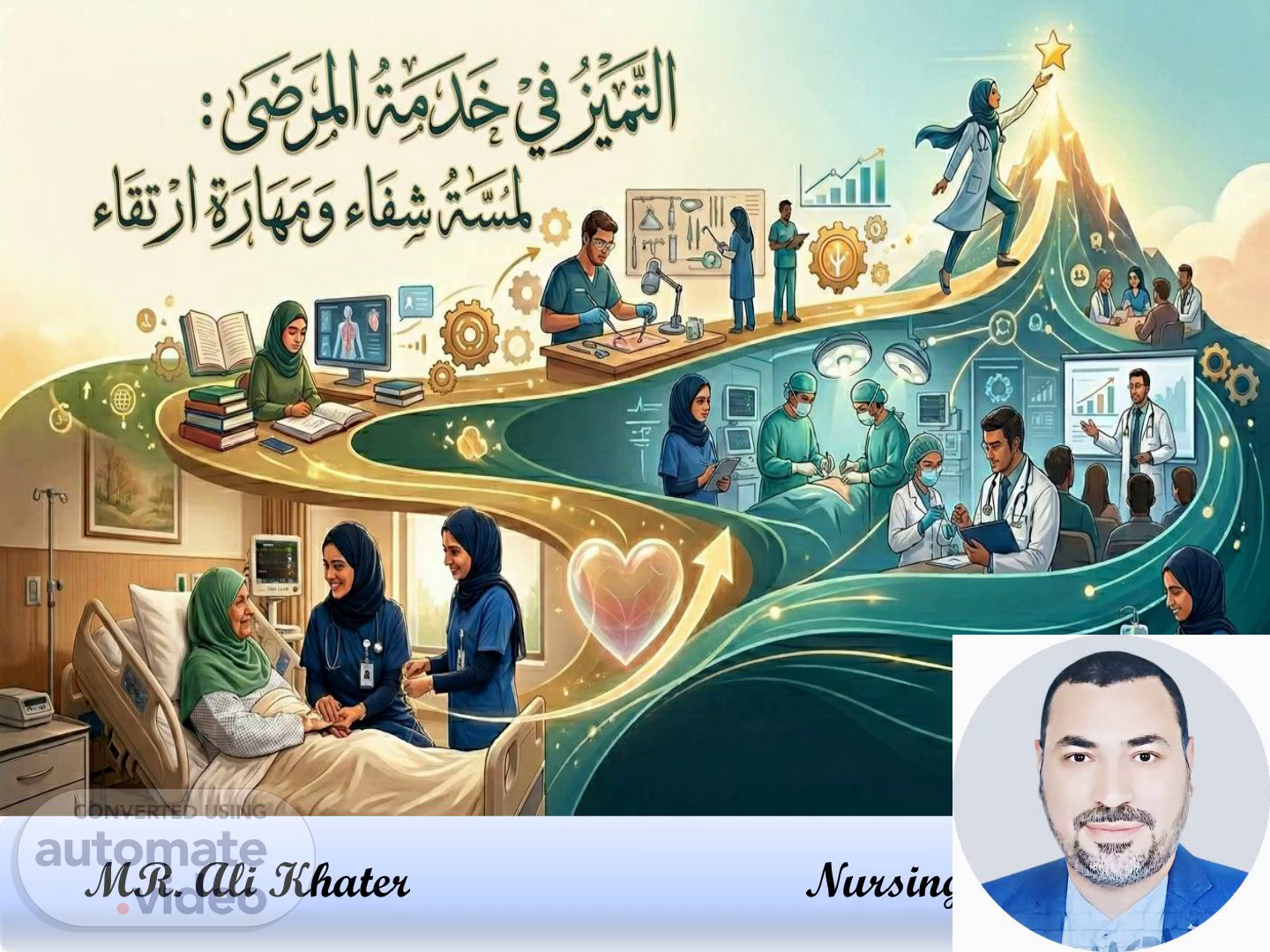
Scene 1 (0s)
MR. Ali Khater Nursing Supervisor.
Scene 2 (51s)
/ ub}.o.bl Jj.
Scene 3 (58s)
ÅoJJ.
Scene 4 (1m 4s)
jp.bl dJAl$Jl ÖJiD ($}JAdl.
Scene 5 (1m 11s)
[Audio] The importance of effective communication in patient care cannot be overstated. As healthcare professionals, we are responsible for communicating effectively with our patients to build trust and create a positive experience. We must listen attentively to their concerns and respond promptly to their inquiries. Clear and concise language should be used when communicating with patients, avoiding jargon and technical terms whenever possible. This helps to reduce anxiety and stress, promoting a sense of calm and well-being. Furthermore, effective communication enables us to identify potential issues early on, allowing us to take proactive measures to prevent complications. By doing so, we can ensure the safety and well-being of our patients. Effective communication is essential for building strong relationships with our patients, which ultimately leads to better health outcomes. It is also vital to communicate clearly with other healthcare team members to avoid misunderstandings and miscommunications. This ensures seamless collaboration and coordination among team members, resulting in comprehensive care. Effective communication is a critical component of patient-centered care, where every patient's unique needs and preferences are taken into account. By using effective communication skills, we can tailor our care to meet each patient's individual requirements, leading to improved health outcomes and increased patient satisfaction..
Scene 6 (2m 38s)
[Audio] The importance of conflict resolution cannot be overstated. Conflict is a natural part of any workplace, but it is essential to know how to manage it effectively. Effective management of conflict requires a combination of effective communication and a problem-solving approach. The goal is to resolve conflicts in a timely and efficient manner, minimizing disruption to the normal functioning of the organization. In order to achieve this, it is crucial to develop strong conflict resolution skills. These skills include active listening, finding mutually beneficial solutions, and approaching conflicts with an open mind. By doing so, organizations can foster a positive and collaborative work environment. Furthermore, conflict resolution skills are critical for maintaining patient-centered care. In healthcare settings, conflicts can have serious consequences, such as compromising patient safety and well-being. Therefore, it is essential to prioritize conflict resolution skills in healthcare teams. By prioritizing conflict resolution, organizations can improve their overall performance and achieve better outcomes. Additionally, effective conflict resolution can lead to increased employee satisfaction and reduced turnover rates. Moreover, conflict resolution skills can help to reduce stress and anxiety among employees, creating a more supportive and inclusive work environment. In conclusion, conflict resolution is a vital component of organizational success, and its development is essential for achieving optimal results. Organizations must invest time and resources into teaching conflict resolution skills to their employees. By doing so, they can ensure that their employees are equipped to handle conflicts in a constructive and respectful manner. Ultimately, effective conflict resolution is key to unlocking the full potential of employees and driving business success. Organizations must recognize the value of conflict resolution and make it a priority. By doing so, they can reap the benefits of improved employee engagement, productivity, and overall performance. Furthermore, conflict resolution skills can help to mitigate risks associated with conflicts, reducing the likelihood of negative outcomes. In summary, conflict resolution is a critical component of organizational success, and its development is essential for achieving optimal results. Organizations must prioritize conflict resolution skills to drive business success. By investing in conflict resolution training, organizations can equip their employees with the necessary skills to handle conflicts in a constructive and respectful manner. This enables them to maintain a positive and productive work environment. Moreover, effective conflict resolution can lead to improved employee morale and job satisfaction. Organizations must recognize the importance of conflict resolution and make it a priority. By doing so, they can reap the benefits of improved employee engagement, productivity, and overall performance. Furthermore, conflict resolution skills can help to reduce stress and anxiety among employees, creating a more supportive and inclusive work environment. In the end, effective conflict resolution is essential for driving business success. Organizations must prioritize conflict resolution skills to achieve optimal results. By investing in conflict resolution training, organizations can equip their employees with the necessary skills to handle conflicts in a constructive and respectful manner. This enables them to maintain a positive and productive work environment. Moreover, effective conflict resolution can lead to improved employee morale and job satisfaction. Organizations must recognize the importance of conflict resolution and make it a priority. By doing so, they can reap the benefits of improved employee engagement, productivity, and overall performance. Furthermore, conflict resolution skills can help to reduce stress and anxiety among employees, creating a more supportive and inclusive work environment. In the end, effective conflict resolution is essential.
Scene 7 (7m 13s)
[Audio] The patient's condition has been stabilized. The medical team has taken necessary measures to prevent any further complications. The patient will receive regular monitoring and care to ensure their recovery..
Scene 8 (7m 26s)
cop.
Scene 10 (7m 37s)
[Audio] The importance of effective communication in the nursing profession cannot be overstated. Clear and concise language is crucial in conveying messages that are both accurate and easy to understand. Active listening and empathy play a vital role in building strong relationships with patients and colleagues. Cultural sensitivity and awareness are also essential in providing high-quality care that respects the diversity of patients and their families. A culture of respect, understanding, and inclusivity can be fostered by promoting these values within the nursing community. This approach enables nurses to provide compassionate and patient-centered care that meets the unique needs of each individual. By prioritizing effective communication, nurses can improve patient outcomes and satisfaction, ultimately leading to better health outcomes. Effective communication is not just about transmitting information; it is also about creating a sense of trust and rapport between healthcare providers and patients. When nurses communicate effectively, they can address concerns, resolve conflicts, and provide emotional support, all of which are critical components of high-quality care..